
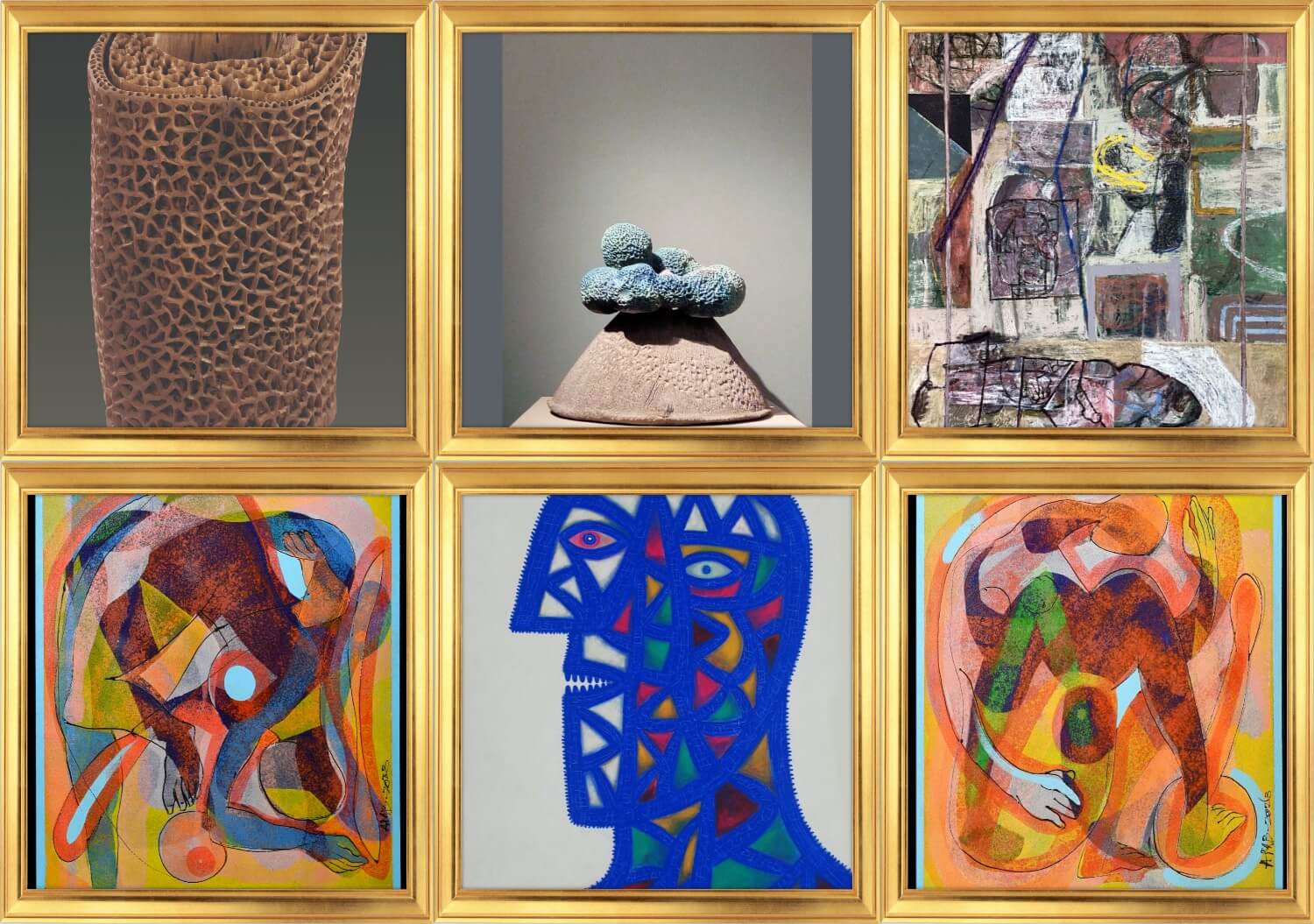
Samanvaya: Line · Colour · Form – Dialogues in Contemporary Indian Art is a group exhibition presented by Delhi Art Society and curated by Jyoti A Kathpalia. Bringing together 25 senior and eminent artists, the exhibition showcases diverse contemporary practices including painting, printmaking, and sculpture. The participating artists are among the most respected practitioners in India, with careers and contributions that span several decades.
As the title Samanvaya—meaning convergence—suggests, the exhibition explores the coming together of line, colour, and form across two and three-dimensional practices. Through this shared visual vocabulary, the works engage in dialogue with one another, revealing both individual artistic positions and collective concerns within contemporary Indian art.
Neeraj Gupta, President of Delhi Art Society, notes:
“It has been my mission to support artists and contemporary Indian art. Over the years, Delhi Art Society has brought serious and committed artists to the fore. In the present art scene, attention needs to be redirected towards contemporary art and sculpture. This is essential if contemporary Indian art is to claim its rightful place on the global stage.”
Curator Jyoti A Kathpalia adds:
“This exhibition is unique in that it speaks simultaneously to the individual and the universal. Each artist brings a distinct vision, yet together they establish a dialogue that reflects shared spatial, emotional, and thematic concerns. While the works are deeply personal, they also communicate through the universal language of art.”
Kalicharan Gupta presents works from his Metropolis series, a visual evocation of urban expansion and the gradual disappearance of open lands. His abstract compositions reflect both the external world and deeper contemplative states. Using a distinctive paint-dropping technique, Gupta creates persistent patterns marked by geometric rigor and infinite repetition, resulting in intricate, graph-like structures that convey both order and spiritual nostalgia.
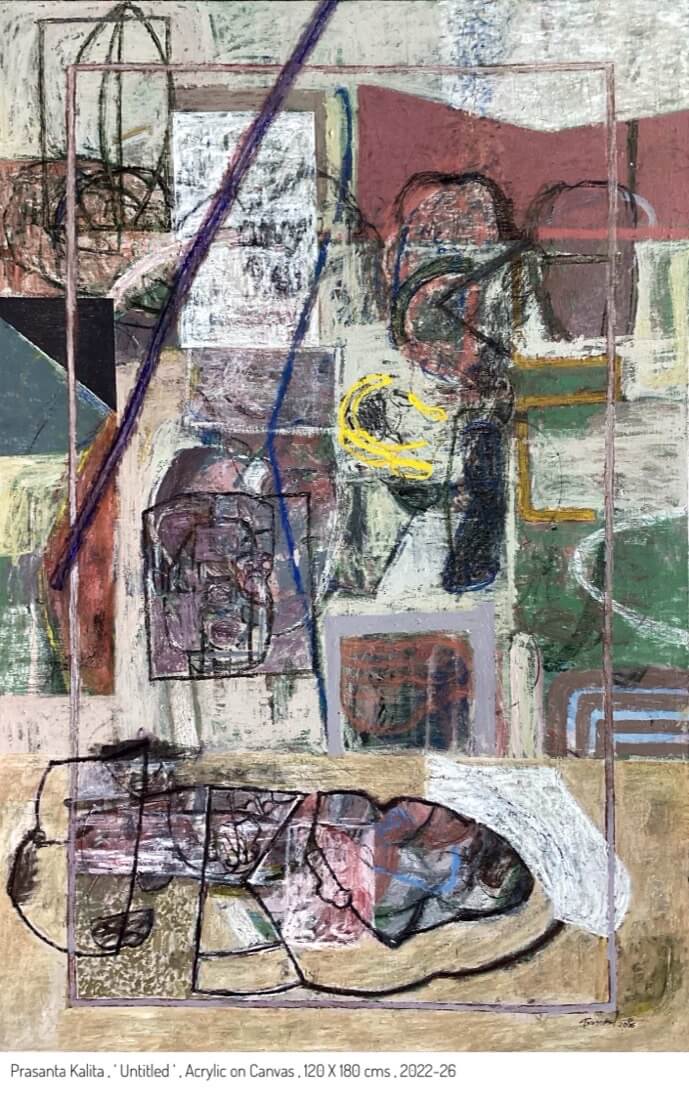
Jagdish Chander is represented through an iconic work influenced by abstract expressionism. The tension between a discernible face and a warm reddish-pink field generates a powerful visual contrast. Chaotic, layered brushstrokes release intense psychological and emotional energy, evoking the anguish, ecstasy, and inner struggles embedded within the human condition.
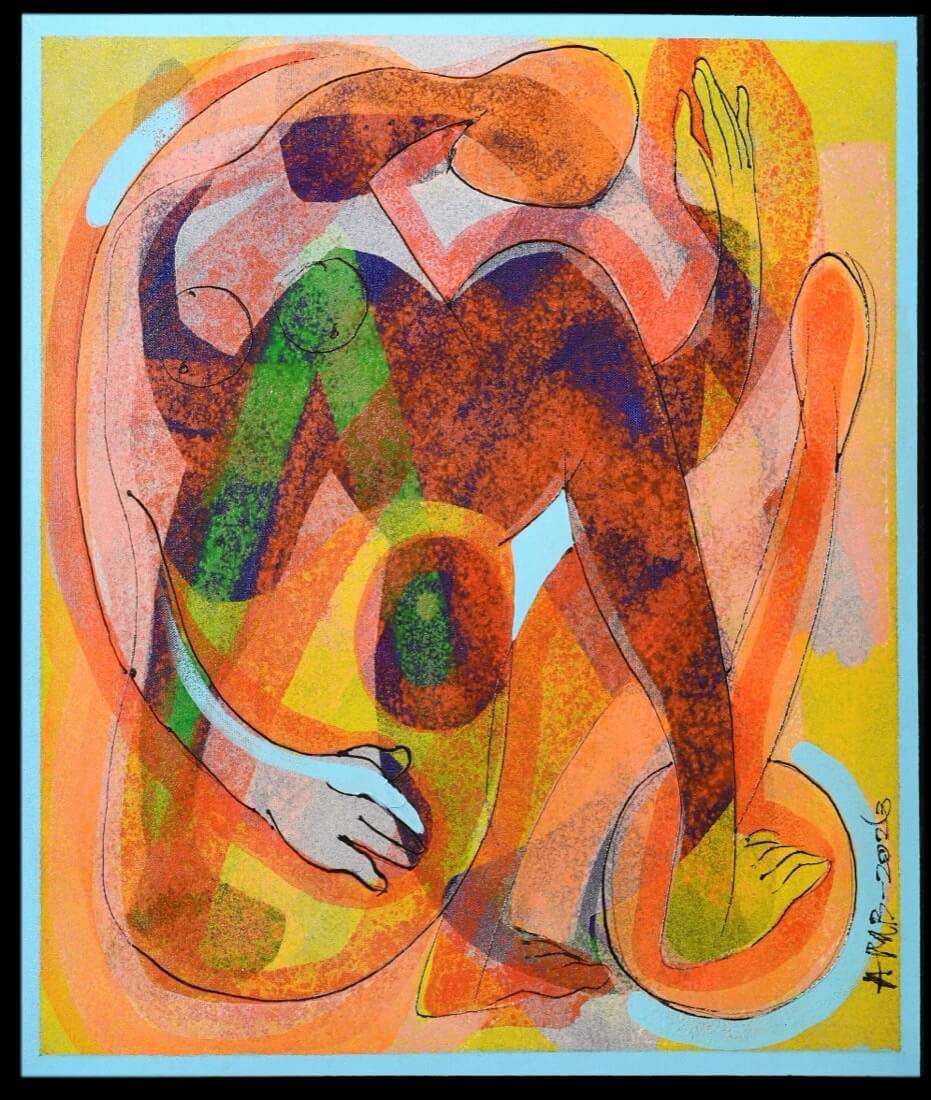
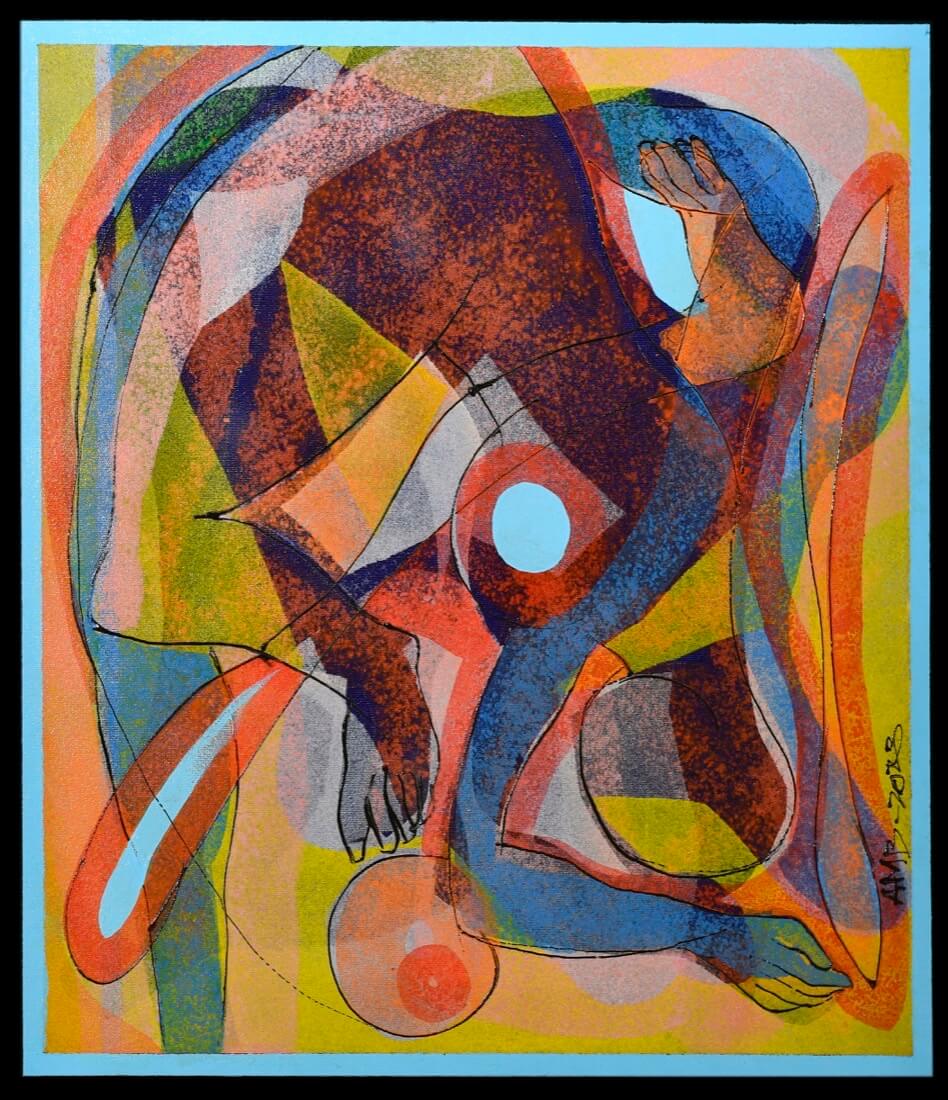
A pioneer of printmaking in India, Anand Moy Banerji brings works such as Form–III and Form–VI, which are semi-figurative explorations of the human psyche and social reality. Rich in colour and innovation, these works resonate with Bergsonian notions of time, layering memory, emotion, and existential tension through limbs, forms, and expressive contrasts.
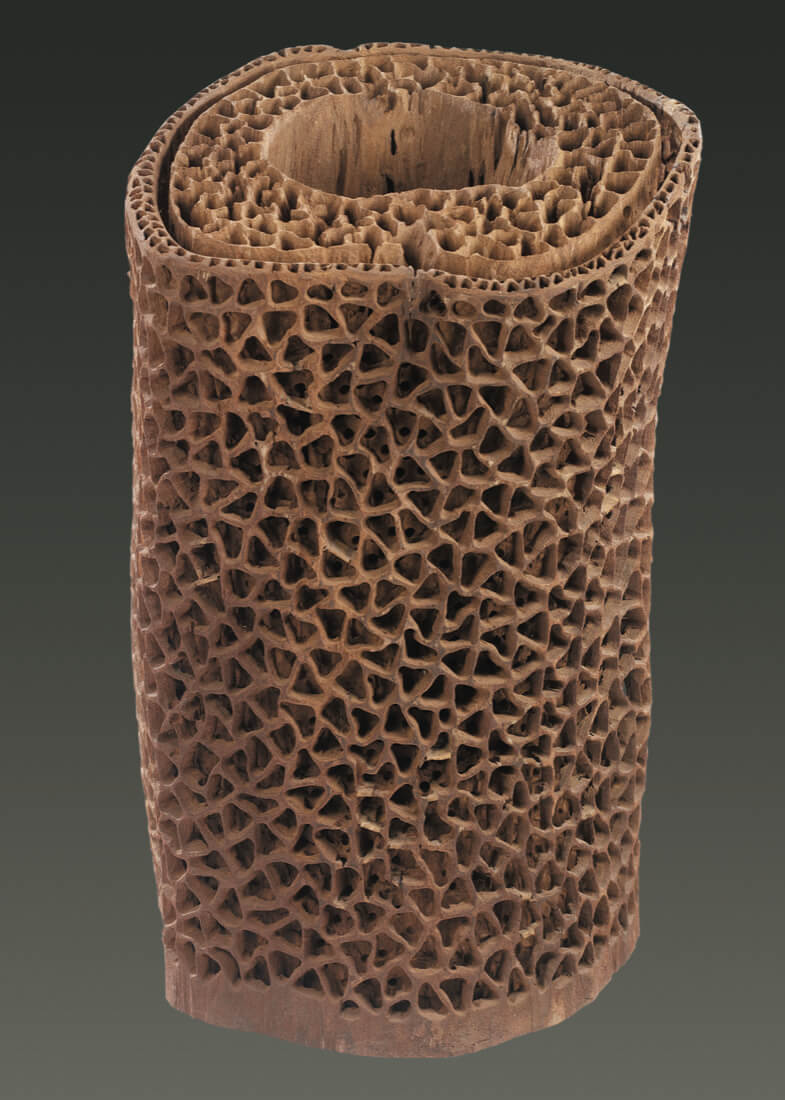
In From the Smithy of the Soul, Neeraj Gupta works intuitively with wood, allowing its natural grain, texture, and form to guide the sculptural process. The work appears to emerge organically, as though forged from deep inner reserves. Wood becomes both material and metaphor, transforming raw nature into an intense expression of creative vision and inner essence.
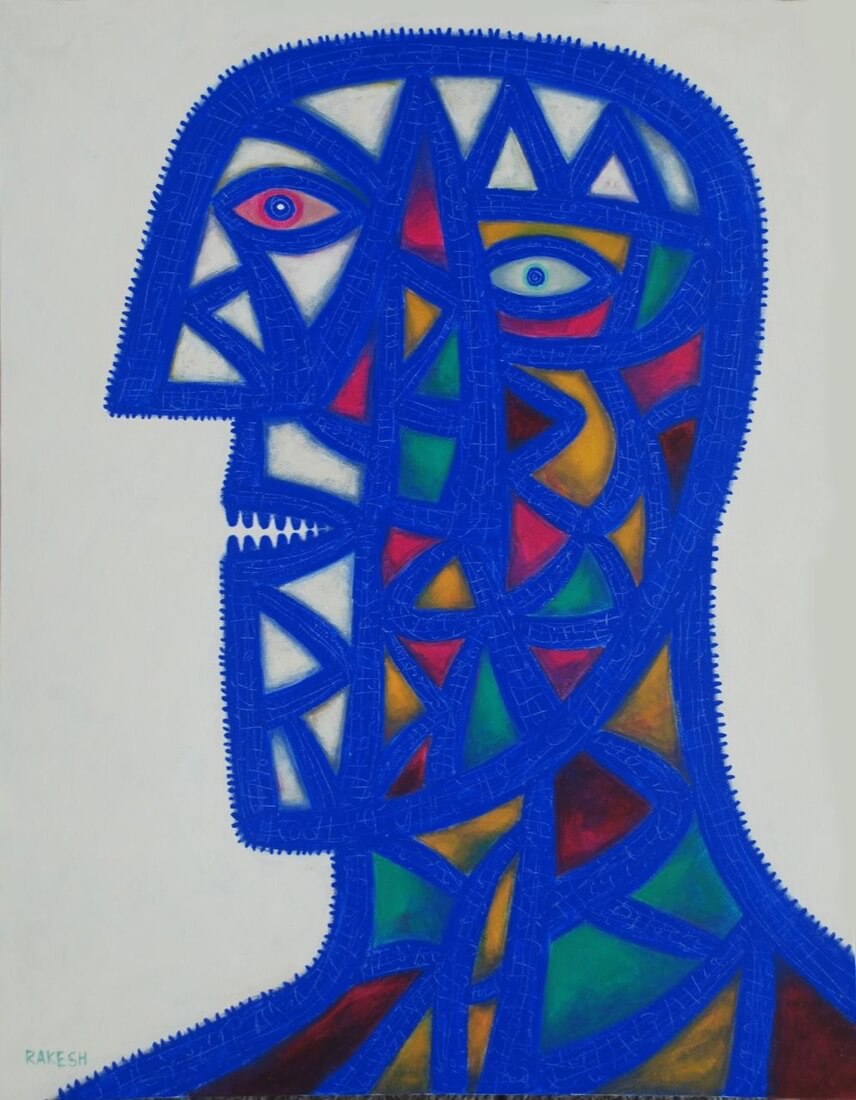
Rakesh Kumar Gupta showcases works from his iconic Heads series. Charged with vibrant colours and bold strokes, the distorted forms draw from abstract portraiture, cubism, and contemporary folk idioms. His non-realist approach emphasizes emotional and subjective realities, compelling viewers to engage with deeper psychological layers.
Shruti Binay presents oil and pencil works on linen that draw attention to the unnoticed and forgotten. In Vestige I, a suspended white fabric evokes old clothes and memories, creating a poignant interplay of presence and absence. The implied absence of the body and the dense black void generate a powerful meditation on memory, loss, and silence.
Watercolourist Vandana Rakesh exhibits works from her series The Journey Within. Drawing upon primitivism and tribal art traditions, she integrates these influences into a modernist framework. Delicate washes, symbolic figures, and dreamlike imagery evoke interior landscapes of memory and mind, balancing the archetypal with the intimate, and the primitive with the modern.