
Dates: 29th March – 11th April 2026
Time : 11am to 6pm
Address: Sunder Nagar, New Delhi
Entry: free and open to all (on prior appointment)
Description
Sanya Malik’s Black Cube Gallery and Shantanu Sharma present ‘Line as Witness’, an accumulation of years of work by Yusuf, spanning acrylic paintings, mixed media explorations, and sculptural forms. The exhibition runs from 29th March to 11th April 2026 at Sunder Nagar. Visits are by prior appointment.
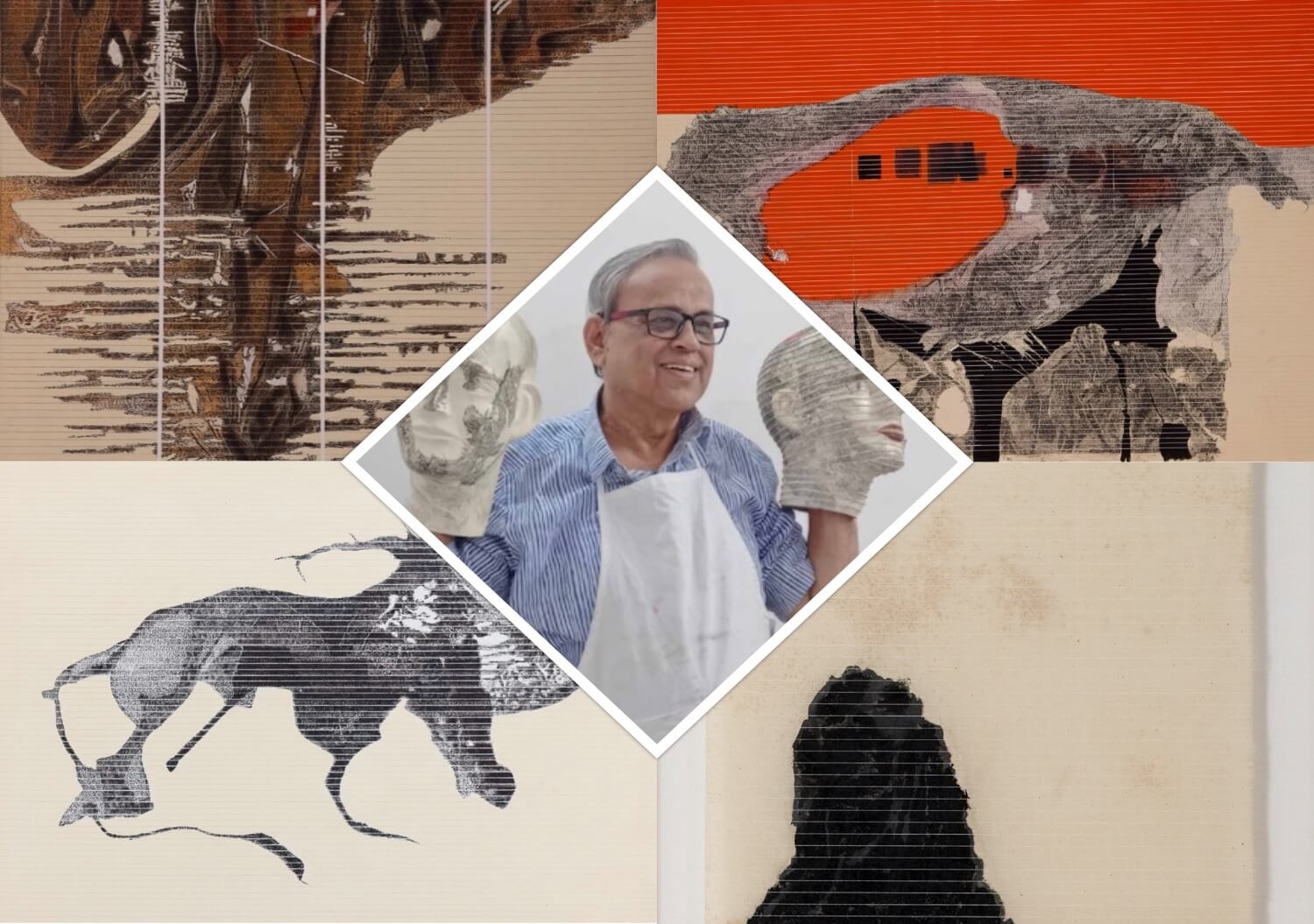
For Yusuf, the line is not merely a formal element of drawing; it is the fundamental unit through which the world becomes visible. Throughout his decades-long practice, the artist has returned to the line with a rare sense of persistence and inquiry, treating it as both subject and method. In his work, the line performs multiple roles: it measures space, records movement, constructs form, and holds within it the memory of a gesture. A line is not merely a modest mark; it is a living unit capable of endless transformation, a site where perception, abstraction, and lived experience converge.
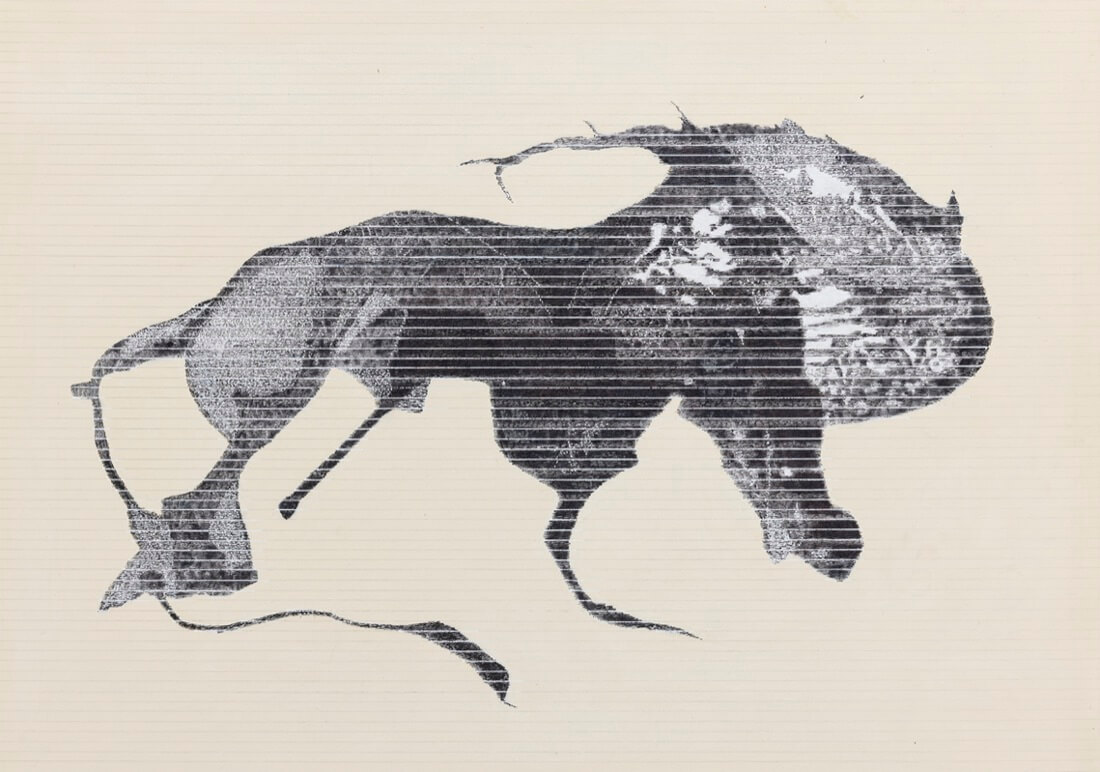
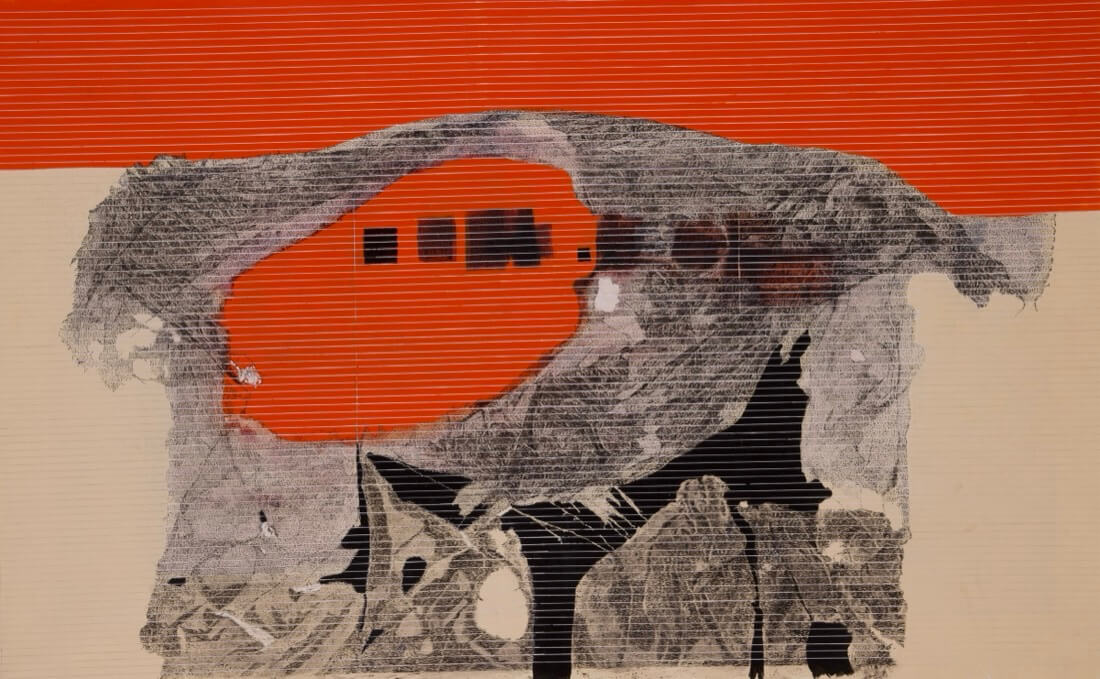
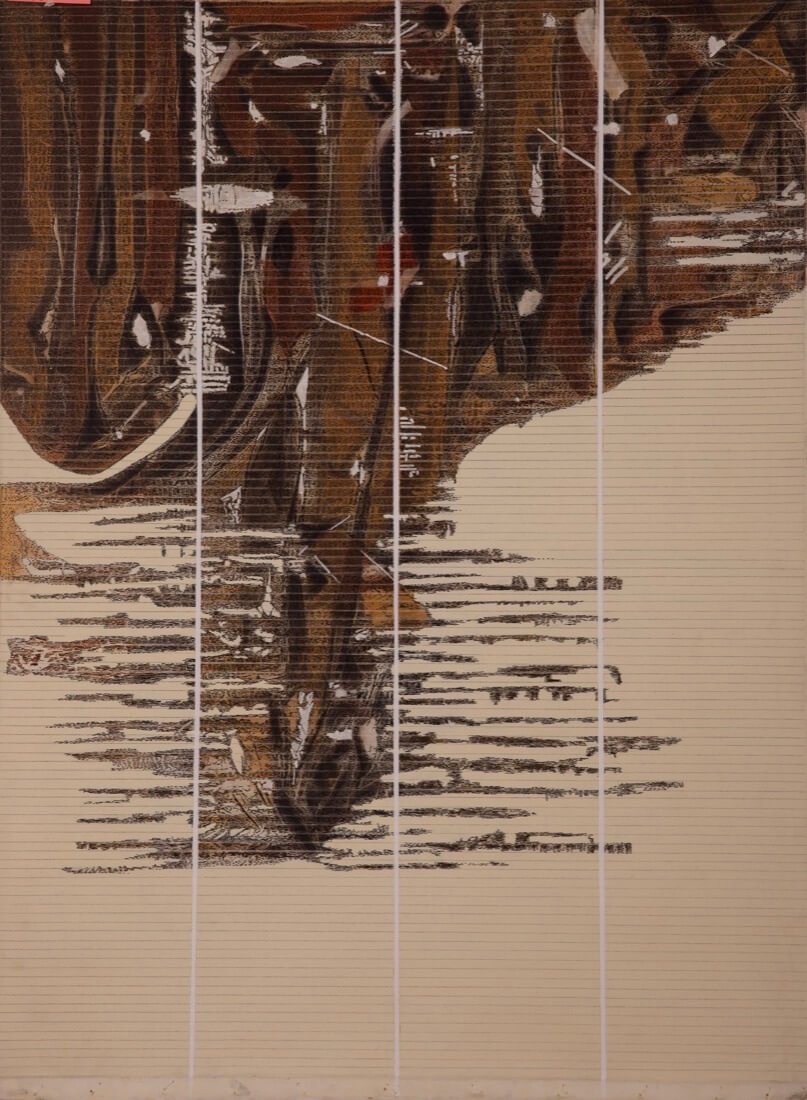
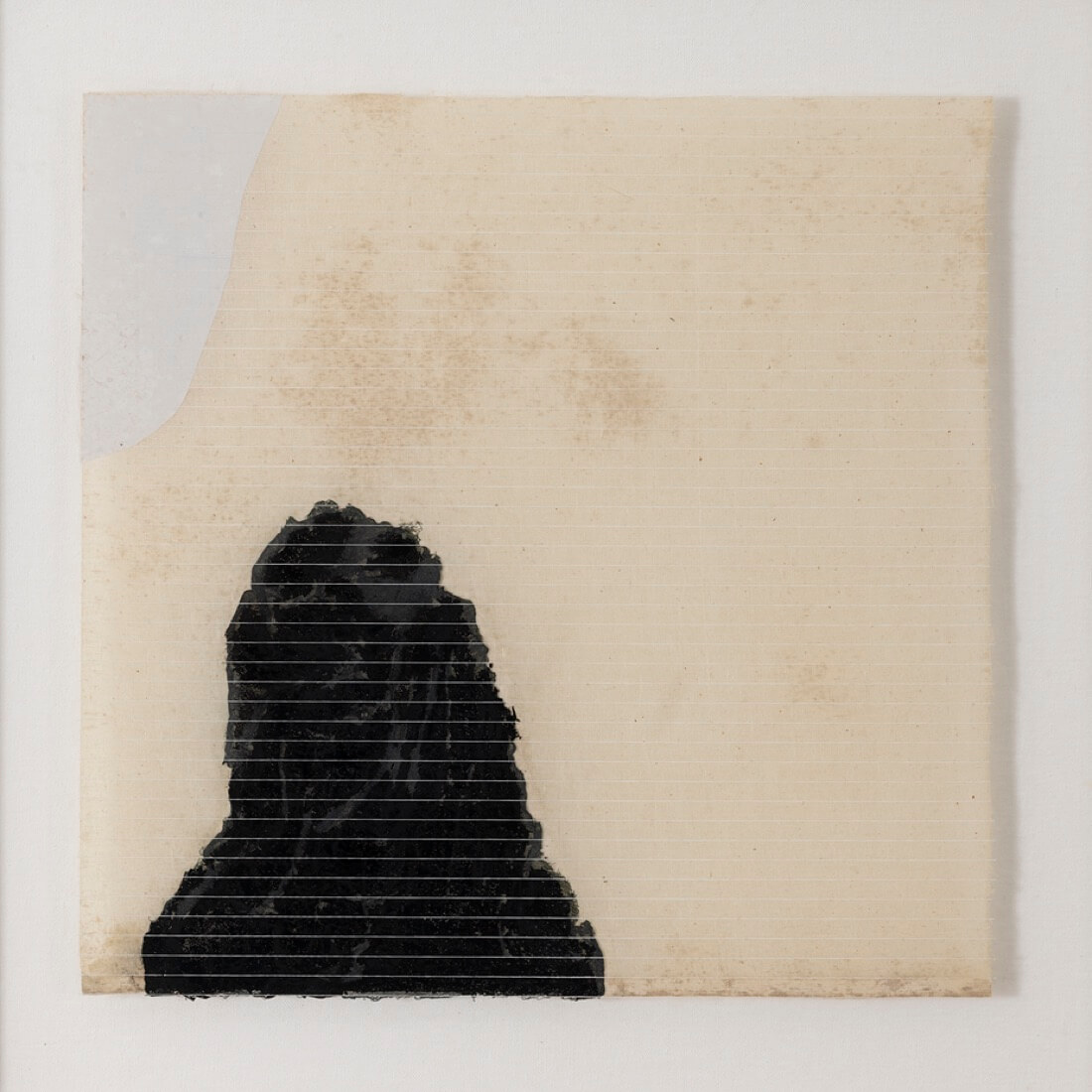
This sensitivity to the relationship between presence and absence shapes the visual structure of Yusuf’s paintings. These lines are not simply backgrounds; they establish the atmospheric field within which forms emerge. At times they create the sensation of motion, like waves of energy passing across the surface. At other moments they appear almost still, forming a quiet grid that stabilises the composition. The viewer’s perception oscillates between these two states – movement and stillness – making the paintings feel simultaneously dynamic and contemplative. Within these fields of lines, Yusuf introduces organic forms that seem to hover, dissolve, or crystallise within the pictorial space. These shapes often carry the suggestion of fragments drawn from nature – suggesting dunes shaped by wind, the intricate structures of living tissue, or fleeting silhouettes drawn from memory. Yet these references remain ambiguous. Yusuf does not depict nature directly; instead he evokes its processes; growth, erosion, sedimentation, or the gradual unfolding of time. In this way, the works operate within what might be described as a form of abstract realism – where the memory of natural phenomena persists, even as the imagery resists literal depiction.
Ultimately, Yusuf’s art is an ongoing conversation between control and freedom, discipline and flow, presence and absence. The line – simple, direct, and elemental – becomes a site of profound exploration, a philosophical proposition. It is a mark that records the act of seeing, thinking, and feeling whilst carrying the memory of movement. Through the quiet persistence of this gesture, Yusuf reminds us that even the most minimal element – a singular line – can contain an entire world of possibility, and yet, the meaning resides in the spaces in between.
Artist bio
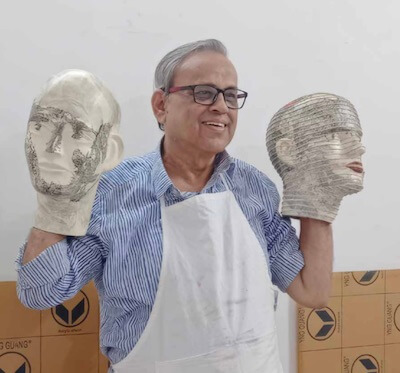 Born in Gwalior, Madhya Pradesh in 1952, Yusuf obtained his Diploma in both painting and in sculpture from Gwalior in the 70`s. In his contemporary abstracts, Yusuf generally sticks to sparse and sometimes-geometric forms spread across the surface. Occasionally he uses mixed media, but most of the time, Yusuf prefers to work with ink on rice paper. He has held 25 solo shows and participated in important group shows including the VII Triennale in New Delhi (1992) and the Bangladesh Biennale in Dhaka (1995). Yusuf has also taken part in several shows in Korea and Japan. He won the Raza Award in 1984 and the Lalit Kala Akademi National Award, New Delhi in 1987. Yusuf also received the National Fellowship from the Ministry of Culture, New Delhi. He is famous for his pioneering work in setting up the Graphic Workshop at Bharat Bhavan, Bhopal, where he now works as Deputy Director of Graphics. The artist has become an honorary member of many national and international institutions, and has also delivered a series of lectures across Japan.
Yusuf has won awards including the All India Exhibition MKKP, Raipur (1976-77); the International Asian European Biennial, Turkey (1980); the All India Drawing Exhibition, Chandigarh (1984-85); the Bharat Bhavan Biennial, Bhopal (1986); the National Award Lalit Kala Akademi, New Delhi (1987); the M.P. State Award (1997, 1980, 1981); the Raza Award, Bhopal (1994); the All India Kalidas Award, Ujjain; and the M.P. Youth & Social Welfare Award (1997). Yusuf lives and works in Bhopal.
Quotes:
“There is none better than Yusuf who understands the meaning and magic of the line.” – J Swaminathan
“When a point moves, a line is drawn” – Yusuf
“When an artist creates a shape using the line, it is the line that gives it a definite shape — ending all other possibilities.” – Yusuf