

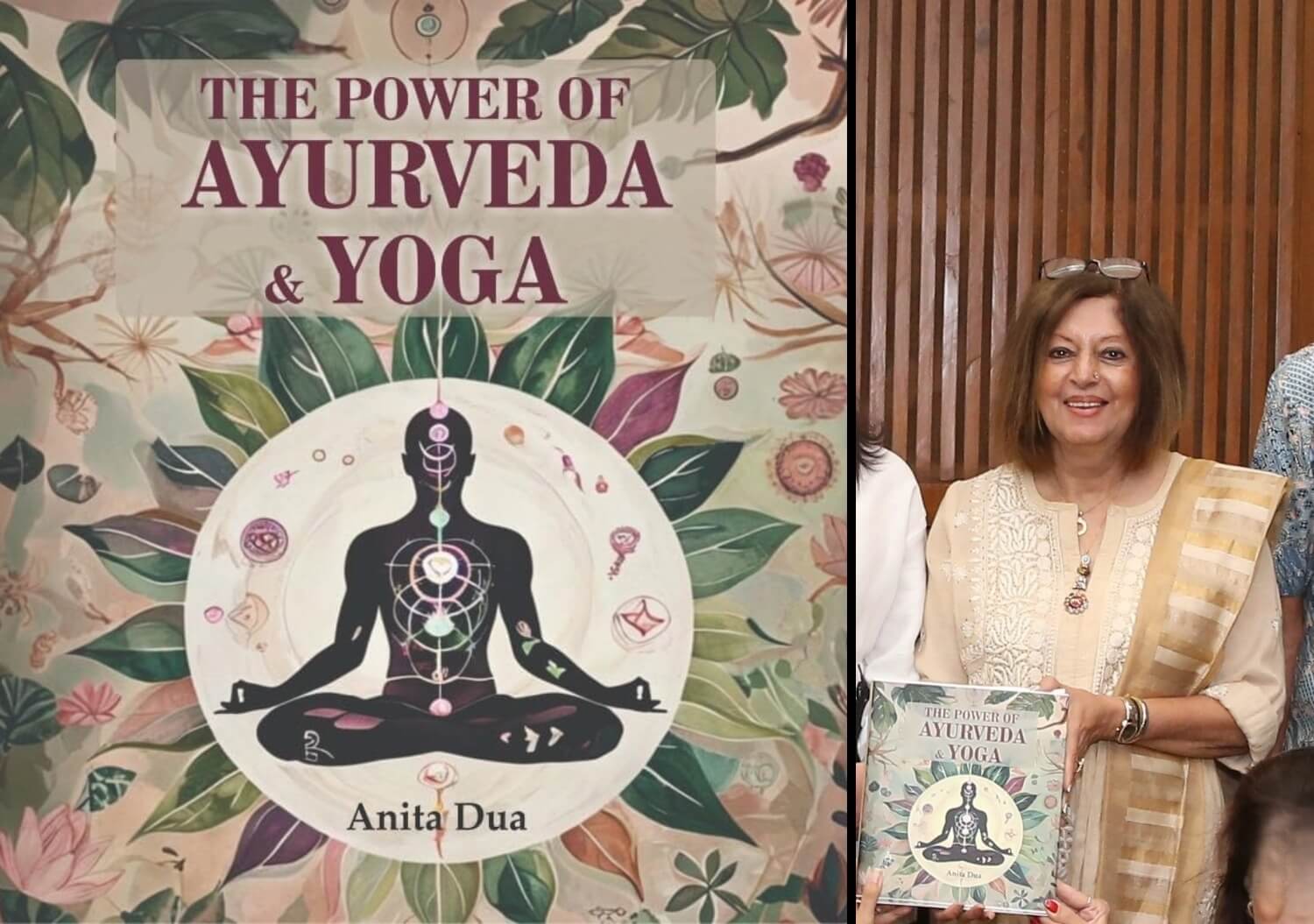
Pages: 191 Price: 995 Publisher: subhi Publication The Power of Ayurveda and Yoga: A Personal Journey to Balance and Wellness Imagine a life where health and happiness feel as natural as breathing—where your body, mind, and spirit are in harmony with the rhythms of nature. The Power of Ayurveda and Yoga takes you on a …
Pages: 191
Price: 995
Publisher: subhi Publication
The Power of Ayurveda and Yoga: A Personal Journey to Balance and Wellness
Imagine a life where health and happiness feel as natural as breathing—where your body, mind, and spirit are in harmony with the rhythms of nature. The Power of Ayurveda and Yoga takes you on a transformative journey to rediscover this state of balance, using the ancient wisdom of Ayurveda and Yoga.
The book begins by describing Ayurveda in simple terms as the science of longevity, defining disease as a state of being “not at ease.” It emphasizes that good health and happiness are our natural states, and disease results from a violation of our inherent nature. According to Ayurveda, disease arises from the “mistakes of the intellect”, where we disregard natural principles such as disciplined routines for sleep, meals, exercise, and aligning with nature’s rhythms.
A crucial aspect of Ayurveda discussed in the book is recognizing and understanding one’s constitution described as Doshas that each one of us is born with. Doshas or humors are explained as biological energies that govern our bodies. There are three Doshas, or Tridoshas: Vata (Air- airy and energetic) Pitta (Fire-fiery and driven)) Kapha (Earth-grounded and nurturing)

As explained in the book, Ayurveda views humans as microcosms of the larger universe, composed of the five elements: air, water, fire, space, and earth. The first step to restoring health is identifying your constitution and recognizing any imbalances in your Doshas. For instance, excess Pitta may manifest as inflammation, while imbalanced Vata could result in anxiety or restlessness.
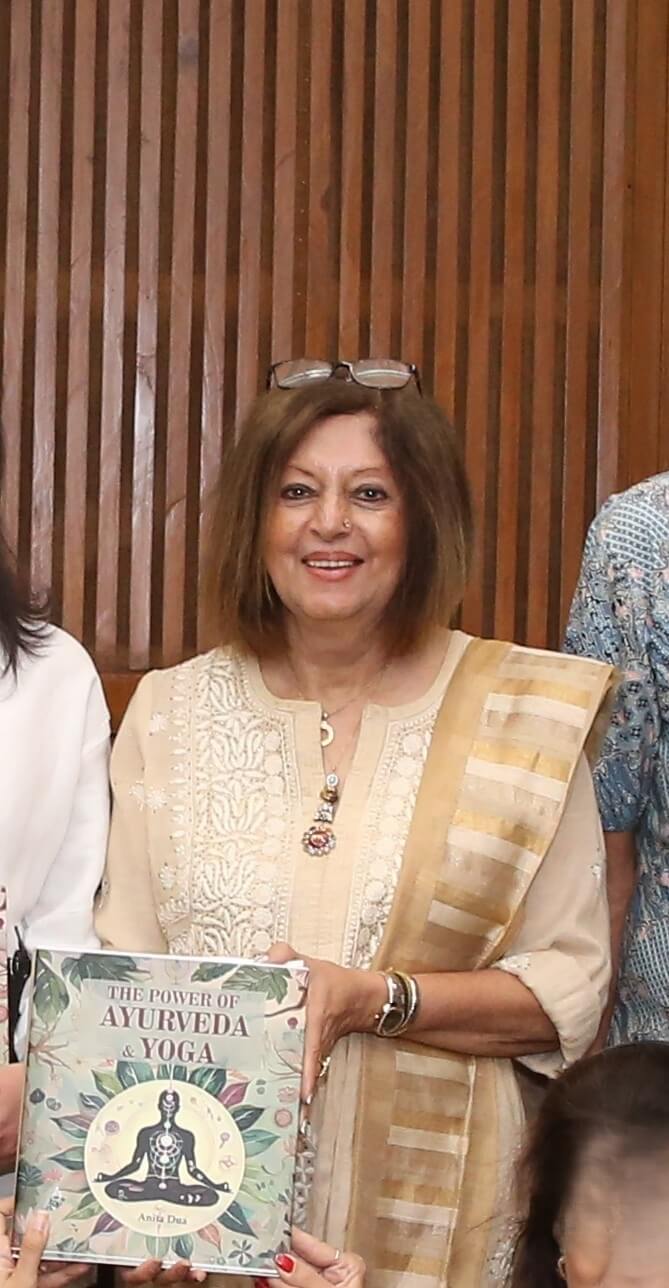
The book elaborates on methods to balance the Tridoshas through Ayuervedic purification techniques such as Panchkarma, oil massages and herbal medicines. The Author highlights Yoga Postures and Pranayam as a vital tool in Ayurveda for physical and mental balance. Yoga section provides step-by-step guidance on practicing Yogic Asanas and Pranayama techniques to restore balance to the Doshas and achieve a state of natural well-being. These practices are illustrated in detail, demonstrated by YogGuru Veer Singhji and the author Anita Dua.
About The Book
Power of Ayuerveda and Yoga :
Book Synopsis
In very simple terms the book introduces the Ayuervedic and Yogic concepts to the reader in progression. Both are centuries old ancient, spiritual discipline ,with well documented origins in Vedas, our ancient scriptures. After introducing Ayuerveda as a science of longevity – and defining disease as a condition where one is not at ease. The book explains how good health and happiness is our natural state of being. If discord , disease sets in that is because we have violated our nature, disease is actually termed in Ayuerveda as a mistake of our intellect where in we violate natural principles. For example, discipline in regulating our sleep time, meal times, meal portions, exercise time in accordance with the rhythm of the nature is of primary importance and should be adhered to at all times.
Of Primary importance is to determine and recognize your body humors, biological energies termed as Doshas in ayuerveda, that each of us is born with. Ayuerveda identifies three , trisoshas , namely Vata, Pitta and Kapha. Hence ,in Ayuerveda as explained in the Book thefirststep is to identify which type of constitution you are – Areyou Vata (air) dominated , Pitta (fire) or Kapha(earth)type. Classification of doshas are based on the premises that we are microorganism of macroorganism universe which is made up of five elements – Air, water, fire,space and ether.
Having determined your constitution as outlined in the Book, it proceeds to balance the tridoshas and restore good health through Yoga Postures. Yoga is one of the important aspect of ayuerveda in addition to other ayuervediac techniques forpurificatin and vatta, Kapha and Pitta balance restoration like Panchkarma, oil massages and Herbal preparations. Both Ayuerveda andYoga define disease as an imbalance, disease occurs because the doshas have been vitiated, there could be excess Pitta ( Fire) , Vatta (air) or Kapha(earth).
One of the importanttools to resotre your body to its natural state of well being and health by balancing tridosha is to practice yoga. The Book describes in detail the Yogic Asanas and Pranayam technique for balancing the three Doshas. The asanas have beendescribed step by step and systematically demonstrated by Yog Guru Veer Singh and the author, Anita Dua.
Thebook begins by describing Ayurveda as the science of longevity, defining disease as a state of being “not at ease.” It emphasizes that good health and happiness are our natural states, and any discord or disease results from a violation of our inherent nature. According to Ayurveda, disease arises from the “mistakes of the intellect”, where we disregard natural principles such as disciplined routines for sleep, meals, exercise, and aligning with nature’s rhythms.
A crucial aspect of Ayurveda discussed in the book is recognizing and understanding one’s Doshas—the biological energies that govern our bodies. There are three Doshas, or Tridoshas:
Vata (Air)
Pitta (Fire)
Kapha (Earth)
Each individual is born with a unique constitution dominated by one or more of these Doshas. As explained in the book, Ayurveda views humans as microcosms of the larger universe, composed of the five elements: air, water, fire, space, and ether. The first step to restoring health is identifying your constitution and recognizing any imbalances in your Doshas.

The book elaborates on methods to balance the Tridoshas through:
Yoga postures: A vital tool in Ayurveda for physical and mental balance.
Purification techniques: Such as Panchakarma, oil massages, and herbal remedies.
Both Ayurveda and Yoga view disease as an imbalance of the Doshas. For instance, excess Pitta may manifest as inflammation, while imbalanced Vata could result in anxiety or restlessness.
The book provides step-by-step guidance on practicing Yogic Asanas and Pranayama techniques to restore balance to the Doshas and achieve a state of natural well-being. These practices are illustrated in detail, offering readers a comprehensive roadmap to better health and harmony through Ayurveda and Yoga.
Anita Dua is a Yoga expert, speaker and author, with over three decades of experience practicing and teaching Yoga. A true believer in the healing power of Yoga, she believes Ayurveda and Yoga are intrinsically connected disciplines that have shaped wellness philosophies for centuries. With her knowledge in these areas, Anita Dua emphasizes the importance of understanding individual constitutions (Doshas) and restoring balance through holistic YOGA practices. By linking Ayurvedic principles with Yogic postures and breathing techniques, she encourages harmony of the mind, body, and spirit, highlighting their combined potential to enhance well-being.
Anita is a disciple of Yogacharya B.K.S Iyenger, under whom she trained in Pune at the Ramamani Iyengar Memorial Institute in the early nineties. Her training is grounded in the precise alignment and therapeutic applications of Iyengar Yoga, making her an authority in using asanas (postures) and pranayama (breathing techniques) to promote health and manage chronic conditions. She has co-authored ‘Illuminating Indian Classical Dances Through Yoga’ with internationally renowned Kathak Guru, Padma Shri Shovana Narayan, a seminal work exploring the intersection of Yoga and Indian classical dance.
Anita has conducted workshops at prestigious institutions and has also collaborated on wellness initiatives for corporate events and contributed articles on nutrition and wellness to publications.
Her academic credentials include a postgraduate degree in Economics, and her professional experience spans teaching at elite educational institutions like Modern School and Delhi Public School, as well as roles in international development organizations, including CARE and Louis Berger. As a dedicated social worker, she runs the Subhash Dua Memorial Trust, a charitable familytrust established in 1972. Her ongoing work underscores the scientific application of Yoga and Ayurveda as powerful tools for preventive and restorative healthcare.