
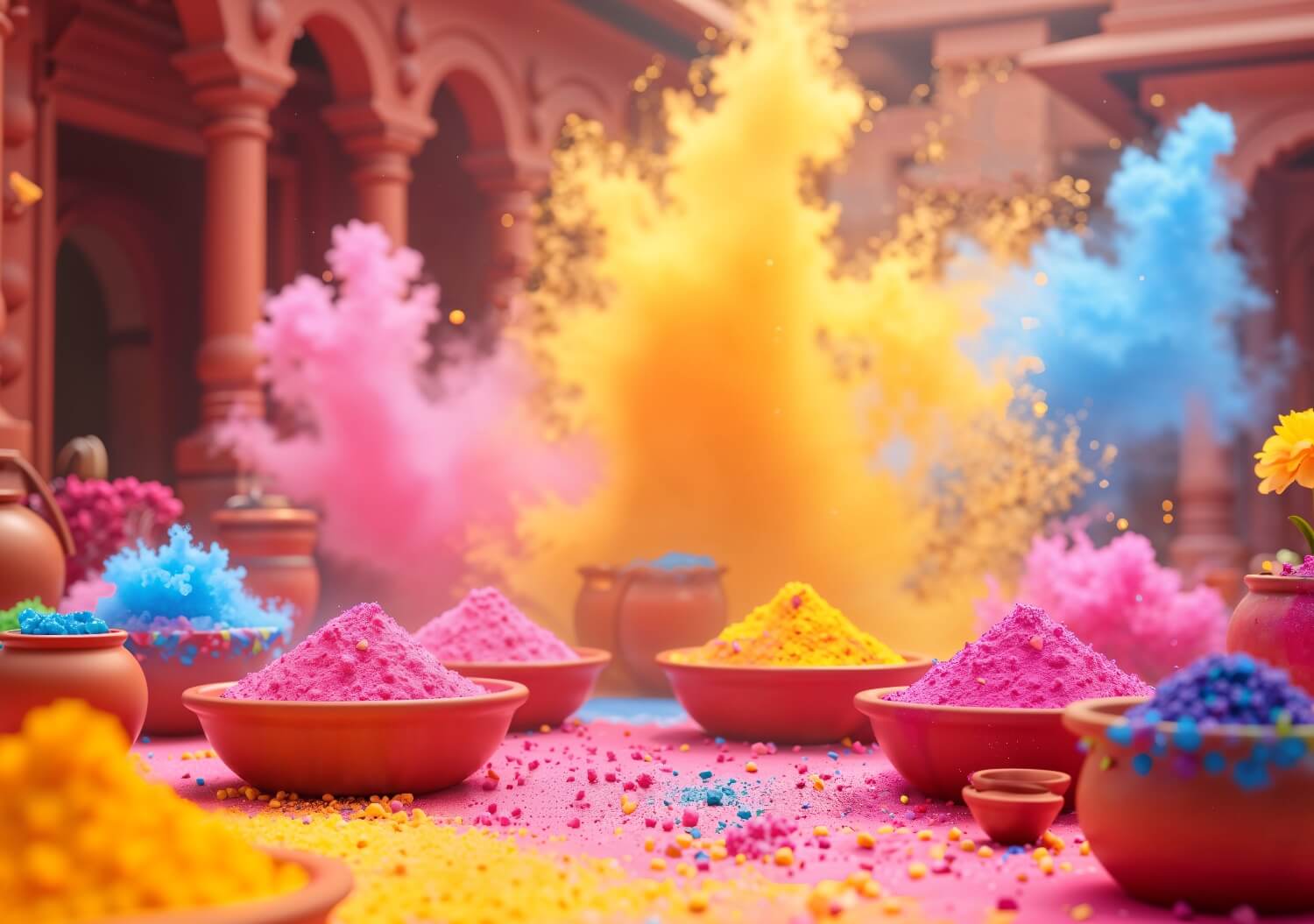
Holi is beautiful chaos. It is colour in the air, laughter in the streets, music that is too loud, and that one friend who always throws colour straight at your face before you are ready. It is joy. It is nostalgia. It is childhood. And every year, a few days later, it is irritated skin, …
Holi is beautiful chaos. It is colour in the air, laughter in the streets, music that is too loud, and that one friend who always throws colour straight at your face before you are ready.
It is joy. It is nostalgia. It is childhood. And every year, a few days later, it is irritated skin, sudden breakouts, stubborn staining, and that tight, uncomfortable feeling that no moisturiser seems to fix.
As someone who works with skin every single day, I can tell you this. Holi itself is not the problem. How we prepare for it, and how we treat our skin afterwards, is what makes all the difference.
Let’s talk about how to enjoy the festival fully without punishing your skin in the process:
1. Your Skin Is Not Just a Surface
During Holi, we often treat skin like a canvas. Something to decorate, colour, scrub, and clean aggressively. But skin is not a canvas. It is a living barrier.
That barrier protects you from pollution, bacteria, ultraviolet radiation, and irritation. When it is strong, your skin looks calm, balanced, and resilient. When it is compromised, everything starts reacting. Redness. Breakouts. Pigmentation. Sensitivity.
Modern Holi colours are not always gentle. Many contain synthetic dyes, talc, alkaline substances, and sometimes traces of heavy metals. Add sun exposure, sweat, friction, and repeated washing, and your barrier is under real stress.
Indian skin, particularly deeper tones, is more prone to post-inflammatory pigmentation. When irritation occurs, it does not simply disappear. It often leaves a mark.
2. A Few Days Before Holi: Do Less, Not More
The biggest mistake I see is people exfoliating right before Holi. Please do not.
The week before Holi is not the time for chemical peels, retinol, scrubs, or trying a new brightening treatment. If anything, simplify your routine.
Focus on strengthening your skin barrier. Use a moisturiser with ceramides, cholesterol, fatty acids, panthenol, or soothing ingredients. Think nourishment, not correction.
If your skin is calm and well hydrated, colour is less likely to cling aggressively and less likely to irritate.
There is also something deeply Indian about preparing for Holi.
Long before barrier creams and dermatology advice, there was coconut oil.
Applying a generous layer of coconut oil on the face, arms and neck before stepping out was not superstition. It was practical wisdom. Oil creates a physical film over the skin. It reduces how strongly colour binds. It makes removal easier later.
Some traditional households even used karanja oil, valued in Ayurveda for its protective and antimicrobial properties. While these oils are not substitutes for sunscreen, they can act as a nourishing protective layer beneath your SPF.
In many ways, this ritual of oiling before Holi reminds us that skin protection did not begin in a laboratory. It began at home.
But oil is not sunscreen.
Holi is usually played outdoors, often under intense sun. Use a broad-spectrum SPF 50. Reapply if you are out for long. Sun exposure combined with inflammation is a fast track to pigmentation, especially in Indian skin tones.
3. After Holi: This Is Where Most Damage Happens
You come home. You look in the mirror. You panic. The instinct is to scrub everything off immediately. This is where I want you to pause.
Harsh scrubbing, loofahs, abrasive soaps, lemon juice, baking soda. These are far more damaging than the colour itself. Over-scrubbing creates micro-inflammation. In Indian skin, inflammation often translates to pigmentation later. Instead, be gentle.
Start with an oil-based cleanser. It helps dissolve pigments without friction. Follow with a mild cleanser. Use your hands, not a scrub. Pat your skin dry instead of rubbing aggressively with a towel.
Some colour may remain after the first wash. That is completely fine. It will fade. Your barrier health matters more than immediate perfection.
Apply a generous amount of moisturiser right after cleansing. If your skin feels warm, tight, or slightly irritated, use calming ingredients such as panthenol, centella, or ceramide-rich creams.
Your goal is recovery, not retaliation.
4. What About Breakouts?
It is common to see a few pimples appear three to five days after Holi. Colours can clog pores. Sweat and oil get trapped. The skin microbiome gets temporarily disrupted.
Do not panic and overload your skin with actives.
A simple salicylic acid cleanser used a few times a week is enough. Keep the rest of your routine basic and hydrating. Avoid combining multiple exfoliants at once. Allow your skin to settle.
Most post-Holi flare-ups are temporary, unless we over-treat them. Celebrate Fully. Repair Gently.
Holi is meant to be messy. It is meant to be joyful and slightly chaotic. You do not need to play cautiously. You just need to play intelligently.
Strengthen your skin before. Protect it during. Clean it gently after. Repair it patiently.
The colours will wash away. If you treat your skin with respect, the glow will stay.
And that, perhaps, is the most beautiful way to celebrate Holi. With laughter in your heart and resilience in your skin.
Oscar Pereira is the founder of CodeSkin, he’s a skincare formulator and educator with over two decades of experience in professional skincare. He works closely with dermatologists and aestheticians across India, focusing on barrier-led, science-based approaches tailored to Indian skin and climate.