
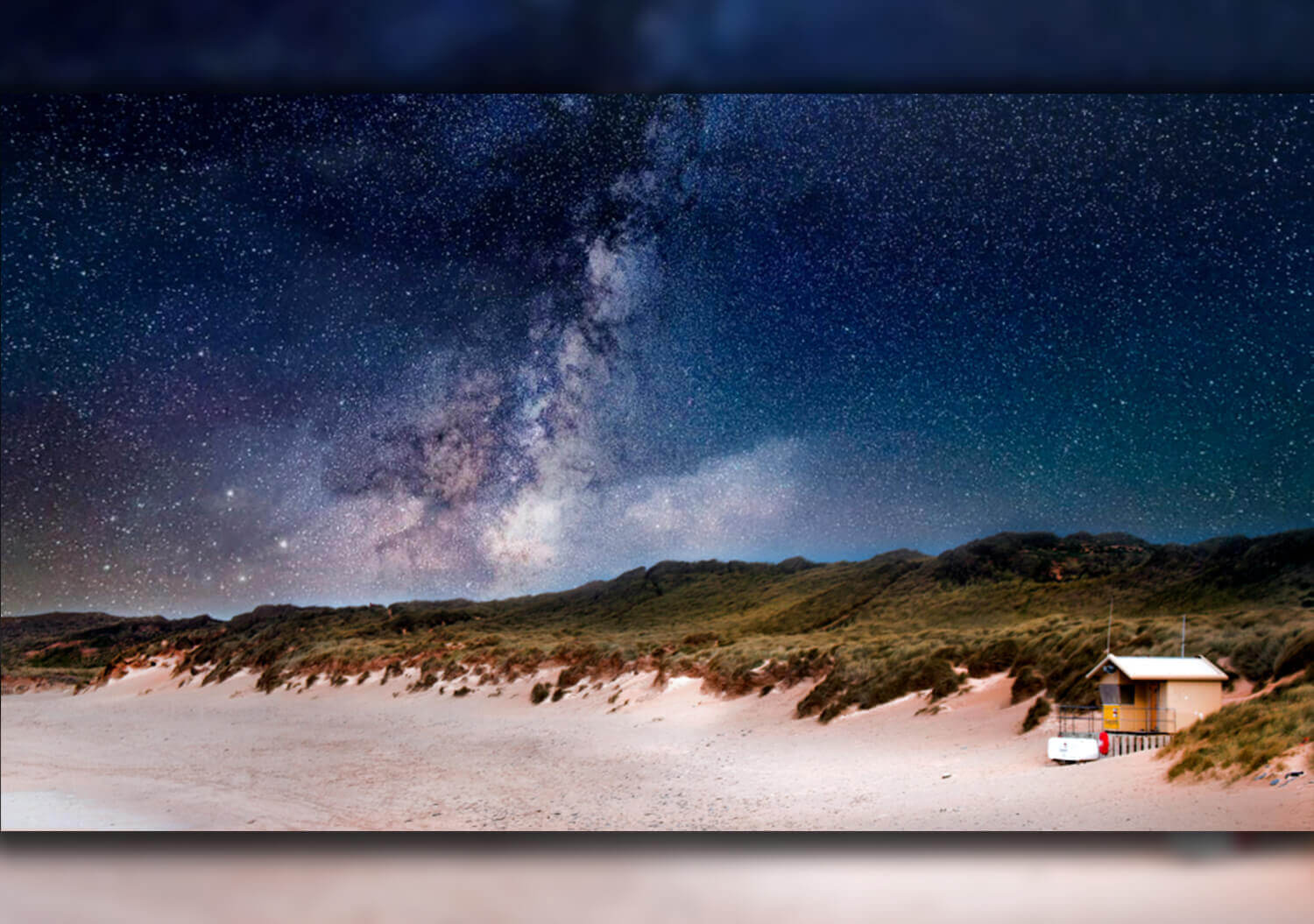
Researchers from Instituto de Astrofísica de Canarias, Spain, conducted a study which was added to the journal ‘Nature Astronomy’. Based on the data from the Gaia space observatory, the Milky Way, home to our sun and billion stars, merged with another small galaxy in a colossal cosmic collision about ten billion years ago. During the infancy …
Researchers from Instituto de Astrofísica de Canarias, Spain, conducted a study which was added to the journal ‘Nature Astronomy’. Based on the data from the Gaia space observatory, the Milky Way, home to our sun and billion stars, merged with another small galaxy in a colossal cosmic collision about ten billion years ago.
During the infancy stage of the universe 13 billion years back, stars were formed quickly, leading to the creation of the first dwarf galaxy. Dwarf galaxies contain between 100 million and several billion stars, while the Milky Way has between 200 billion and 400 billion stars.
Flawless. Gorgeous. Stellar 🌌
You probably think this tweet is about you. Well, it could be. In this @NASAHubble image, we see a spiral galaxy with arms that widen as they whirl outward from its bright core, slowly fading into the emptiness of space: https://t.co/meyTI1Hwvk pic.twitter.com/Or7vH1XOaD
— NASA (@NASA) July 23, 2019
To decode the timeline of the Milky Way, researchers are using the Gaia data put together in the galaxy’s past. They used the space telescope to go back into the early stages of the formation, taking exact measurements of its stars to understand the distance, brightness and position.
The stars were formed in two systems: the Milky Way and the Gaia-Enceladus dwarf galaxy. Previously, the Milky Way was four times more massive and contained more metal. But, ten billion years ago, these two galaxies collided and their stars were thrown into motion, forming a halo around the Milky Way that exists today.
Happy 20th launch-iversary, @chandraxray! The space telescope blasted off to space on the Space Shuttle Columbia #OTD in 1999. In the two decades that have passed, its X-ray eyes have changed our view of the cosmos: https://t.co/bd1CmEyfFu pic.twitter.com/tGh1tsW3e1
— NASA (@NASA) July 23, 2019
It has a galactic halo consisting of two components, blue stars and red stars. On measurement, they found that the stars are remnants of a dwarf galaxy called Gaia-Enceladus. This chaotic merger led to violent bursts of star formation for four billion years. Till date, the galaxy’s gas has created a thin disc and stars are still formed here.
Now, thanks to Gaia space observatory data, astronomers have a clearer and complete picture of our galaxy’s past.
Join the Club
Like this story? You’ll love our monthly newsletter.

Twinkle Sethia
Photography is hobby. Food is love. Travelling is passion. An impulsive writer and compulsive procrastinator. Fuels daily grind with coffee and distractions.