
Arcause Spotlight 3.0 | Bengaluru edition brought together a diverse and interdisciplinary gathering of participants for a day of immersive learning, conversations, and on-ground engagement around the themes of accessibility and inclusive design, everyday urban life, and heritage in the city. The event saw the participation of architecture and design students, architects, urban practitioners, faculty …
Arcause Spotlight 3.0 | Bengaluru edition brought together a diverse and interdisciplinary gathering of participants for a day of immersive learning, conversations, and on-ground engagement around the themes of accessibility and inclusive design, everyday urban life, and heritage in the city. The event saw the participation of architecture and design students, architects, urban practitioners, faculty members, researchers, and professionals from various industries, creating a dynamic environment for dialogue and exchange across disciplines and experiences.
Activity 1 | Accessibility and Inclusive Design at Museum of Art and Photography, Bengaluru
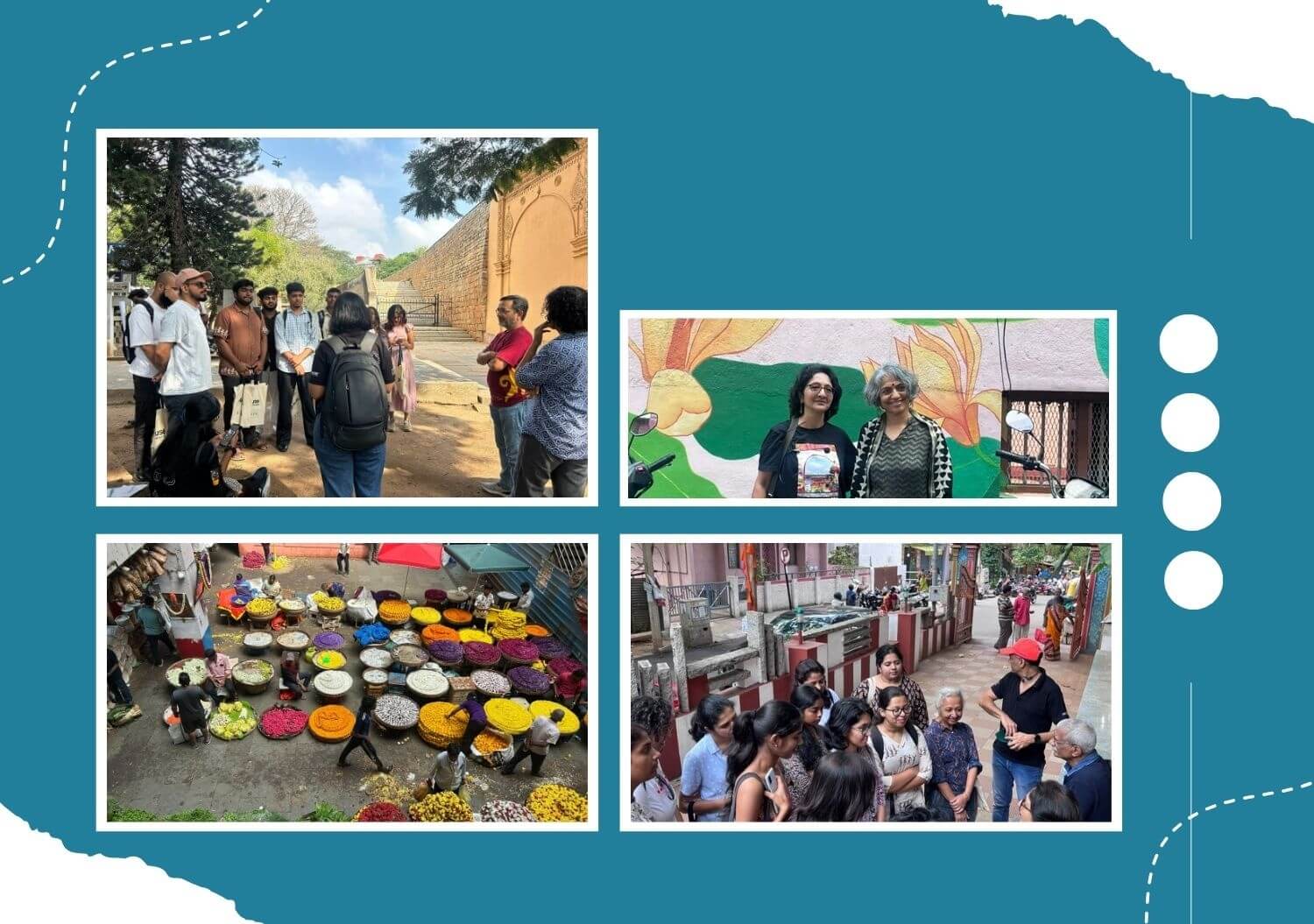
One of the key activities of the event was the Accessibility and Inclusive Design Exercise conducted across multiple public and cultural spaces in Bengaluru, including the Museum of Art & Photography (MAP), Cubbon Park, and Cubbon Park Metro Station. Participants were divided into groups and engaged in a structured accessibility assessment exercise using specially designed observation and metric cards developed by Team Ethos.
The activity encouraged participants to critically examine how different users navigate and experience public spaces. Observations ranged from accessible entrances, circulation systems, seating and rest zones, tactile pathways, and signage to more experiential aspects such as sensory comfort, inclusivity of interactions, and ease of independent movement. The exercise pushed participants to slow down and observe details that often go unnoticed in everyday use of the city.
The reflection and discussion session was conducted at MAP and facilitated by Rama Krishnamachari from DEOC (Diversity and Equal Opportunity Centre). The session became a meaningful and interactive exchange where participants reflected on their observations, discussed the difference between technical accessibility and lived accessibility, and engaged with broader conversations around inclusion, empathy, and public space.
Activity 2 | Walkable Malleswaram
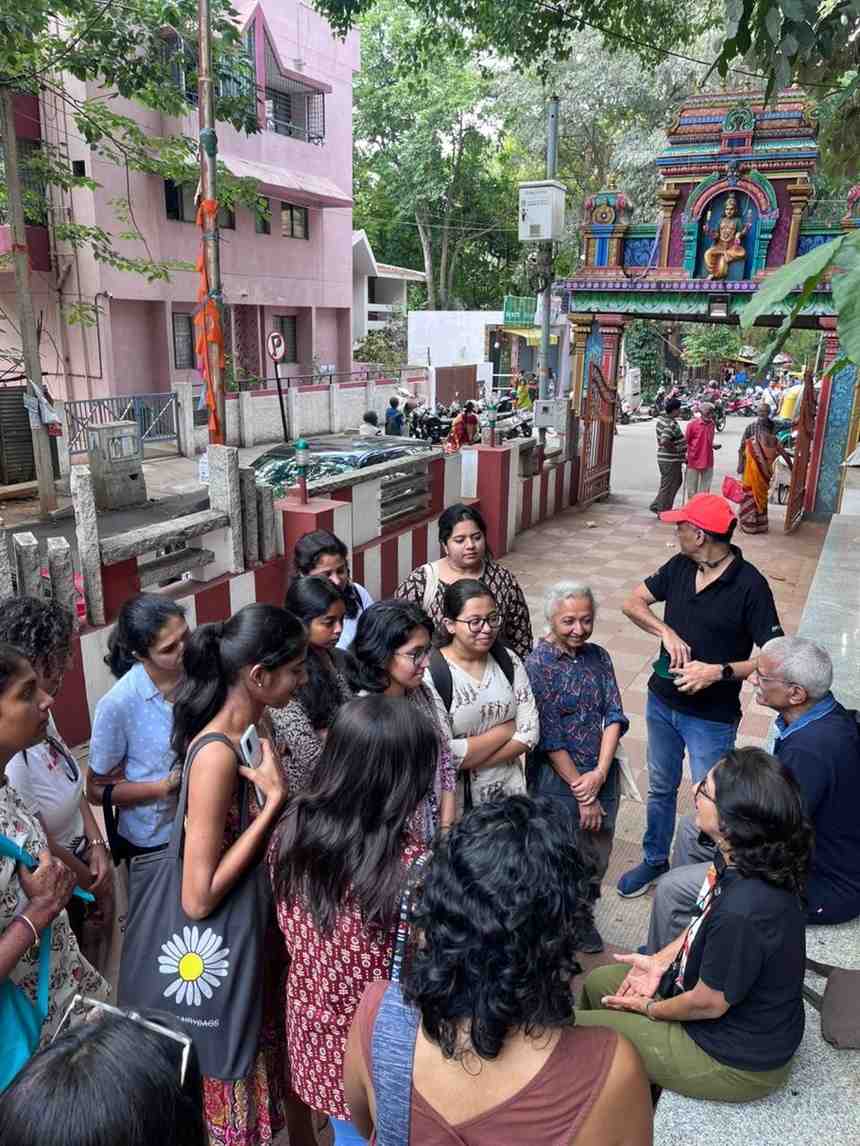
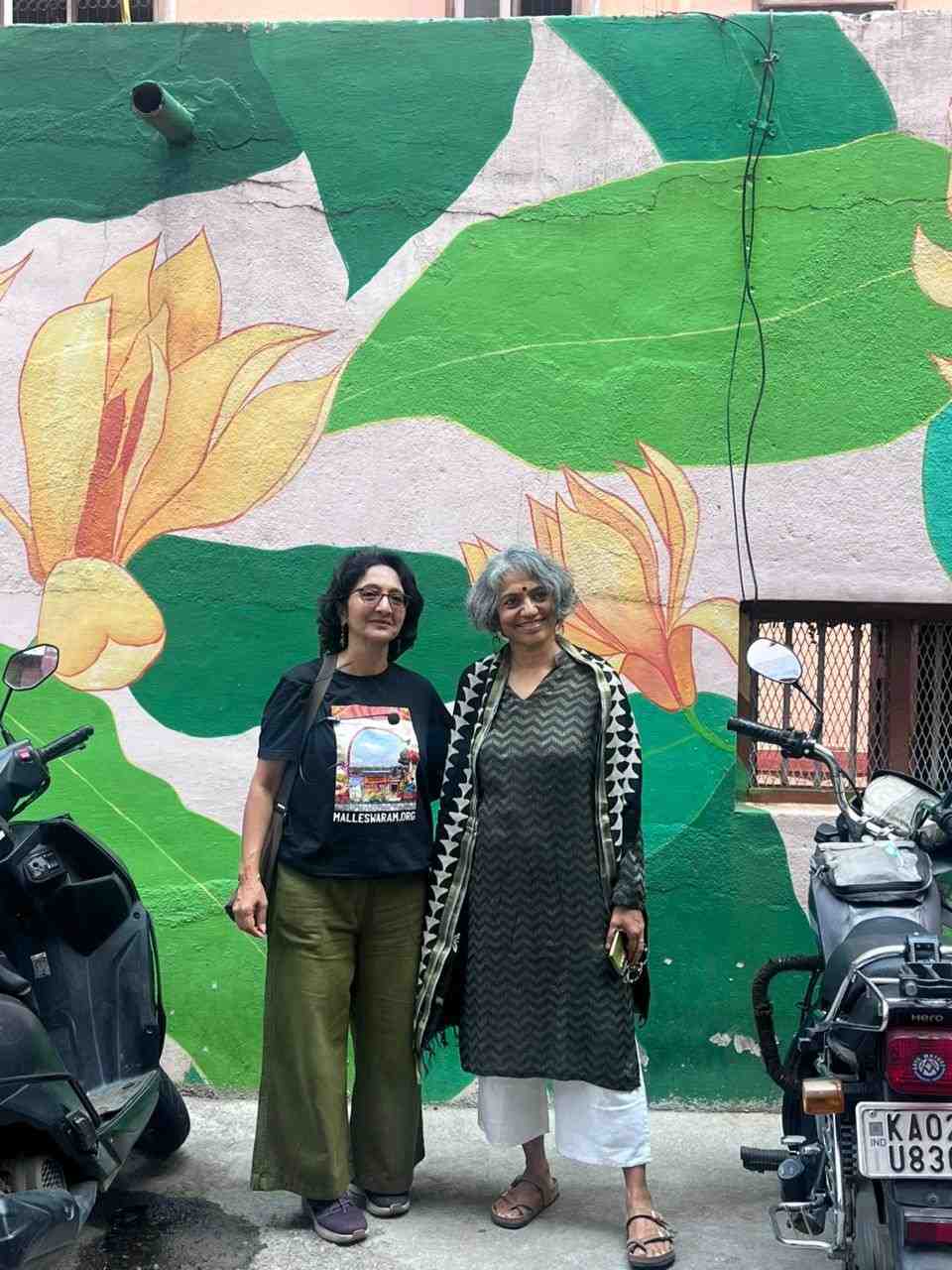
The Walkable Malleswaram session at Arcause Spotlight 3.0 | Bengaluru Edition began with an introduction to the heritage, evolution, and community life of Malleswaram, setting the context for understanding neighbourhoods through the lens of walkability and everyday urban experiences. The facilitator shared her engagement with local initiatives advocating for safer and more accessible footpaths, which led to the Walkable Malleswaram project, a citizen-led effort focused on creating pedestrian-friendly streets through participatory urban practices.
A key focus of the session explored the transformation of conservancy service lanes, historically associated with manual scavenging, into inclusive pedestrian routes. Participants learned about the process behind the initiative, including implementation strategies, stakeholder negotiations, challenges faced, and the social and spatial impact of reclaiming underutilized urban spaces. The discussion encouraged students to reflect on accessibility, community ownership, and the role of design in shaping equitable neighbourhoods.
The session concluded with a guided neighbourhood walk and a stakeholder roleplay exercise, where participants observed how different users, vendors, elderly citizens, children, workers, and pedestrians, experience the same street differently. Students then assumed various stakeholder roles to analyse conflicts and priorities, presenting their insights through memory maps, graphical representations, stories, and small design proposals. The activity transformed observation into active learning, fostering empathy, critical thinking, and a deeper understanding of participatory urban design.
Activity 3 | Heritage, Memory & Urban Continuity walk with INTACH, Bengaluru
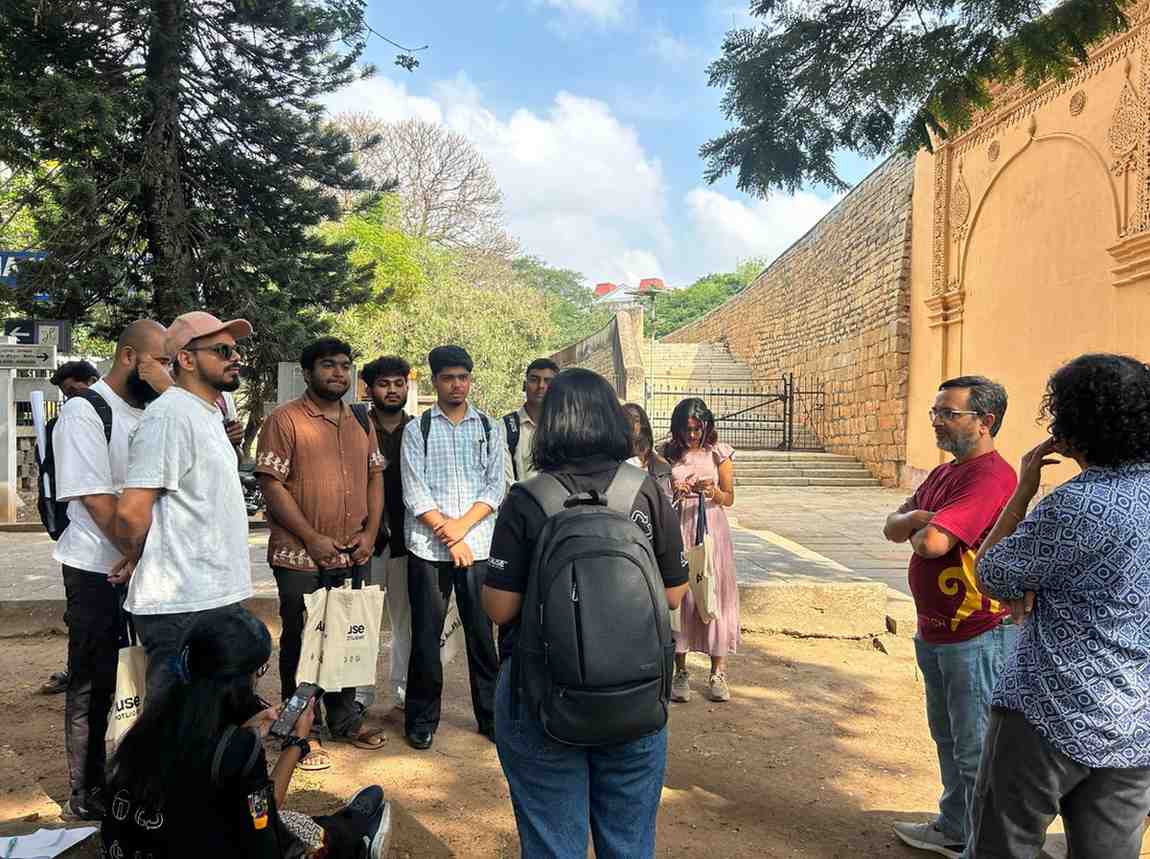
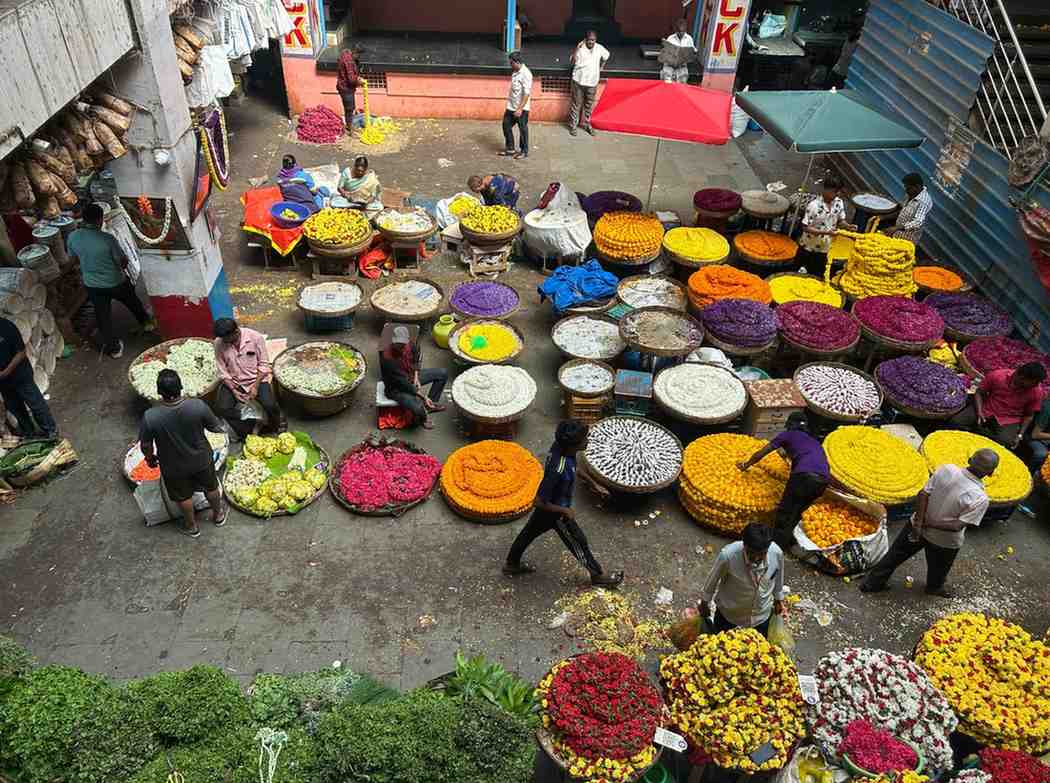
The walk began with a stroll through K R Market, where we observed the complexities of development in a space that has existed for eons. The facilitators noted that Bengaluru is significantly older than Hyderabad or Mumbai, and the market has thrived throughout that history.
What was particularly striking was how people have found ways to thrive amidst shifting urban developments. We observed colonial remnants, which showed how the market was originally segregated into a compound with grand entrances, contrasted against a 1980s central building. Despite being designed by a prominent firm, this newer structure sits mostly abandoned, while the market continues to flourish around it.
This juxtaposition prompted participants to ask: Has formal design succeeded or failed as we evolve?
The walk raised several critical questions regarding the future of urban spaces:
- How do we incorporate heritage into everyday use? Do we bring people in or keep them out?
- What does it mean in the larger scheme of things to transform history into “living heritage”?
- What happens to the surrounding buildings when a site is repurposed?
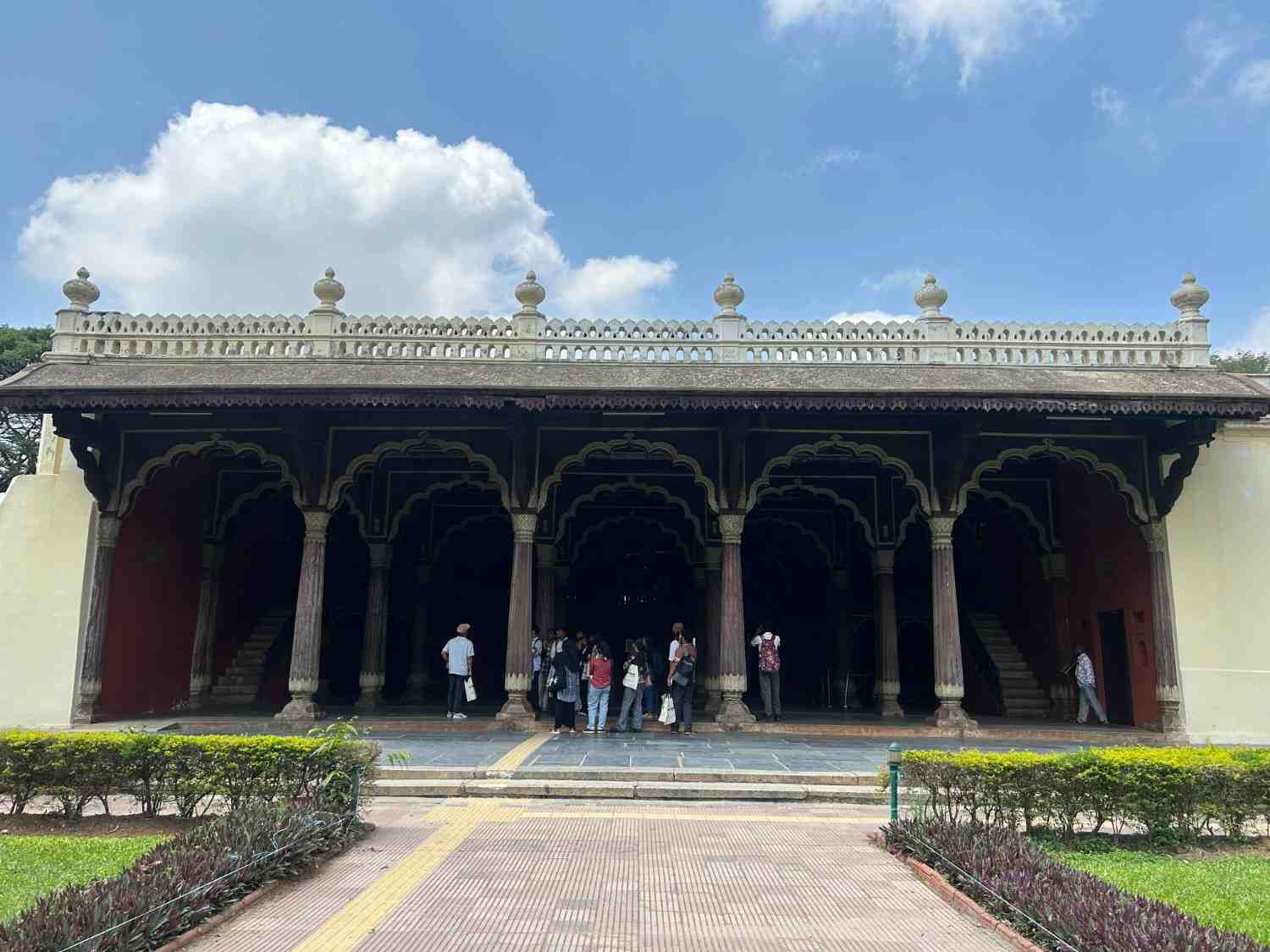
The journey concluded at a historic armoury. Once misused by the community as a urinal, it now stands as an empty space awaiting a decision on how it can be integrated into daily life. This site brought complexities of religion and community needs to the forefront. To wrap up, participants engaged in an activity to brainstorm how this armoury could be adaptively reused. They left with a set of deeply relevant questions that will surely reflect in their future projects.