
The new age Indian woman combines tradition and new age fashion together and makes it her own. Many designers balance culture and fashionable styles together to make an everlasting impression on the world. The timeless kalamkari is usually done on organic fabrics like cotton or silk and they never go out of style. Like we …
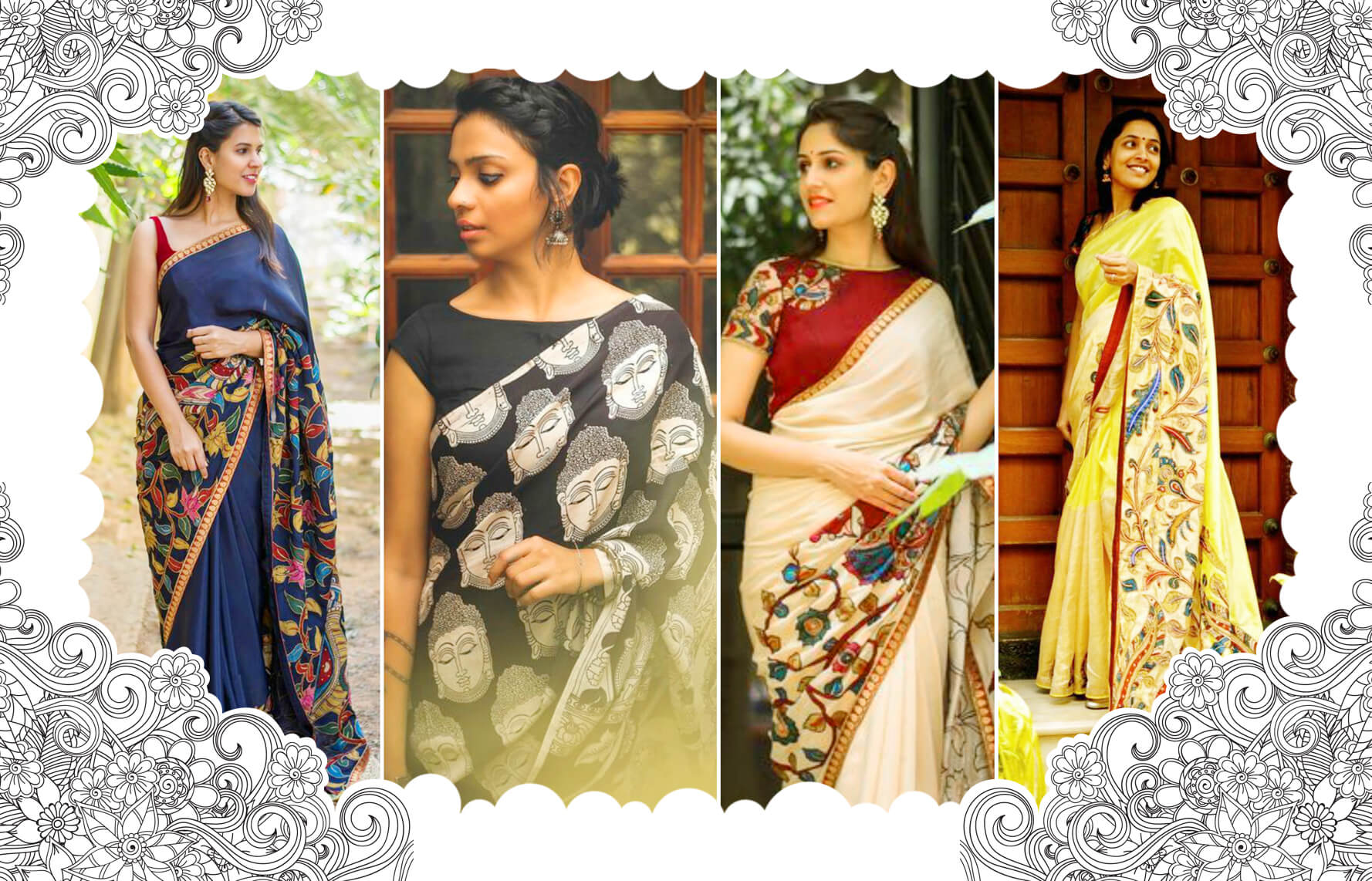
The new age Indian woman combines tradition and new age fashion together and makes it her own. Many designers balance culture and fashionable styles together to make an everlasting impression on the world. The timeless kalamkari is usually done on organic fabrics like cotton or silk and they never go out of style. Like we always say, a blouse can change the whole concept of a sari and what better way than to add a statement with a kalamkari blouse? Kalamkari blouses are in trend right now. Think if there has ever been a day in the recent past that you have not seen those cute Buddha heads or the goddess face on blouses or kurtas or pants?
https://www.instagram.com/p/BooU-9IA4uC/?hl=en&tagged=kalamkari
https://www.instagram.com/p/BnaUvVxBVrG/?hl=en&tagged=kalamkari
The History
The Kalamkari art is a type of hand-painted or block-printed cotton textile, produced in Iran and India. Through the ages, it has been practised by many families in Andhra Pradesh and Tamil Nadu. It is an ancient style of hand painting done on cotton or silk fabric with a tamarind pen, using natural dyes. The word Kalamkari is derived from a Persian word where ‘kalam‘means pen and ‘Kari’ refers to craftsmanship. This art involves 23 tedious steps of dying, bleaching, hand painting, block printing, starching, cleaning and more. The Indian art is highly appreciated in the fashion world and for its breathtaking beauty and versatility. Be it handloom, kanjeevaram, cotton or a georgette sari, a kalamkari blouse blends well with all of them. The collection comprises of easy to wear silhouettes, draped pants with crop tops and jackets, layered jackets with kurta and pants, floor-length maxis and lots more. In north India, Kalamkari today is practised in Bagru, Sanganer, Palampur and Faizabad.
https://www.instagram.com/p/Boof9eKlORV/?hl=en&tagged=kalamkari
The Making
The process of making Kalamkari involves 23 steps. From the natural process of bleaching the fabric, softening it, sun drying, preparing natural dyes, hand painting, to the processes of air drying and washing, the entire procedure is a process which requires precision and an eye for detailing. Incorporating minute details, the kalamkars use ‘tamarind twig’ as a pen, to sketch beautiful motifs of Krishna Raas-Leela, Indian god and goddesses like Parvati, Vishnu, Shri Jagannath; designs of the peacock, lotus; and scenes from the Hindu epics like Mahabharata and Ramayana.
https://www.instagram.com/p/BopFdbfhhXg/?hl=en&tagged=kalamkari
The design aesthetic is elegant yet stylish, with heavy use of silks. The collection breathes in a new lease of life into any woman’s wardrobe. Kalamkari art primarily uses earthy colours like indigo, mustard, rust, black and green. Natural dyes used to paint colours in kalamkari art is extracted for natural sources with no use of chemicals and artificial matter. This kalamkari collection has pieces that are easy to style, yet unique enough to make all heads turn at a party.
Types of Kalamkari
There are two identifiable styles of kalamkari art in India – Srikalahasti style and Machilipatnam style. In the Machilipatnam style of kalamkari, motifs are essentially printed with hand-carved traditional blocks with intricate detailing painted by hands. On the other hand, Srikalahasti style of painting draws inspiration from the Hindu mythology describing scenes from the epics and folklore. This style holds a strong religious connect because of its origin in the temples.
https://www.instagram.com/p/BoqL3BKHGnF/?hl=en&tagged=kalamkari
https://www.instagram.com/p/BoqJQAelG7K/?hl=en&tagged=kalamkari
Present Day Scene
From the first representation of kalamkari art as religious paintings, depicting Indian gods and goddesses to the process of gaining recognition during the reign of Mughal dynasty, and till today when Andhra Pradesh is the largest producer of kalamkari; this art has come a long way.
In the past decade, due to the tedious technique involved in its making, kalamkari art was losing its shine. The appearance of high on technology machine looms and printed textiles also escalated the extinction process of this art. But it was the fashion designers of the Indian fashion industry who came together to revive this art and helped artisans working this art in the state of Andhra Pradesh.
Join the Club
Like this story? You’ll love our monthly newsletter.

BO Correspondent
Boldoutline magazine is one of India’s most promising luxury lifestyle magazine. With a splash of choiciest articles, fun read, snappy views garnished with stunning photo spreads, the magazine is every reader’s delight wrapped in one. A monthly sanctuary of everything luxurious, Boldoutline is a haven for lovers of travel, style, beauty, culture, auto and literature.