

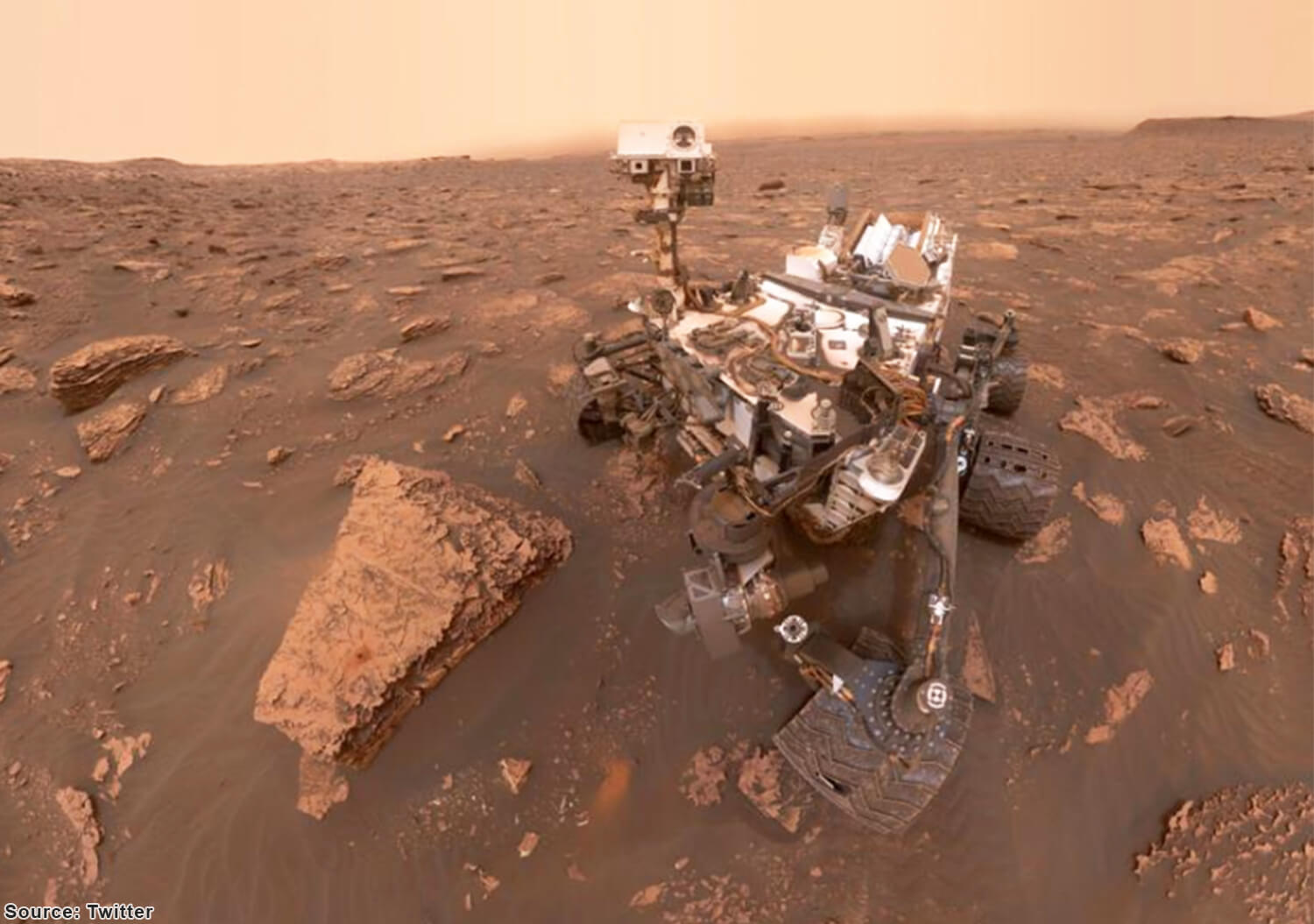
Time flies, on Mars as well as Earth. It’s been seven years since NASA’s Curiosity landed on Mars. This was a harrowing and seemingly improbable maneuver that had people around the world, glued to their phones and laptop screens. On 26 November 2011, Atlas V 541 blasted in Cape Canaveral Air Force Station, …
Time flies, on Mars as well as Earth. It’s been seven years since NASA’s Curiosity landed on Mars. This was a harrowing and seemingly improbable maneuver that had people around the world, glued to their phones and laptop screens.
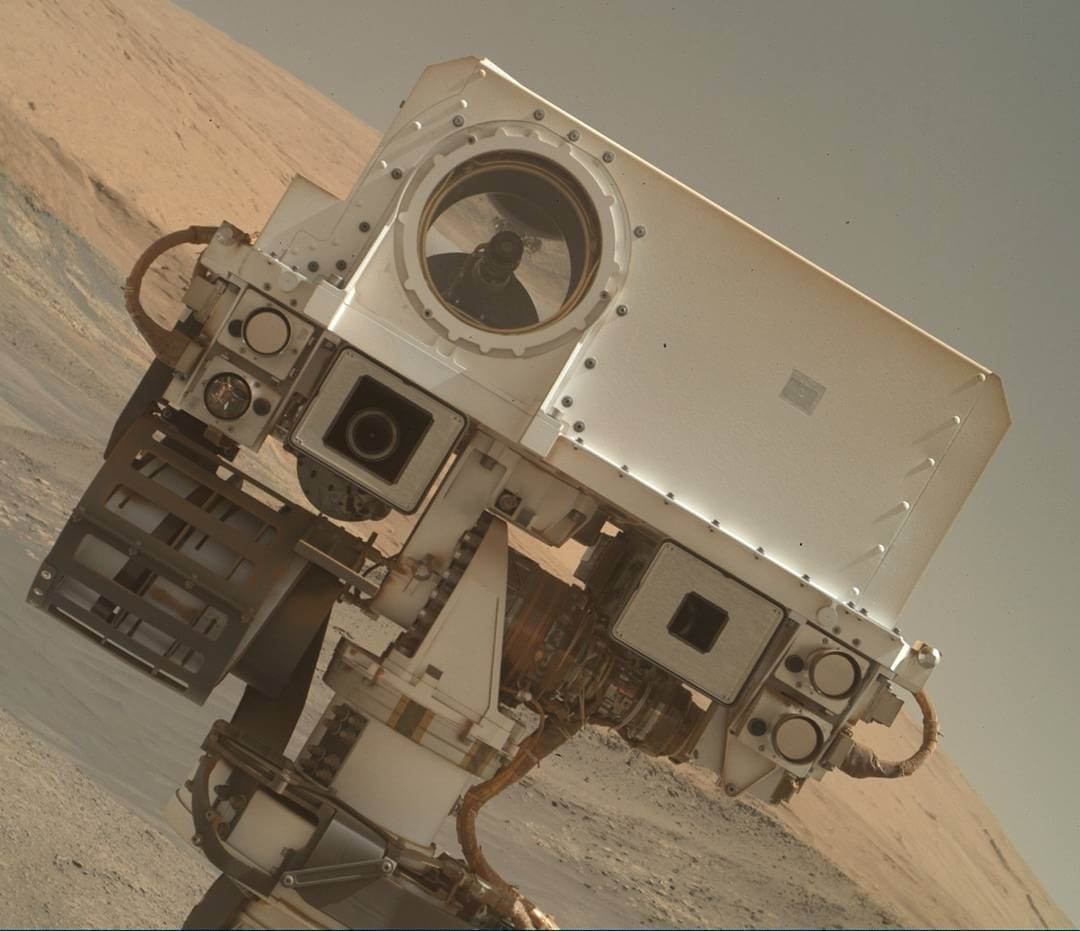
On 26 November 2011, Atlas V 541 blasted in Cape Canaveral Air Force Station, Florida, USA. But on the night of 5 August 2012, the rover landed on Mars inside the Gale Crater. On hearing the news of the mission’s success, the American space agency in California erupted in cheers and tears of joy.
Nov 26, 2011 🚀 I launched
Nov 26, 2018 🔴 InSight landsI couldn't ask for a better sol mate, @NASAInSight! Looking forward to your #MarsLanding and all the discovery yet to come. https://t.co/yMT4pfgvWO pic.twitter.com/ixANAEqQMp
— ARCHIVED – Curiosity Rover (@MarsCuriosity) November 25, 2018
From there, they started to find an answer to the big question: Does Mars have the right environmental conditions to harbour human life? And Curiosity not only confirmed this, but also found that the atmosphere is a mix of sulphur, nitrogen, oxygen, phosphorus and carbon, precisely where microbes could thrive.
Can't stop. Won't stop.
I've been exploring #Mars for seven years, traveled 13 miles (21 km), climbed 1,207 feet (368 m), found conditions on ancient Mars were favorable for life as we know it, and I'm not done yet.
Here's what's new (plus a 360 view): https://t.co/KW5uyV2Uum pic.twitter.com/ljnGp75cu6
— ARCHIVED – Curiosity Rover (@MarsCuriosity) August 5, 2019
This mission was originally meant to be terminated after two years of its launch, but it had an indefinite extension on 5 August 2017. Since then, Curiosity has been going strong and making exciting discoveries. Take a look at a few of their findings:
1. Unearthing Of The Carter
The rover determined that the 154 kilometres wide crater, hosted a lake-and-stream system in the ancient past. Observations suggested that the environment was habitable for long stretches.
Hey, space fans: Scientists may have found a 22-mile-wide impact crater under Earth's Greenland ice sheet. Gale Crater, my home on Mars, is likely an ancient impact crater, 96 miles across. https://t.co/R1KAzaY4Eo pic.twitter.com/i1K3V1QNdm
— ARCHIVED – Curiosity Rover (@MarsCuriosity) February 11, 2019
2. Discovery Of Methane
Several surges of methane was detected in Gale Crater’s air, this is produced by microbes and other organisms. This is not a definitive sign of life, but the gas was produced abiotically, like via reactions between hot water and certain types of rock.
🔎 The game is afoot.
I'm continuing to investigate the Martian methane mystery. A follow-on investigation shows that this past week's methane levels have sharply decreased. https://t.co/fC6lDxATiM pic.twitter.com/4w7aVRa2Hk
— ARCHIVED – Curiosity Rover (@MarsCuriosity) June 25, 2019
Something in the air tonight
I detected the largest amount of methane ever during my mission: ~21 parts per billion by volume. While microbial life can be a source of methane on Earth, methane can also be made by interaction between rocks and water. https://t.co/CPEpxsspR2 pic.twitter.com/uk2mjV7OeE
— ARCHIVED – Curiosity Rover (@MarsCuriosity) June 23, 2019
3. Drilled into a Martian rock
In September 2014, Curiosity reached the base of Mount Sharp, the mysterious mountain that is 5.5 kilometres tall. It started working its way up through the mountain’s foothills to seek clues about Mars’ wetter, warmer past and its shift to the cold and dry planet. The rover also found about the presence of clay minerals, gravel and pebbles in this region.
Did I do that? 🤓
This #Mars rock was so soft, I didn't need to use percussion, making it the first sample obtained with drill rotation alone. This gif of "Aberlady" shows that it and surrounding rocks appear to have moved when the bit was retracted. https://t.co/nA2SJjblgu pic.twitter.com/jrqwr2MT9p
— ARCHIVED – Curiosity Rover (@MarsCuriosity) April 11, 2019
4. Measured Mars radiation
This car-sized rover assessed the radiation on the Red Planet, helped scientists to understand the hazards of the potentially dangerous solar eruptions. The findings suggested that the radiation levels makes it capable for humans to endure long-term trip to Mars.
Can't stop. Won't stop.
I've been exploring #Mars for seven years, traveled 13 miles (21 km), climbed 1,207 feet (368 m), found conditions on ancient Mars were favorable for life as we know it, and I'm not done yet.
Here's what's new (plus a 360 view): https://t.co/KW5uyV2Uum pic.twitter.com/ljnGp75cu6
— ARCHIVED – Curiosity Rover (@MarsCuriosity) August 5, 2019
5. Explored the Teal Ridge
Curiosity found more complex geological features, like halting at a 360-degree panorama, at an outcrop called the Teal Ridge. The wavy layers indicated about the presence of a dynamic environment here. It recorded that wind or flowing water or both could have shaped this area.
Hola, amigos! How's it going? Been a while since I rapped at ya.
I took this selfie (here's how: https://t.co/RNHeuJy75K) before heading toward an area of clay rocks that may hold more clues about the ancient lakes that helped form this part of #Mars. https://t.co/pRsWBrc5UU pic.twitter.com/3jd1lzqXKL
— ARCHIVED – Curiosity Rover (@MarsCuriosity) January 28, 2019
https://www.instagram.com/p/B0zUXu-Di16/
6. Snapped Strathdon
The most recent and elaborative activity was capturing Strathdon, a rock made of sediment layers, on 10 July 2019, using the Mars Hand Lens Imager (MAHLI) camera. This is a proof of the changes in the landscape and environment on Mars.
It me.@HiRISE on the Mars Reconnaissance Orbiter snapped this pic of moi, rollin’ around the intriguing rocks of Gale Crater's clay-bearing unit. You can see my head on the left: https://t.co/7s0mBQiJ3H pic.twitter.com/6dQr478yW8
— ARCHIVED – Curiosity Rover (@MarsCuriosity) July 12, 2019
From the beginning, Curiosity has kept people interested about Mars exploration and planetary science. Every year on 5 August, crowds flock to places like New York’s Times Square, to witness the seven minutes of the Martian atmosphere. Till date, it maintains a strong social media and Internet presence.
Feeling the love! Thanks, everyone, for all the thoughtful landing anniversary messages.
I remember where I was seven years ago tonight. Do you remember where you were when I touched down on Mars? pic.twitter.com/Pf2Xs6gfUa
— ARCHIVED – Curiosity Rover (@MarsCuriosity) August 6, 2019
More discoveries are in store, but for now everyone is looking forward to when Curiosity will discover the complex story behind the water on Mount Sharp, paving the way for NASA’s Martian mission 2020.