
A Four-Artist Exhibition Exploring Upheaval, Anatomy, and the Radiant Logic of ArtKriti is pleased to announce Threshold of Traces: Stitched with an Amber Thread, a group exhibition bringing together four contemporary artists, Siddharth Jharia, Soumik Nag, Sonia Sareen and Gaurav Chawla, working across figurative realism, atmospheric landscape, sculpture and abstraction. The exhibition opens with a …
A Four-Artist Exhibition Exploring Upheaval, Anatomy, and the Radiant Logic of
ArtKriti is pleased to announce Threshold of Traces: Stitched with an Amber Thread, a group exhibition bringing together four contemporary artists, Siddharth Jharia, Soumik Nag, Sonia Sareen and Gaurav Chawla, working across figurative realism, atmospheric landscape, sculpture and abstraction. The exhibition opens with a reception on 25 October 2026, from 6:00–8:00 PM, and remains on view through 29 October 2026 at the Visual Art Gallery, India Habitat Centre, New Delhi.
Instead of keeping figure, terrain and abstraction apart, the show treats them as one map of survival. It looks at the threshold where a human silhouette gives way to landscape, and where the ground itself breaks down into feeling with no name. The hope on view here is not fragile or quiet. It is fierce, loud and hard-won.
The title explains the show. A threshold is a place you pass through, neither inside nor outside, neither what something was nor what it is becoming. A trace is what is left once it has passed: a stain, a fracture, a fold of pigment, the mark of a hand. The amber thread that ties the four bodies of work together is the show’s central image. Amber starts as a tree’s response to a wound and, given enough time, hardens into something that holds light. A thread is what mends. Put together, they suggest a way of looking at damage that neither denies it nor dwells on it, and treats it as what continuity is built from.
“Threshold of Traces is a reminder that when we break open, we do not empty out. We bloom,” said artist Gaurav Chawla, founder of ArtKriti. “Each of these four artists works in a completely different medium and register, but they are all describing the same moment: the point where damage and light are the same event.”
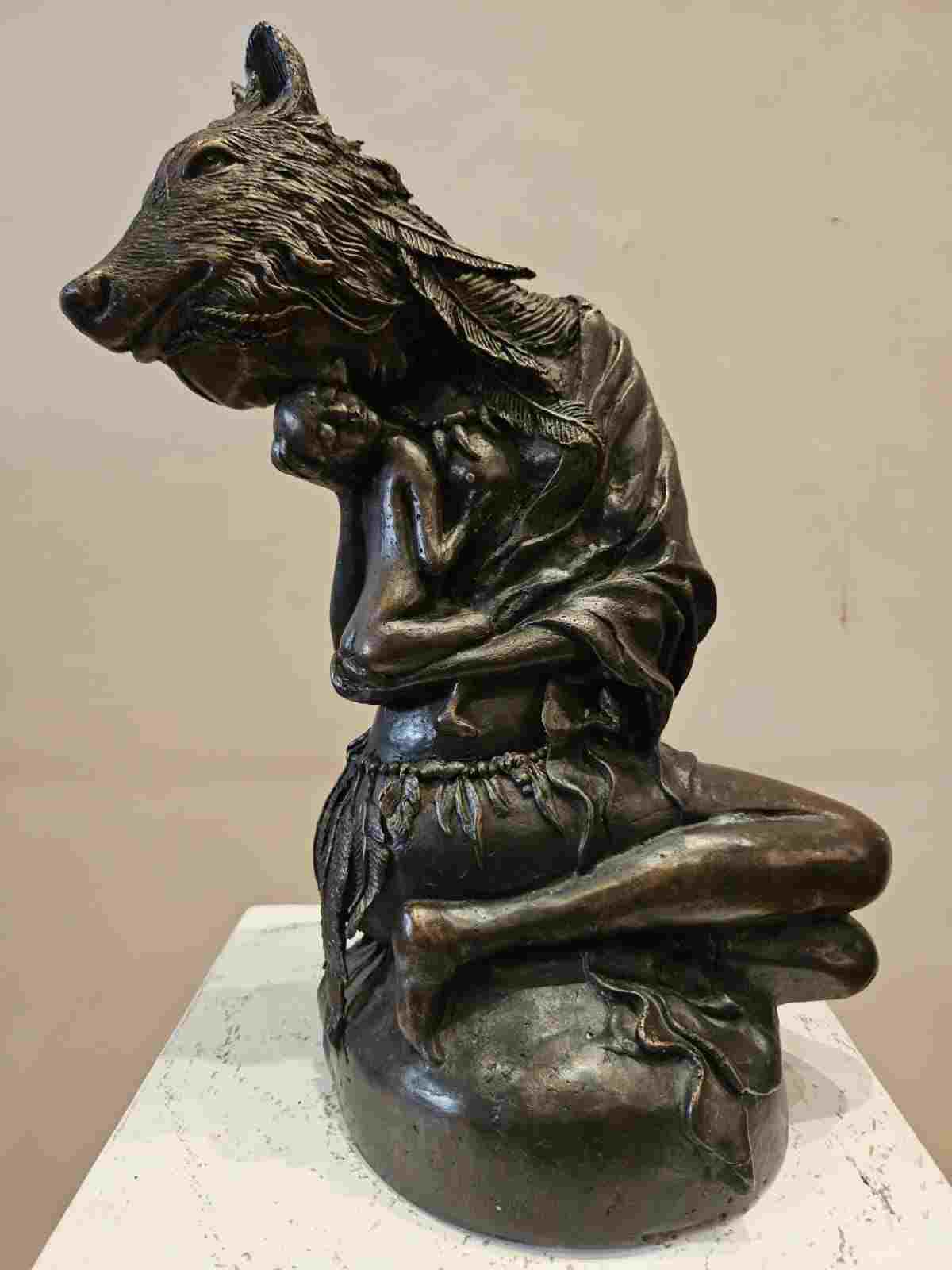
Upheaval, Anatomy, and the Radiant Logic of Hope
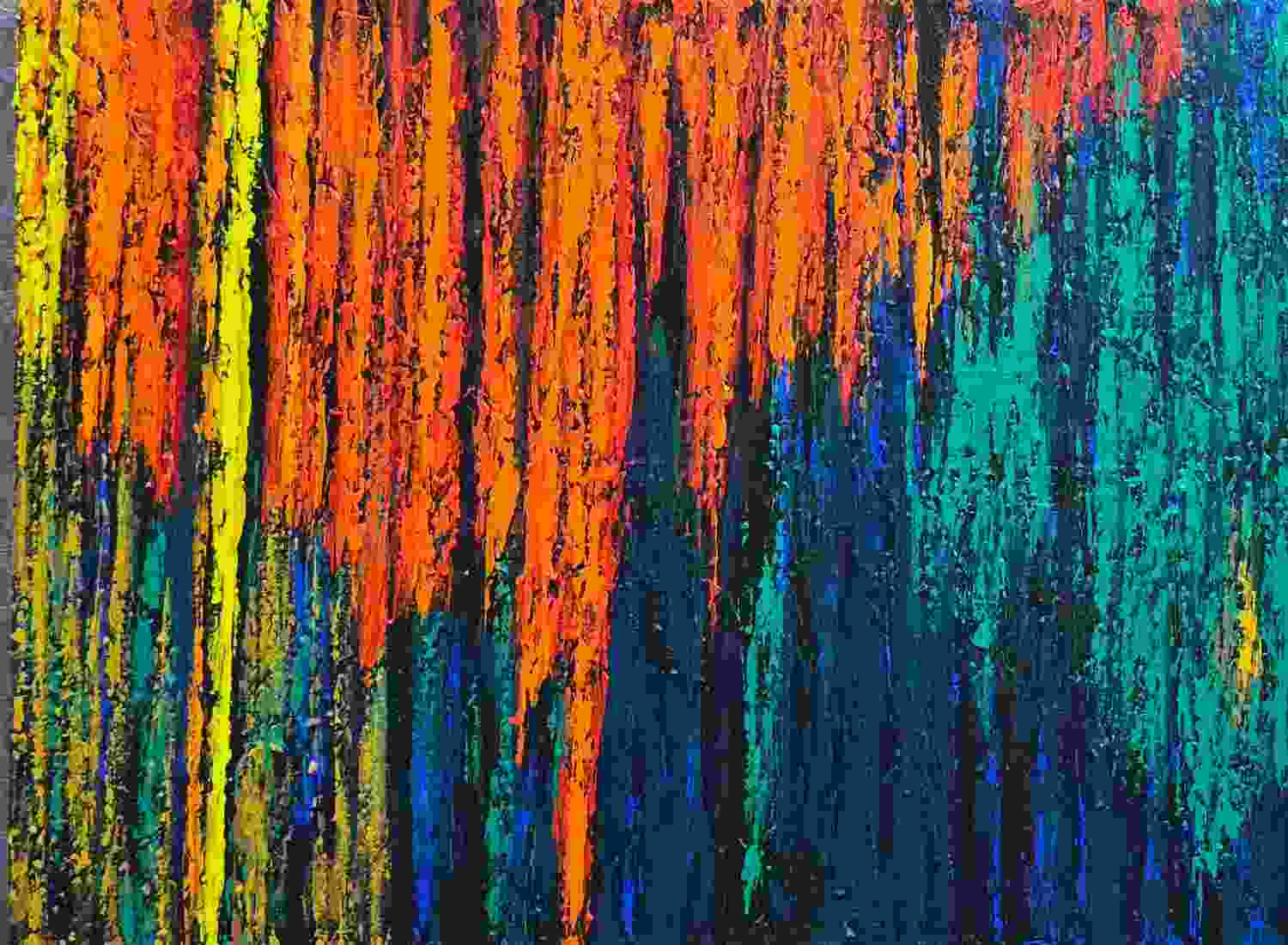
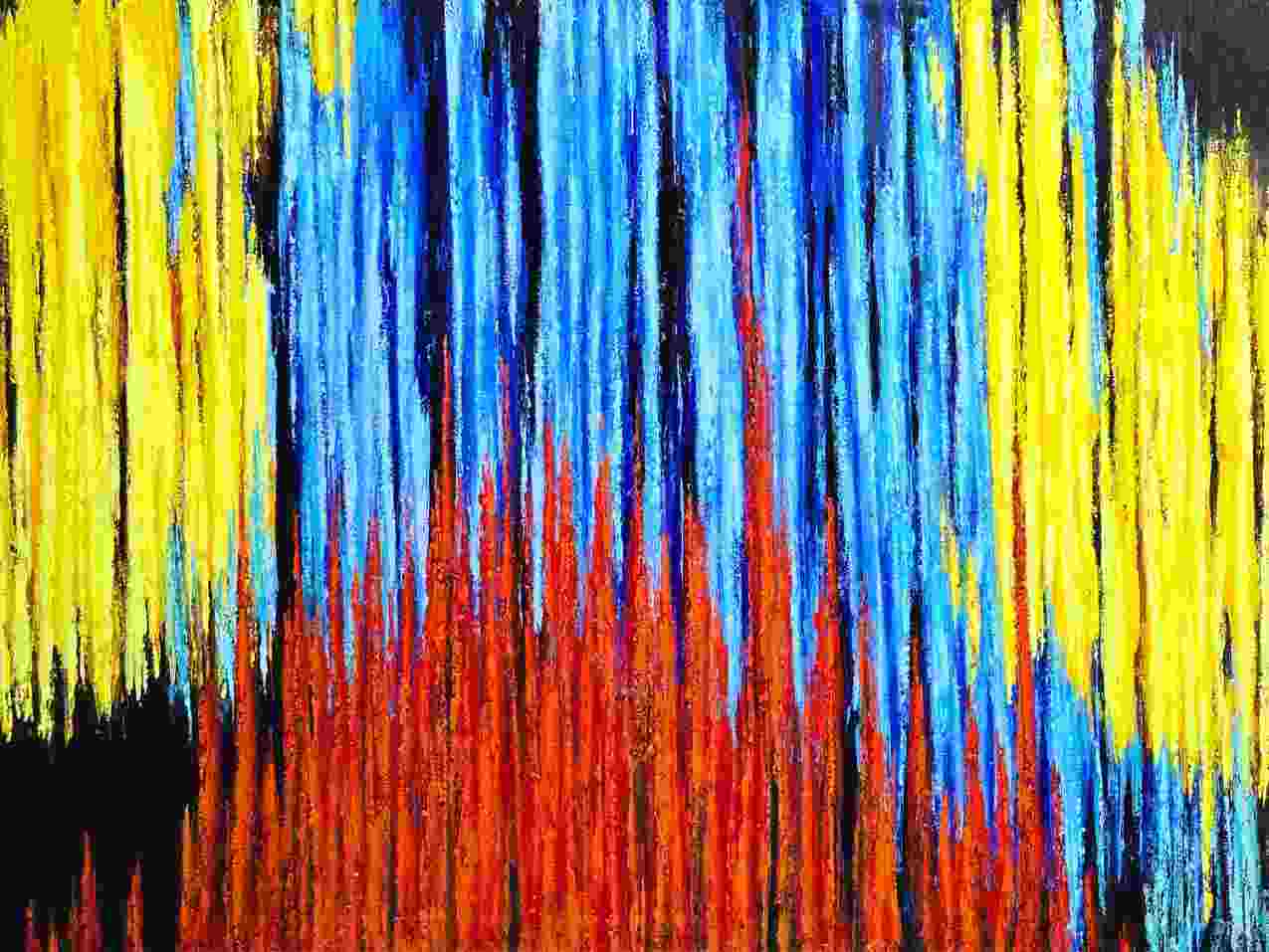
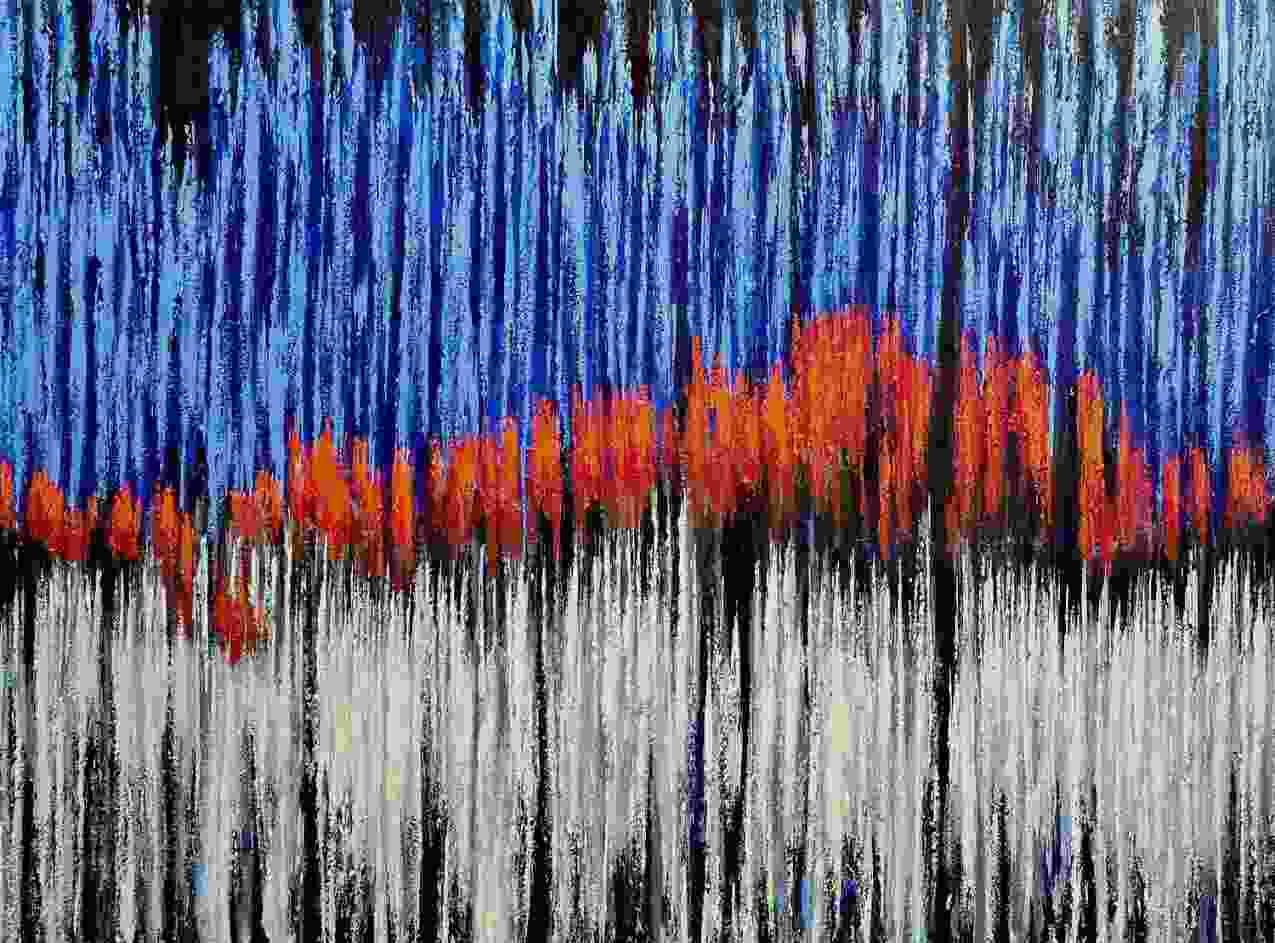
The subtitle points to three things that run through all four practices. Upheaval shapes the valleys in Soumick Nag’s paintings and drives the layered eruptions in Gaurav Chawla’s canvases. Anatomy is the body seen as unfinished, in Siddharth Jharia’s figures caught between vulnerability and light, and in Sonia Sareen’s forms, which hover between silhouette and landscape. Hope, the radiant logic of the title, is where the work ends up. It arrives as a consequence rather than a consolation, at the point where pressure, fracture and erosion give way to light.
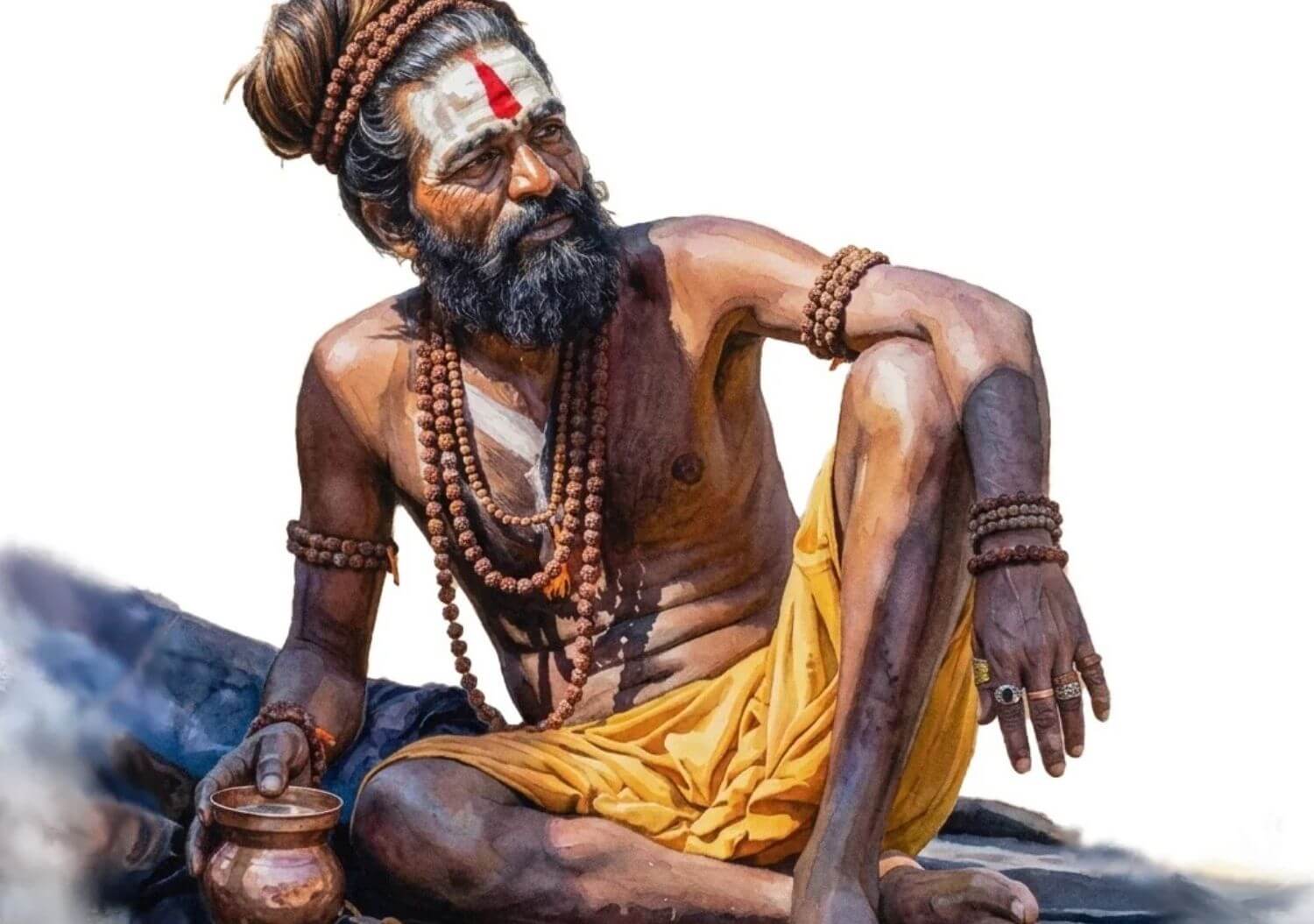
Taken together, the four bodies of work, Traces of the Flesh, The Weathered Terrain, The Ruin & The Bloom and The Volcanic Core, read as one continuous map: a figure in watercolour, a valley in two tones, a sculpture that begins in fracture and ends in shelter, a canvas built from layers pushing against each other. The media differ, but each artist treats their material as a record of what has passed through it, not as a finished statement.
The Artists
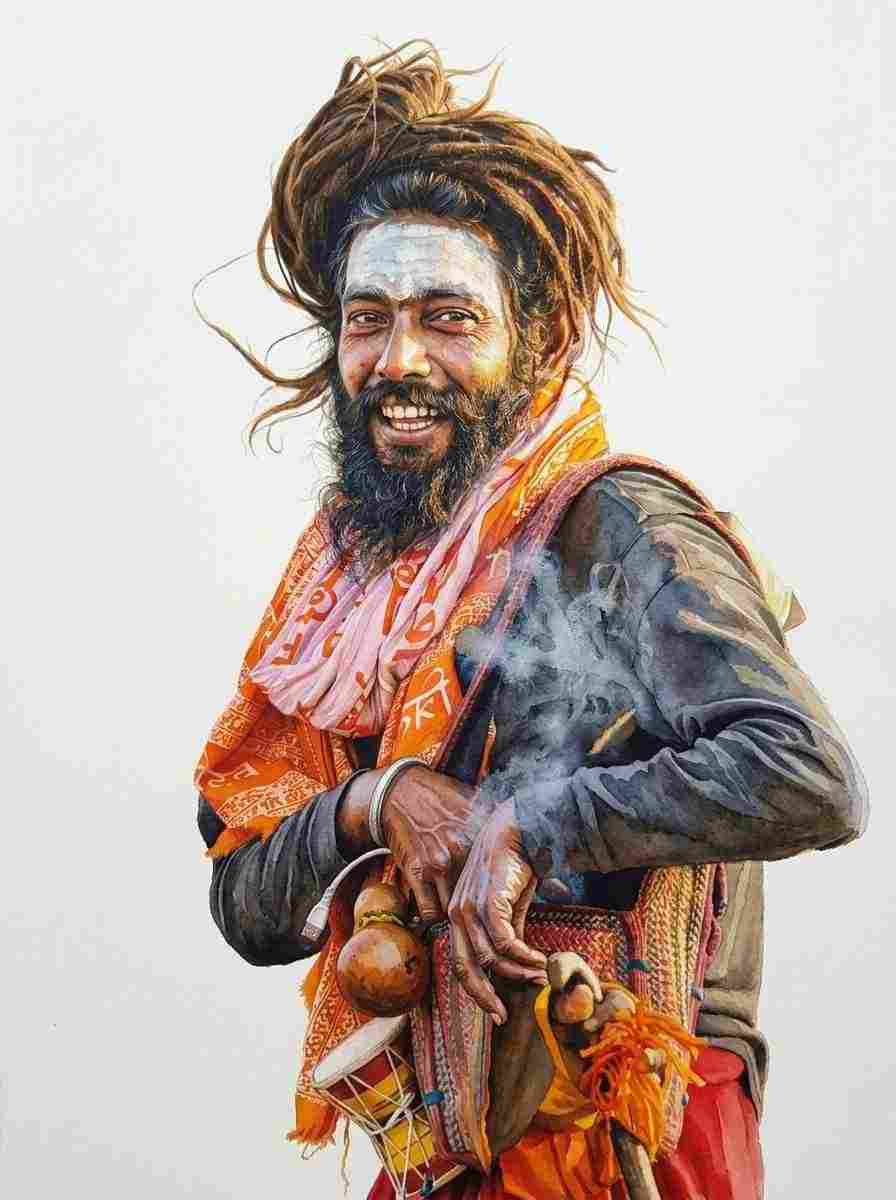
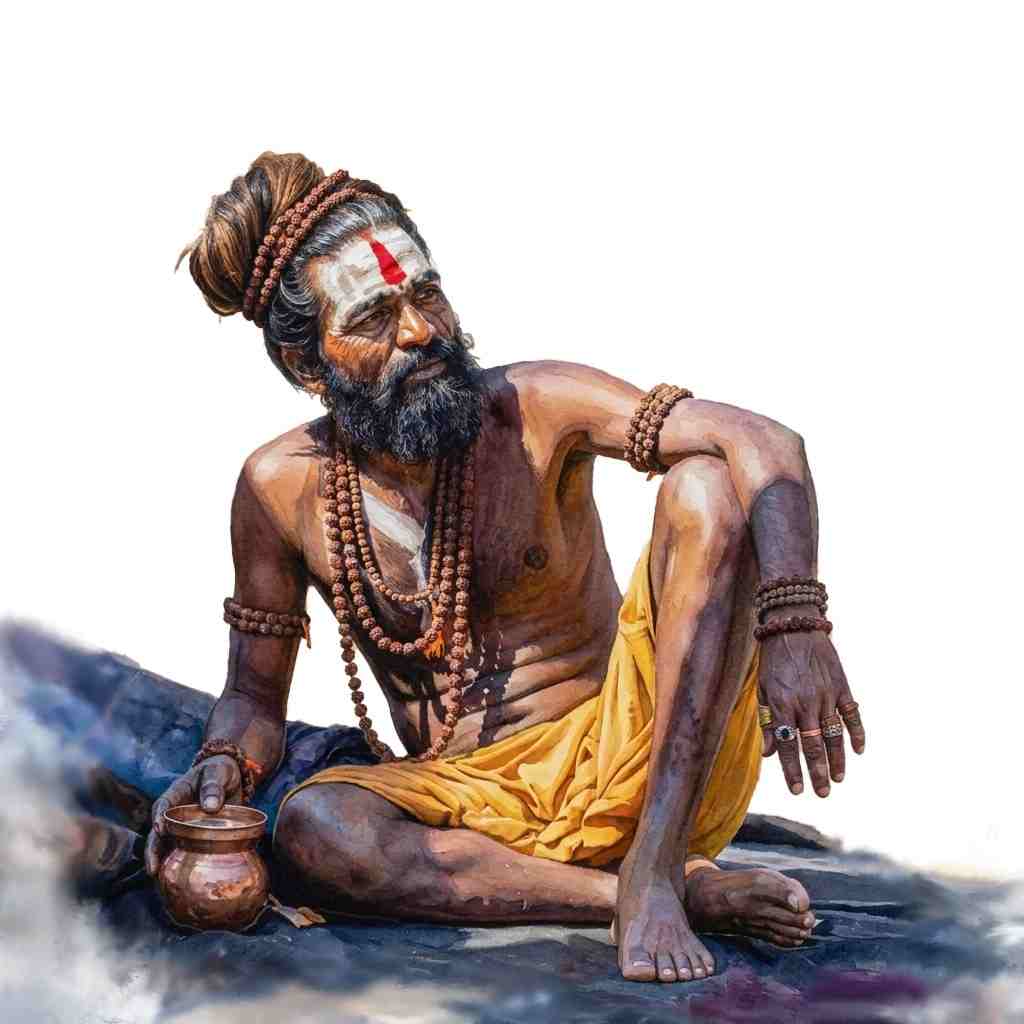
Siddharth Jharia (Traces of the Flesh — Figurative)
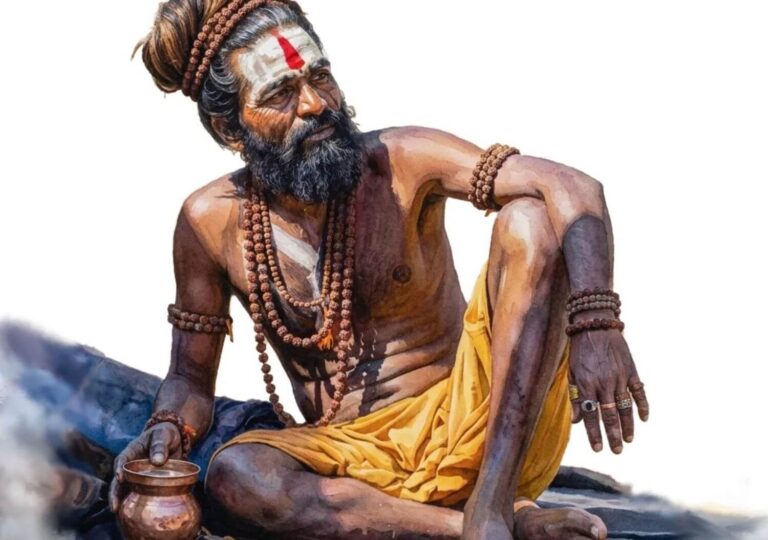
In this exhibition, Siddharth Jharia turns to the human figure in watercolour, a medium whose transparency and unpredictability suit his subject. His bodies are never presented as resolved or complete; they are caught mid-transition, where fragility and luminosity share the same surface. The wash, pooling and drying on its own terms, becomes a collaborator, and it is often the paper rather than the painter that decides where warmth gathers.
“I don’t think of the body as something finished. Every figure I paint is caught mid-transition, somewhere between vulnerability and light. Watercolour makes that happen almost against my will — the wash decides where the warmth settles.”
Soumick Nag (The Weathered Terrain — Landscape)
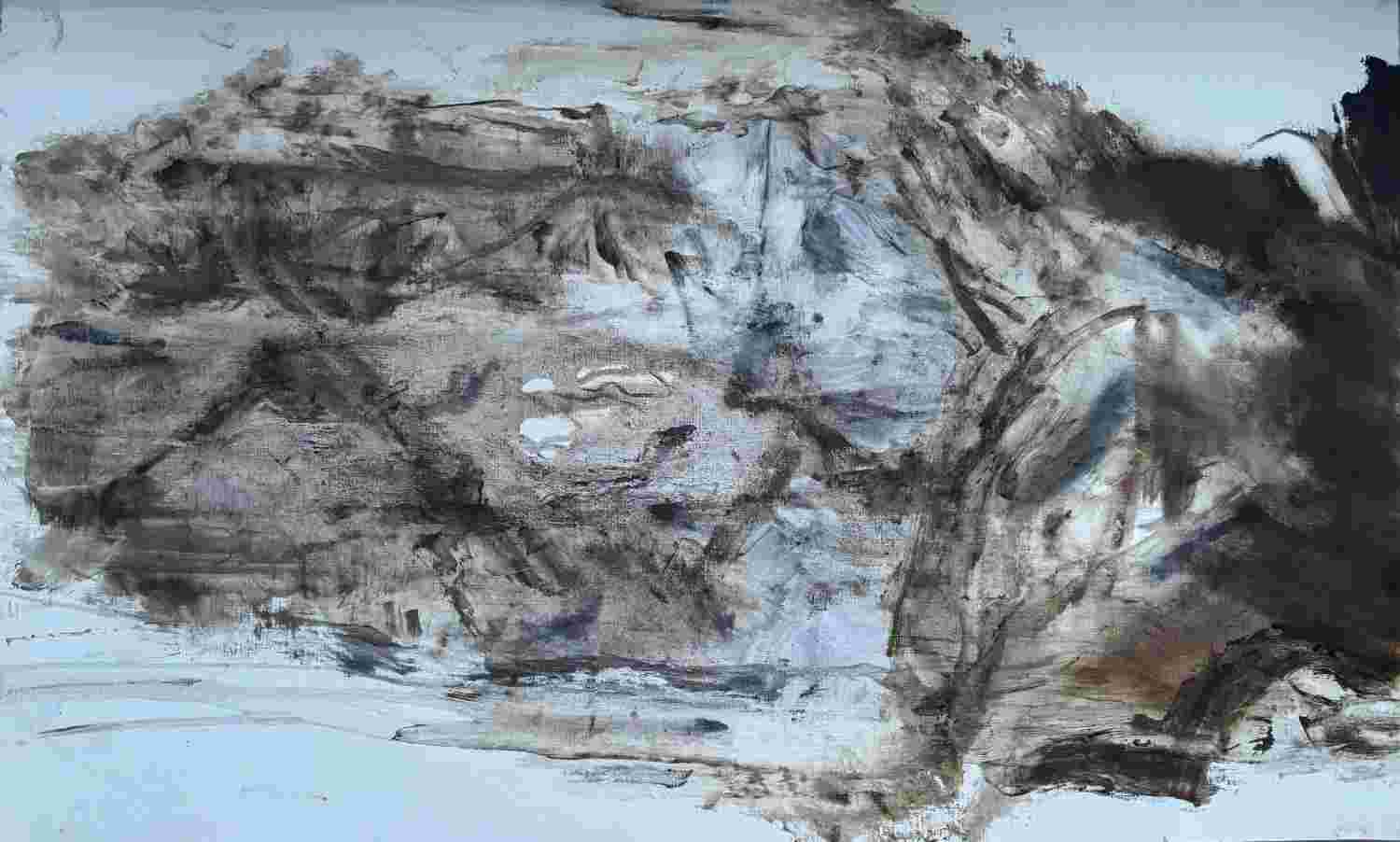
Soumick Nag approaches landscape less as a view than as a record of forces. For The Weathered Terrain, he gave up almost every colour and let two tones, Vandyke brown and black, carry an entire valley. The restraint is deliberate. It sets up the tension he describes between the surveyor, who knows where a ridge must break, and the seismograph, which learns only as the tremor passes through it: control and surrender working as partners. The result is terrain that feels less depicted than registered.
Soumick’s paintings are held in the collections of renowned lawyers and authors and he has shown in many exhibitions over the years. The most notable was at Ghansali village in Chamoli district, Uttrakhand. There his work were hung on the open air among the people who live in the landscape that shaped them, rather than gallery walks. His current work draws on the landscape of the Niti valley, it’s stillness and it’s weathered ground and the way a landscape stays with you after you gave left it
“For this series, I gave up almost every colour and let the two Vandyke brown and black govern the whole valley. It wasn’t a restriction; it turned out to be the opposite. My hand had to hold two instincts at once: the surveyor’s, which already knows where a ridge has to break, and the seismograph’s, which knows nothing until the tremor has passed through it. Precision and spontaneity aren’t opposites in this work, they’re collaborators.”
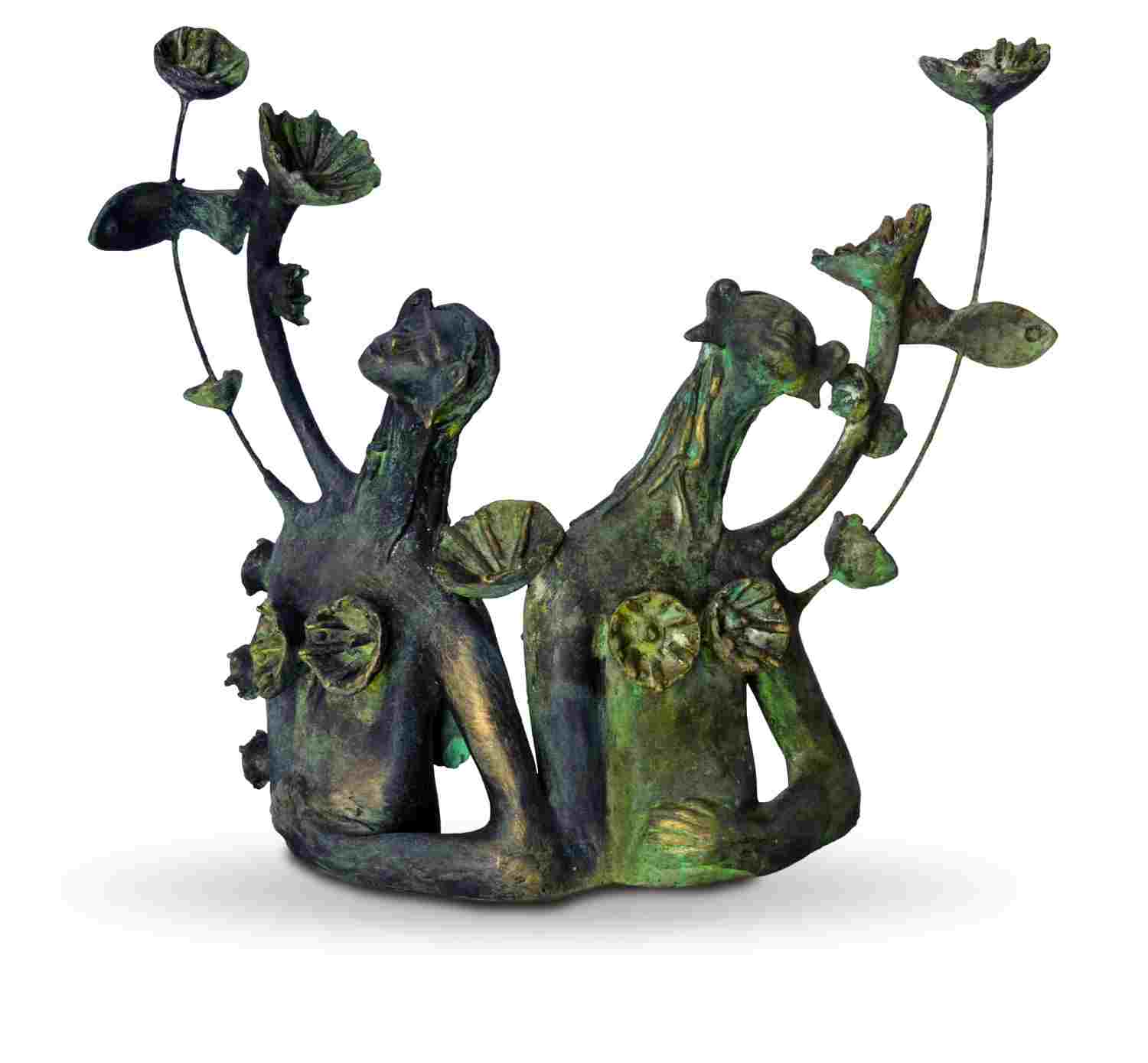
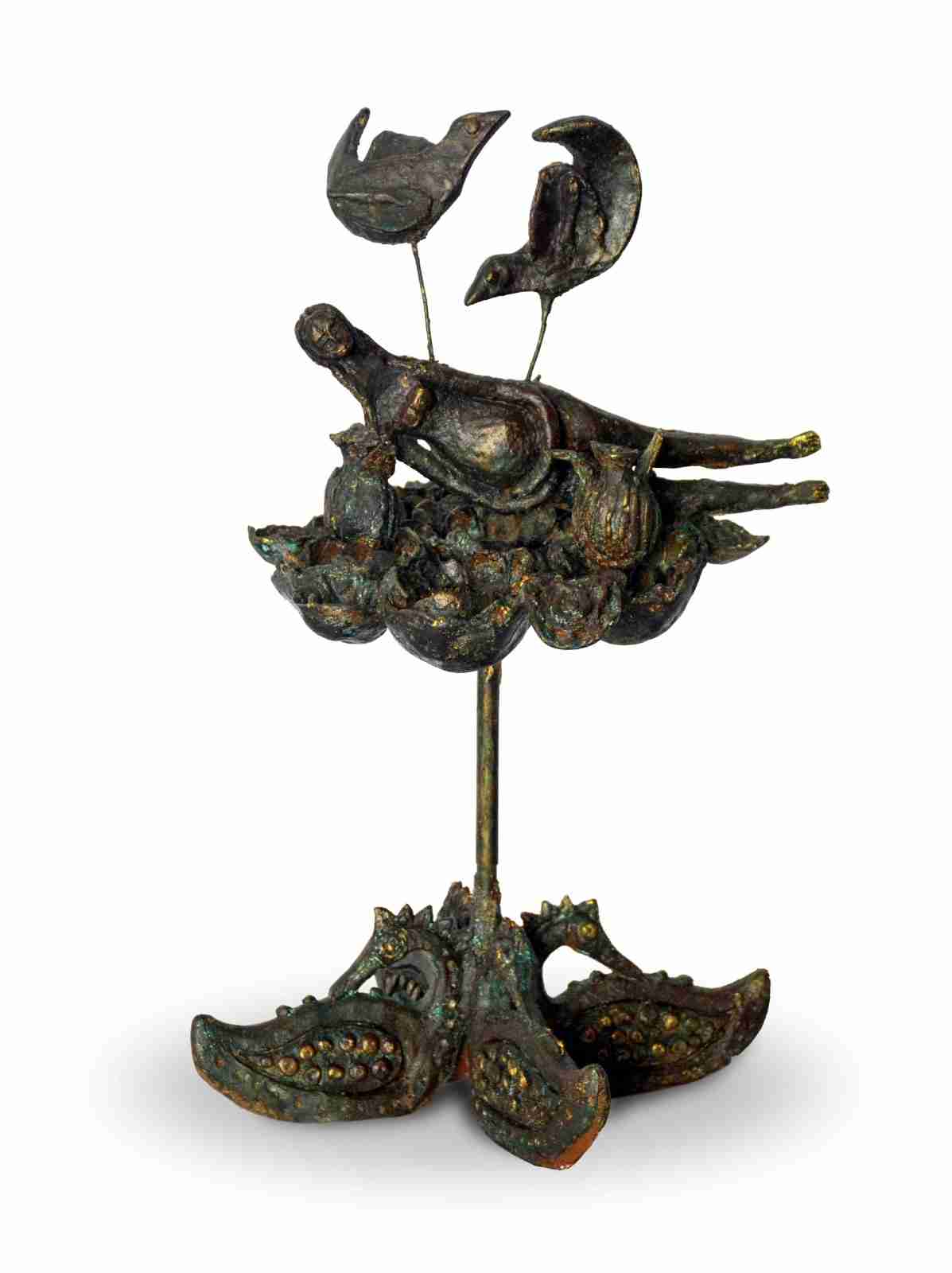
Sonia Sareen (The Ruin & The Bloom — Sculpture)
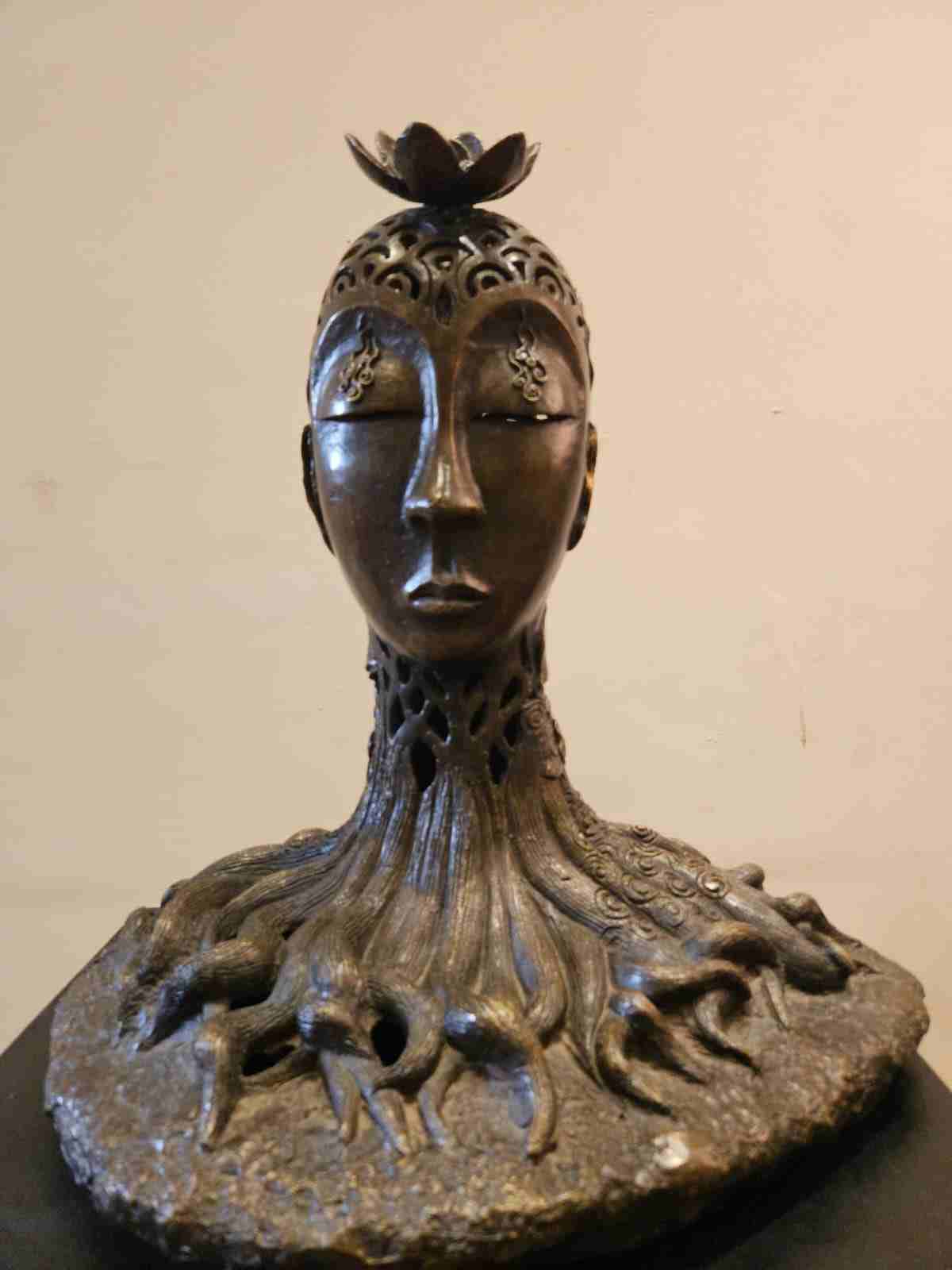
Sonia Sareen’s sculptures begin, in her words, with a wound and end with a nest. In The Ruin & The Bloom, she works at the exact moment a body’s silhouette gives way to landscape, where what is broken and what is growing prove to be made of the same material. Her forms hold damage and shelter in a single gesture, suggesting that ruin is not the opposite of bloom but its ground.
“My sculptures start with a wound and end with a nest. I’m interested in the exact moment a silhouette stops being a body and becomes a landscape, where fracture and growth turn out to be made of the same material.”
Gaurav Chawla (The Volcanic Core — Abstraction)
Gaurav Chawla, founder of ArtKriti, also exhibits in the show as an artist. His a
bstract works in The Volcanic Core are made fast and heavy, in layers that push against one another, each arguing with the one beneath it, until the canvas stops describing turbulence and becomes the moment of its release. His paintings stay close to the eruption itself, and to the light that breaks through it.
Gaurav also regularly shares his work and experiences with the art community through impromptu meetups, exhibitions and talks focusing on emerging artists.
His paintings have been exhibited widely and adorn many residences in Europe, USA, Singapore and India. Gaurav lives and works from New Delhi.Apart from several solo shows, he has participated in over 65 prestigious art events all across the globe.
“I work fast and heavy because that’s how the feeling actually moves — like weather. Every layer is an argument with the one underneath it. By the time a canvas is finished, it isn’t describing a storm anymore. It’s the moment the storm breaks into light.”
About ArtKriti
ArtKriti is an Indian art gallery and platform devoted to contemporary art and the artists who make it. It was founded by artist Gaurav Chawla.
Striving to engage and push new boundaries within the multidisciplinary parameters and practices of art and design, ARTKRITI an art project that seeks to educate, inspire and lift the creative spirits within. Aimed at embracing and highlighting the artistic processes, approaches and ideas of some of todays most established and emerging artists and creative individuals, the core of ARTKRITI is to bring art into the life of everyone , and bringing artist near to art lovers , providing a unique artistic platform to express intimate and personal ideas. With craftsmanship , artistry and quality in mind.