
Located in Bangalore, this sprawling 12,000 sq. ft. residence beautifully reflects the philosophy of “Heirloom Modernism” — a design language that blends South Indian heritage with contemporary living and global influences. Designed for a well-travelled family, the home brings together antique timber, indigenous craft, classical Indian art, and modern architectural planning to create a layered …
Located in Bangalore, this sprawling 12,000 sq. ft. residence beautifully reflects the philosophy of “Heirloom Modernism” — a design language that blends South Indian heritage with contemporary living and global influences. Designed for a well-travelled family, the home brings together antique timber, indigenous craft, classical Indian art, and modern architectural planning to create a layered and deeply personal living experience.
From the dramatic sunken living room and handcrafted detailing to curated Indian artworks, bespoke furniture pieces, and contemporary interpretations of traditional elements, every corner of the home celebrates storytelling, craftsmanship, and cultural rootedness. Highlights include a princely poster bed, a Raja Ravi Varma artwork integrated into wardrobe panels, a playful children’s room with Channapatna-inspired detailing, and a serene pooja room inspired by temple architecture.
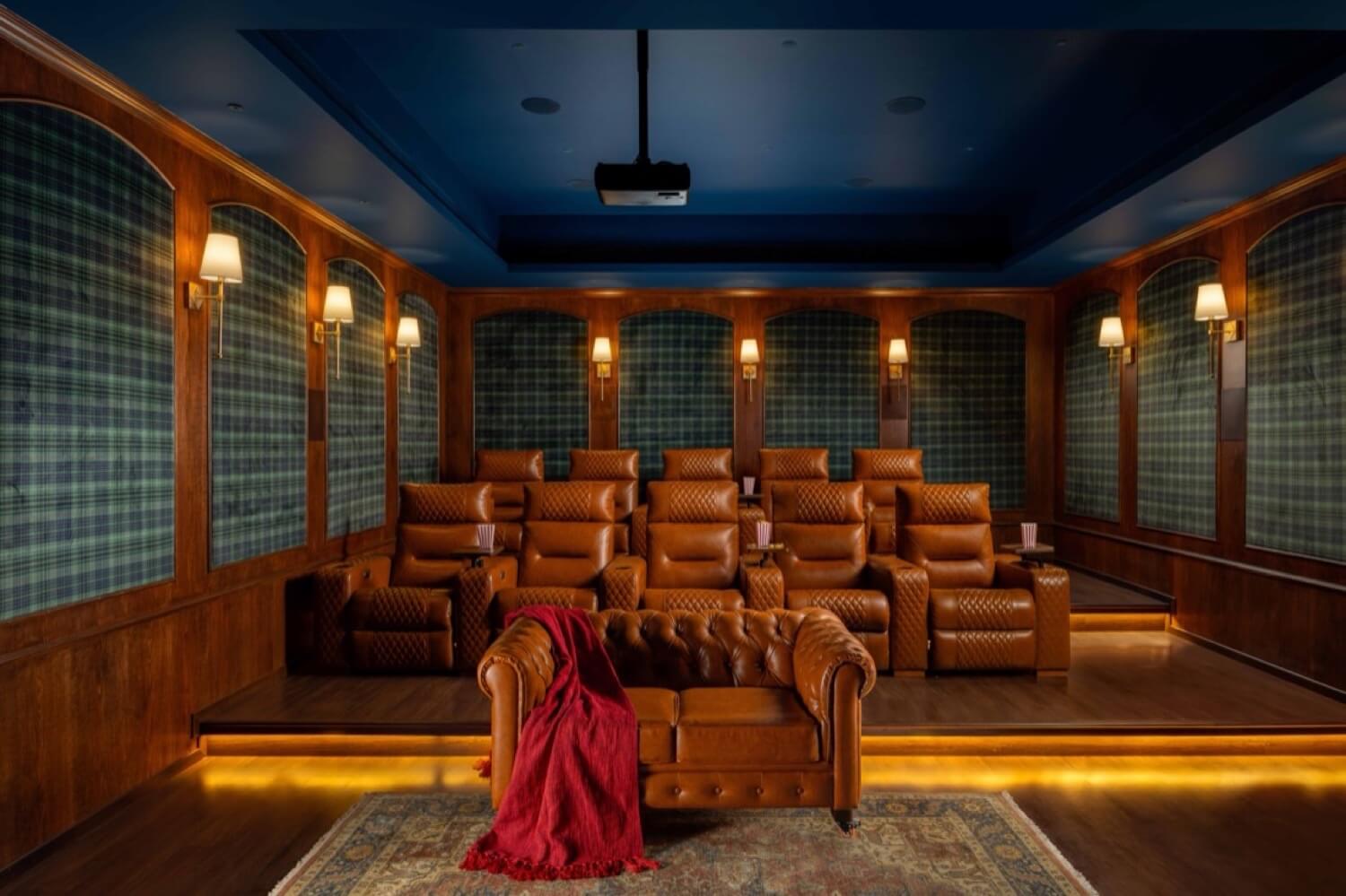
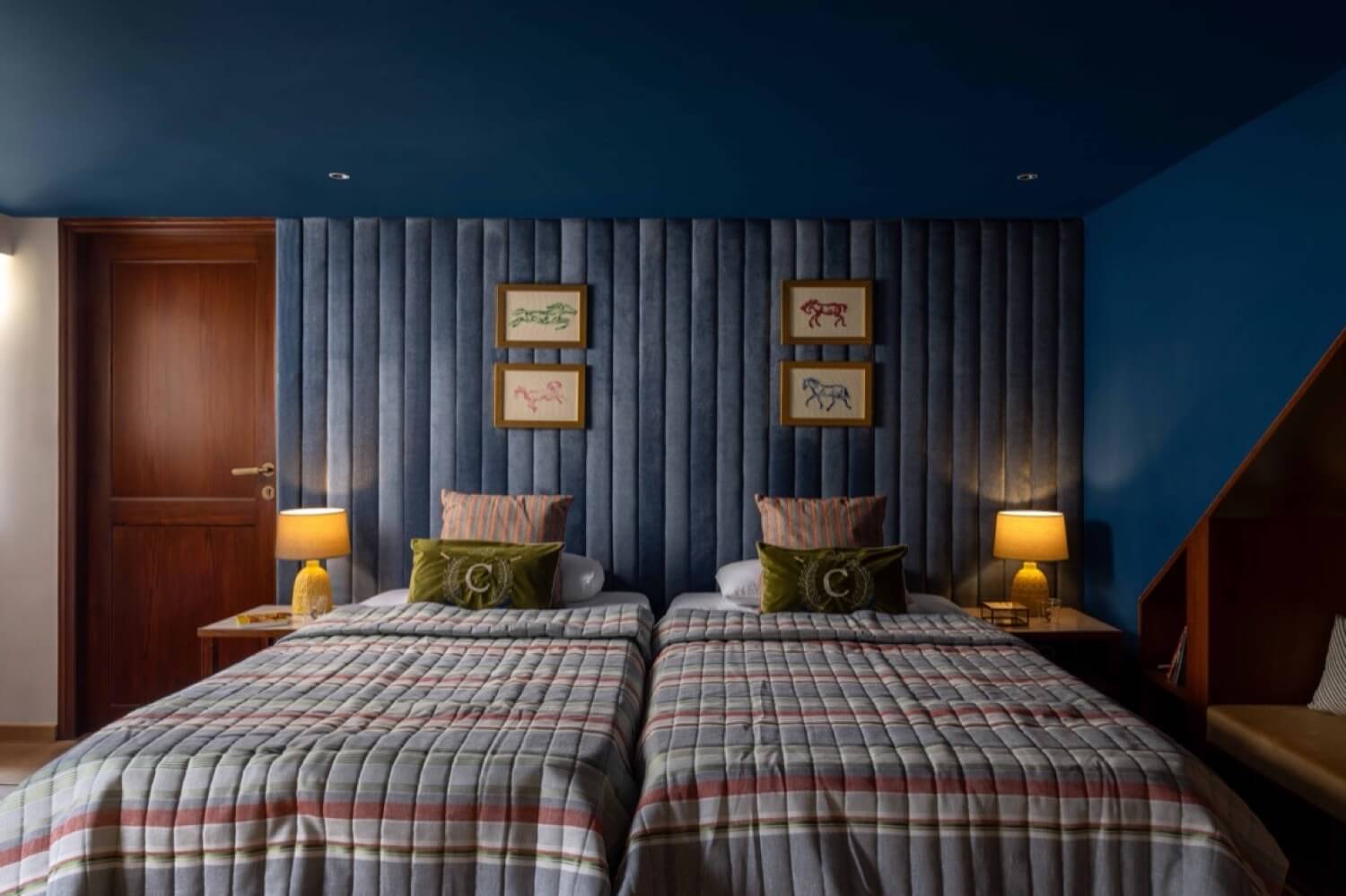
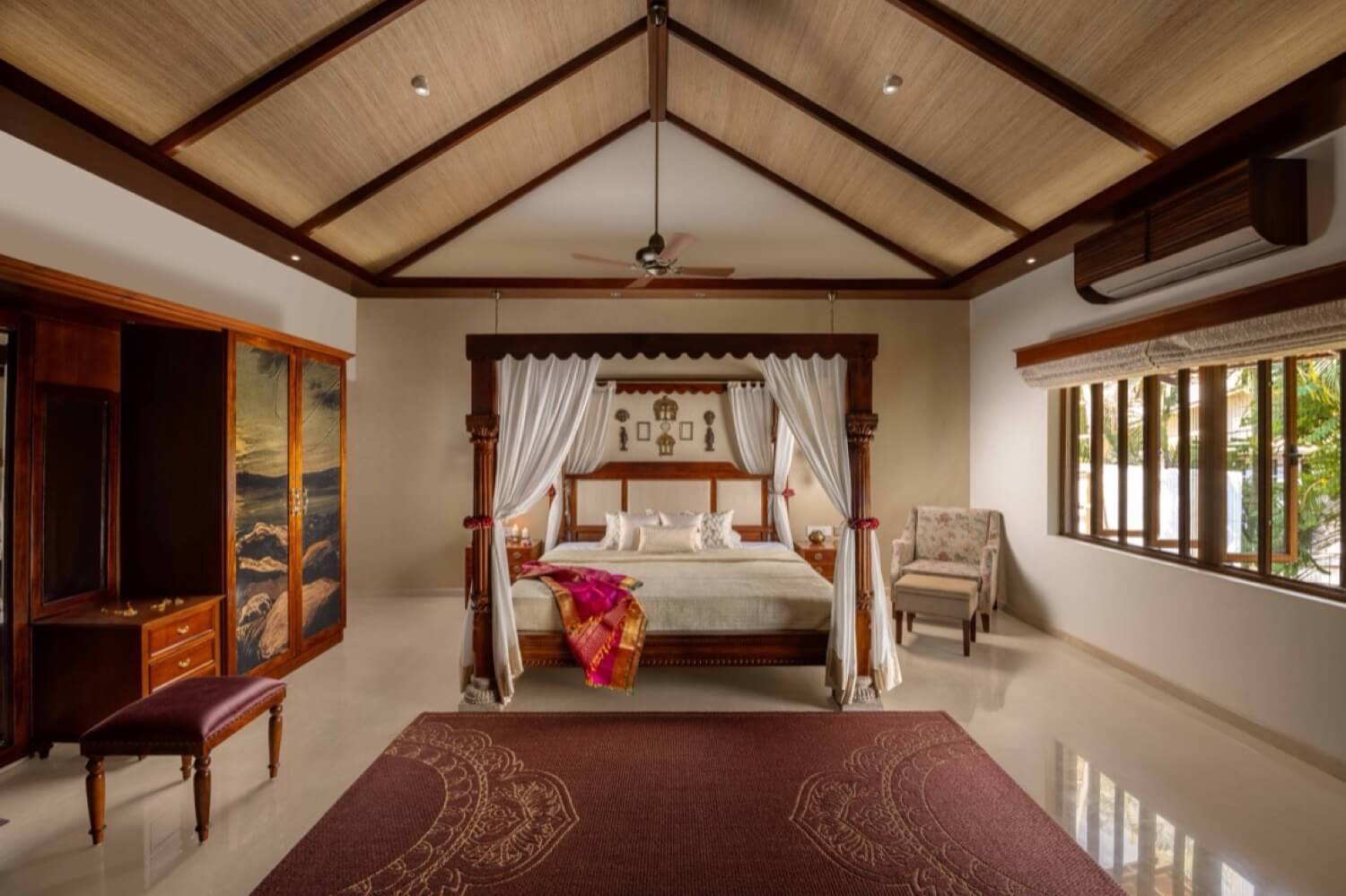
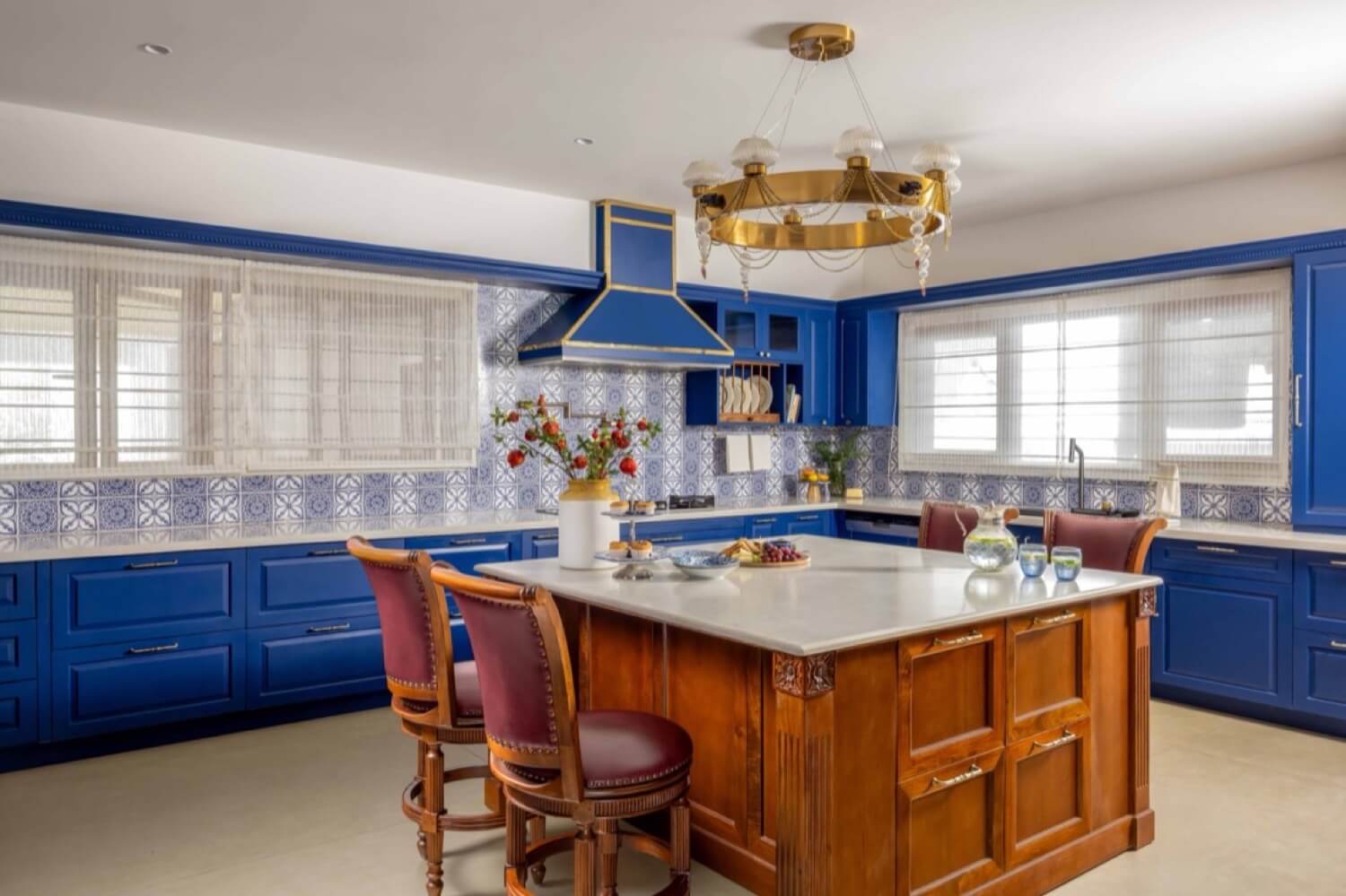
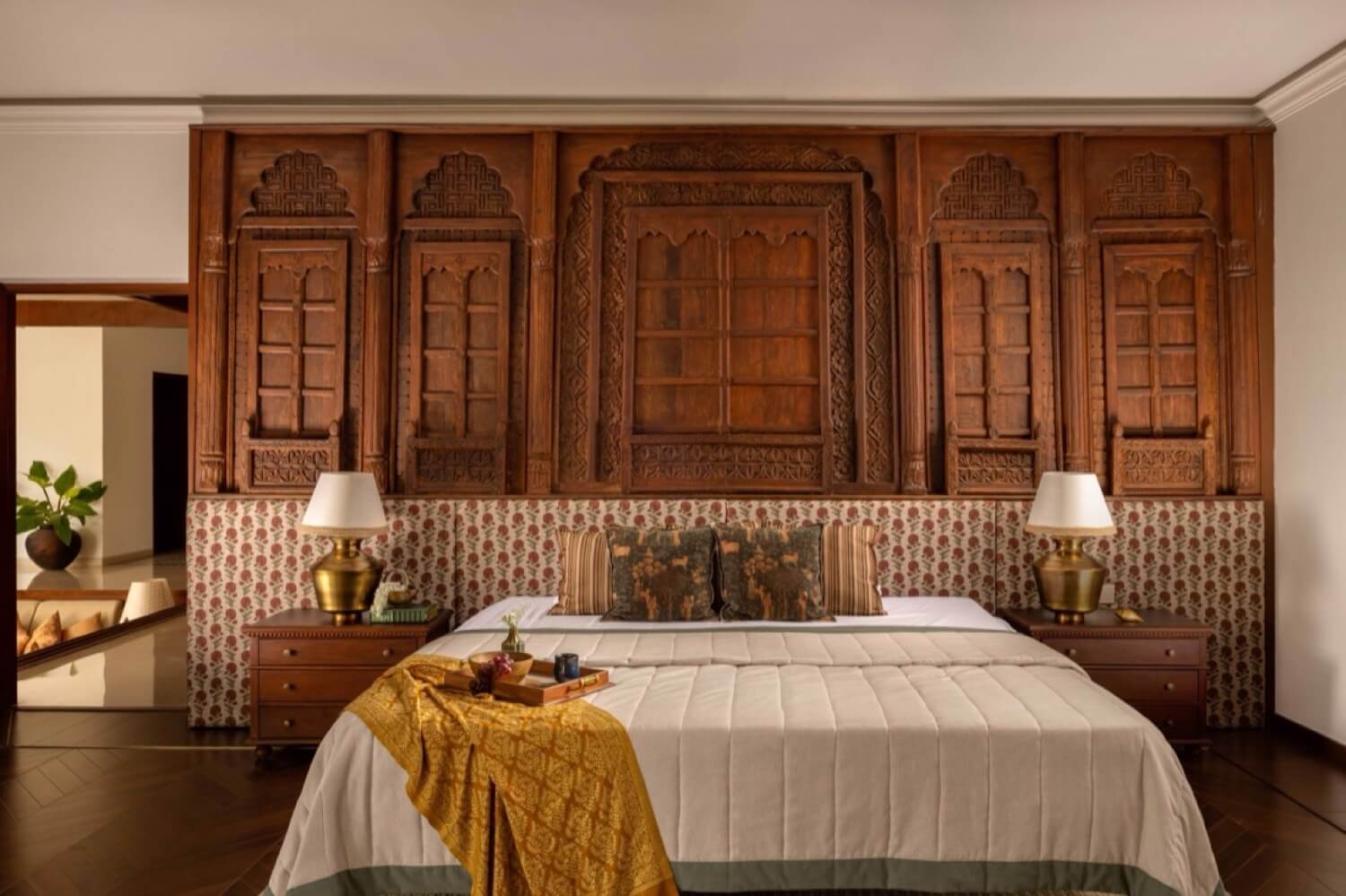
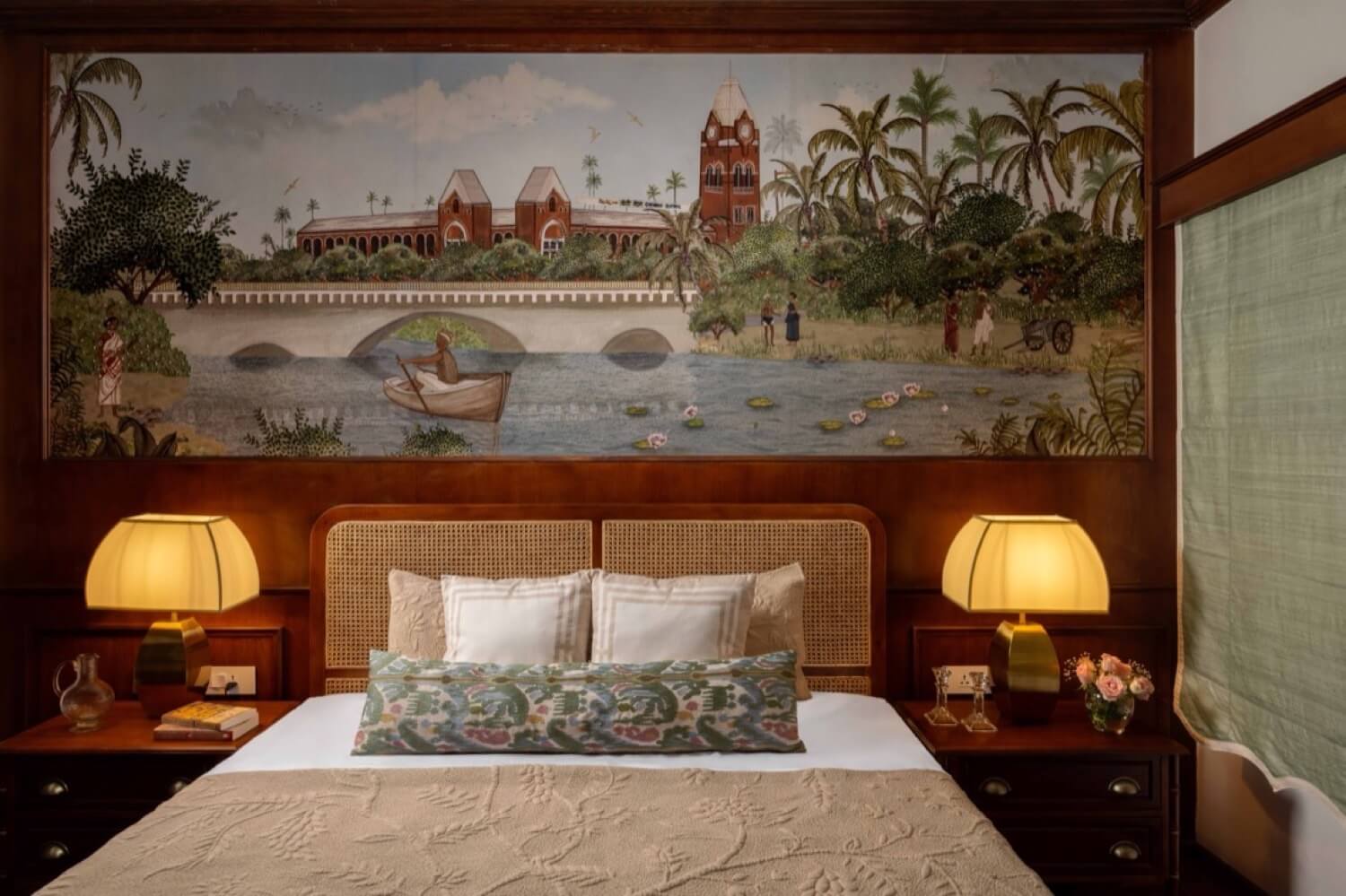
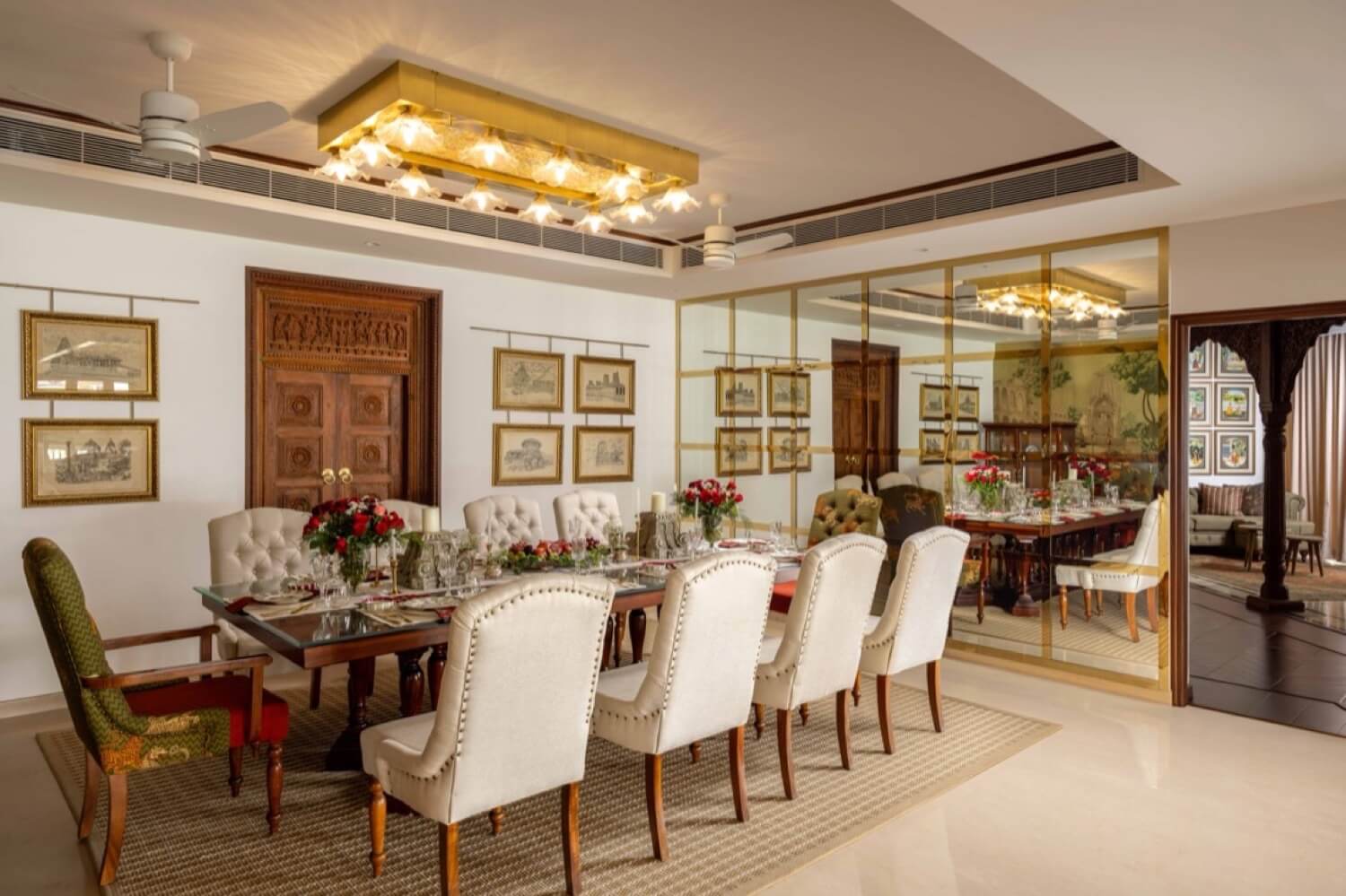
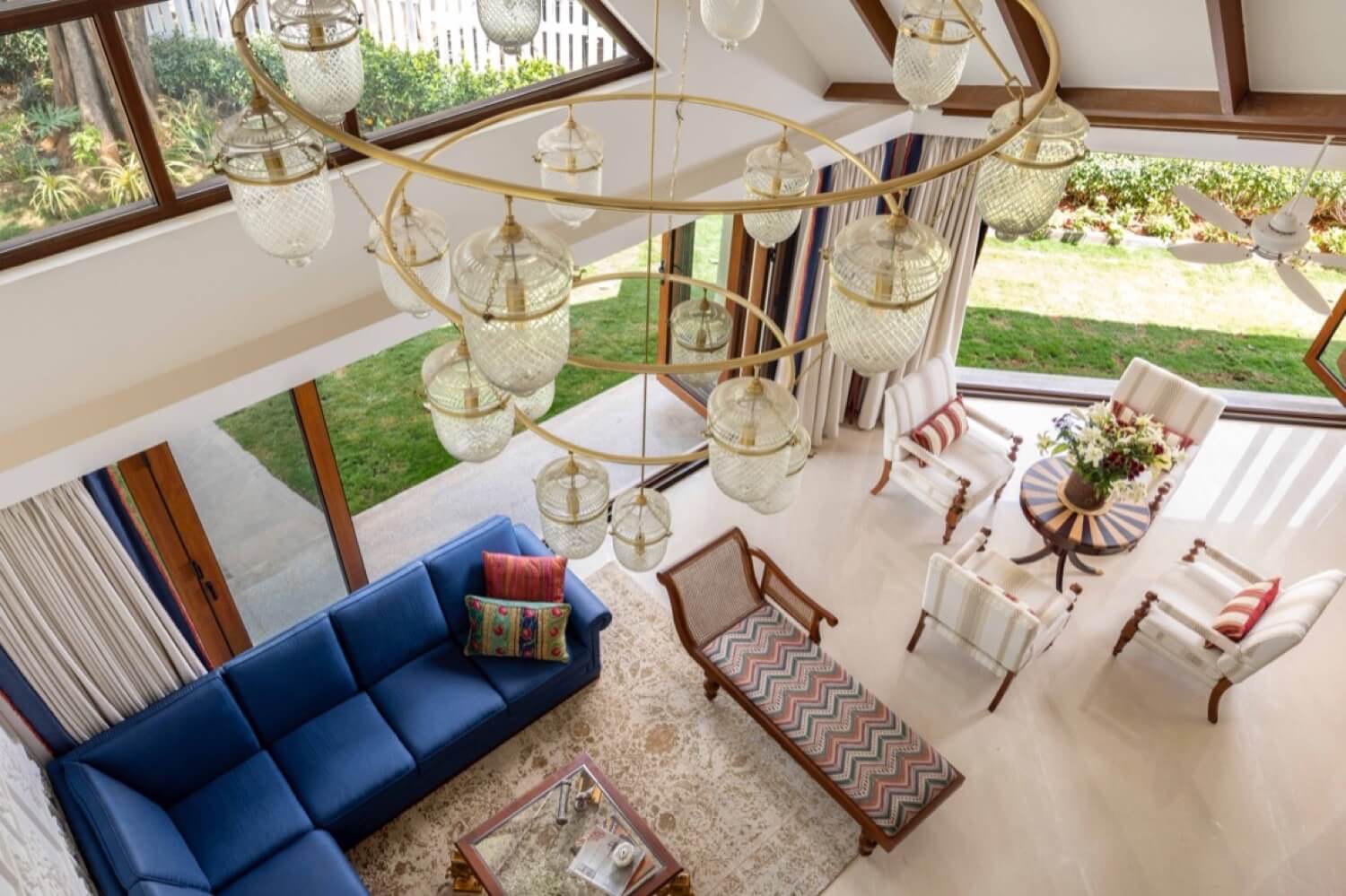
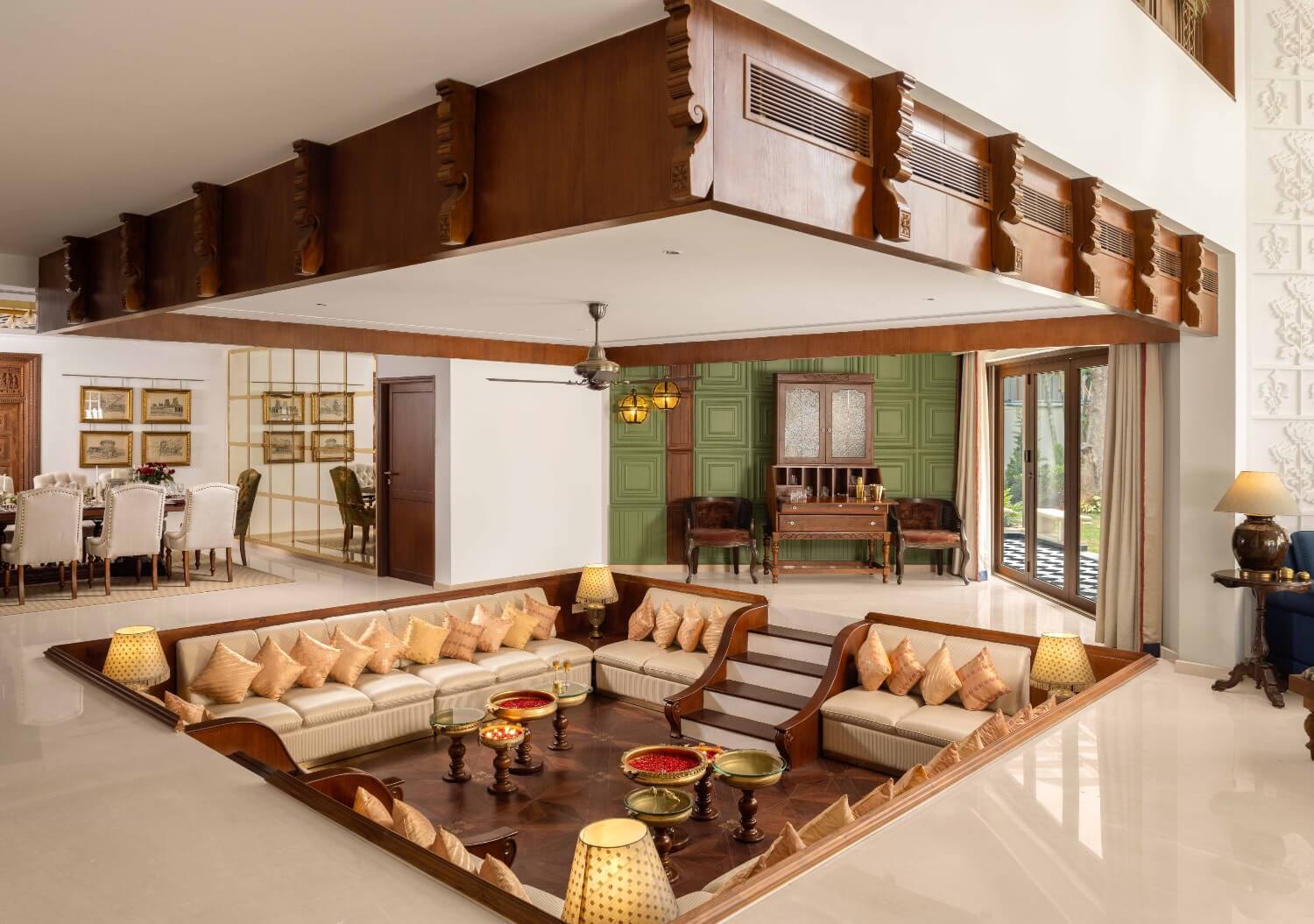
Coromandel Court, a sprawling 12,000-square-foot residence in Bangalore, stands as a testament to the lives of its owners: the Chief Marketing Officer of a billion-dollar global company and his wife, a Vice President of a billion-dollar organization.
Together, they envisioned a home that reflects their South Indian heritage while embracing the European influences absorbed through a lifetime of travel-a true reflection of modern India: rooted, worldly, and richly layered.

The Philosophy: Why “Heirloom Modernism”?
The design ethos for Coromandel Court was born from a specific tension in the clients’ lives: the duality of high-velocity global careers versus the desire for a slow, culturally rooted home life.
We christened this design language “Heirloom Modernism.”
The “Why” was simple: As busy professionals raising two young children, the brief was to create a modern sanctuary. However, they did not want a sterile contemporary box. They wanted a home that would give their children a deep cultural foundation from an early age, anchored in South Indian art, craft, and mythology.
The “How” lay in the execution: We took the soul of the past-antique timber, indigenous craft, and classical art-and applied it to a strictly contemporary layout. We treated the home not just as a living space, but as a future antique in its own right. It is a dialogue between the “Heirloom” (the gate-legged tables, the Pichwai, the craft) and the “Modernism” (the open-plan flow, the acoustic technology, the sleek kitchen).