
A landmark exhibition tracing seven decades of Indian sculpture practice Curator: Nainvi Vora Participating artists: Ira Choudhuri, Latika Katt, Poojan Gupta, Radhika Agarwala, Shambhavi, Sojwal Samant Dates: August 22 – September 26, 2026 Time: Monday to Saturday from 10am to 7pm Venue: Gallery Espace 16, Community Centre New Friends Colony, New Delhi GALLERY ESPACE presents …
A landmark exhibition tracing seven decades of Indian sculpture practice
Curator: Nainvi Vora
Participating artists: Ira Choudhuri, Latika Katt, Poojan Gupta, Radhika Agarwala, Shambhavi, Sojwal Samant
Dates: August 22 – September 26, 2026
Time: Monday to Saturday from 10am to 7pm
Venue: Gallery Espace
16, Community Centre
New Friends Colony, New Delhi
GALLERY ESPACE presents “Sculpting Lineages: Women Across Generations”, a major exhibition tracing nearly seven decades of sculptural practice through the work of six artists — Ira Choudhuri (b. 1927), Latika Katt (1948–2025), Shambhavi (b. 1966), Sojwal Samant (b. 1972), Radhika Agarwala (b. 1985), and Poojan Gupta (b. 1998).
Curated by Nainvi Vora, the exhibition proposes an alternative genealogy of Indian sculpture as a counter narrative to dominant art histories composed principally of male sculptors, with women practitioners portrayed as exceptions rather than core participants. As Vora notes, the exhibition unearths the “profound ways in which women have shaped the development of sculpture in India”, tracing “not a linear progression of styles but a network of affinities, continuities, ruptures, and reinventions that connect sculptural practices across time.”
Viewed collectively, the works of the six artists gathered in ‘Sculpting Lineages’ reveal a profound evolution – from the modelling of bodies to the mapping of systems; from bronze portraiture to assemblage, installation, and material ecologies; from human-centred narratives to complex entanglements between humans, objects, landscapes, and non-human life. Yet beneath these shifts, core concerns persist. The body remains present, though often fragmented or displaced; materiality remains central, though increasingly unstable; and memory continues to function as a structuring force, though it shifts from personal recollection to collective, ecological, and planetary archive.
“Throughout its history, Gallery Espace has been committed to presenting women artists, and the exhibition, “Sculpting Lineages”, continues this trajectory. One of our most significant exhibitions, “The Self & The World”, a collaboration with the NGMA marking the 50th anniversary of India’s Independence, had presented 15 women artists who shaped the trajectory of Indian art, from Amrita Sher-Gil to Nilima Sheikh, Pilloo Pochkanawala to Nalini Malani. I still remember Latika Katt’s work in that show which had pride of place at the entrance. I hope Sculpting Lineages opens up a more expansive view of the histories and practices that have shaped Indian art.” RENU MODI, founder- director, Gallery Espace
The exhibition opens with two pioneering artists – Katt and Chaudhuri – who emerged during the post-Independence decades, a period when sculpture was deeply entangled with questions of nationhood, identity, and modernity.
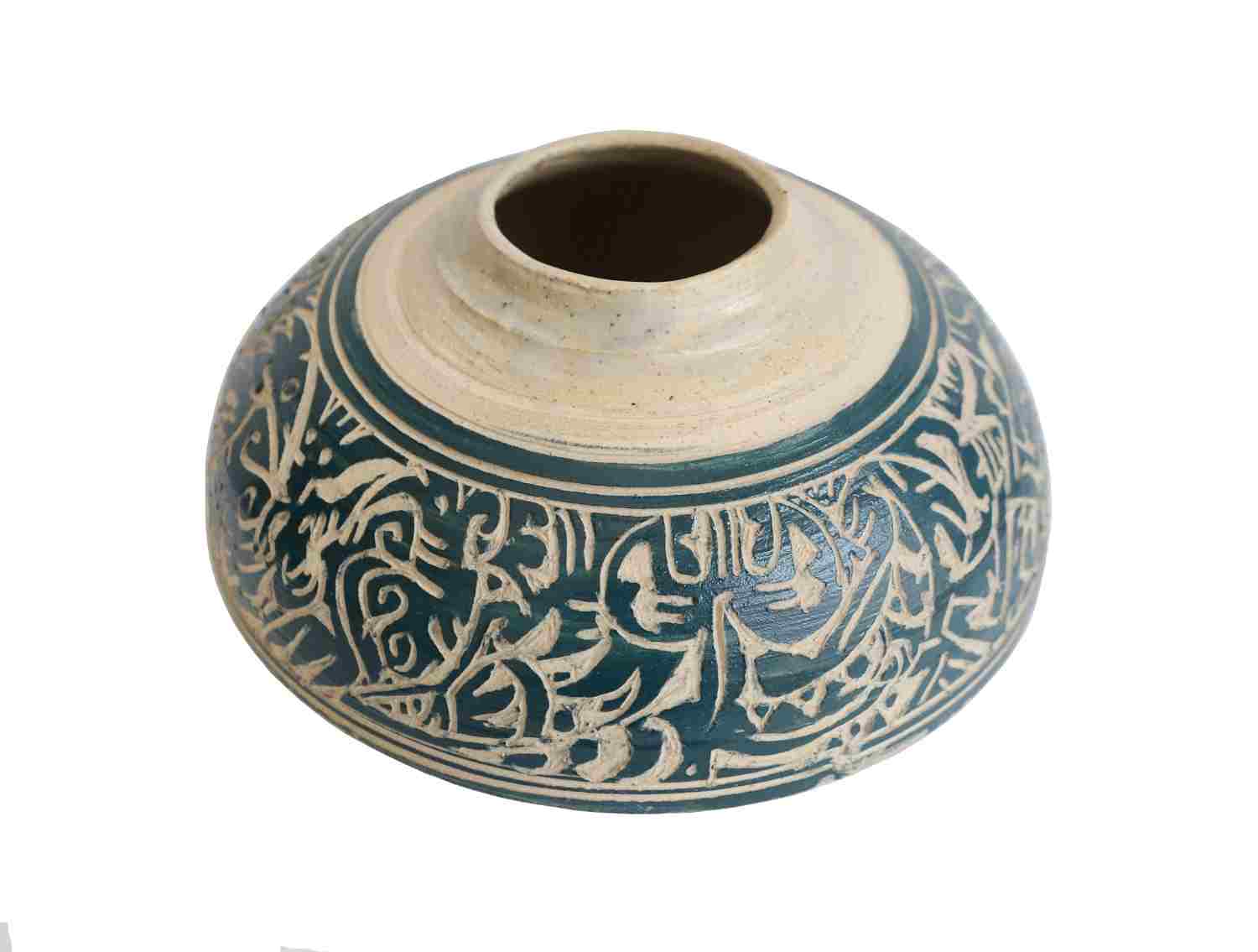
Chaudhuri frequently described herself as a studio potter, but Vora reframes her practice, situating her ceramic pots, vases and three-dimensional forms within a broader understanding of sculpture. The show highlights how Chaudhuri’s artworks, shaped by Indian folk traditions and international developments in studio ceramics, challenged conventional divisions of art, craft and sculpture.
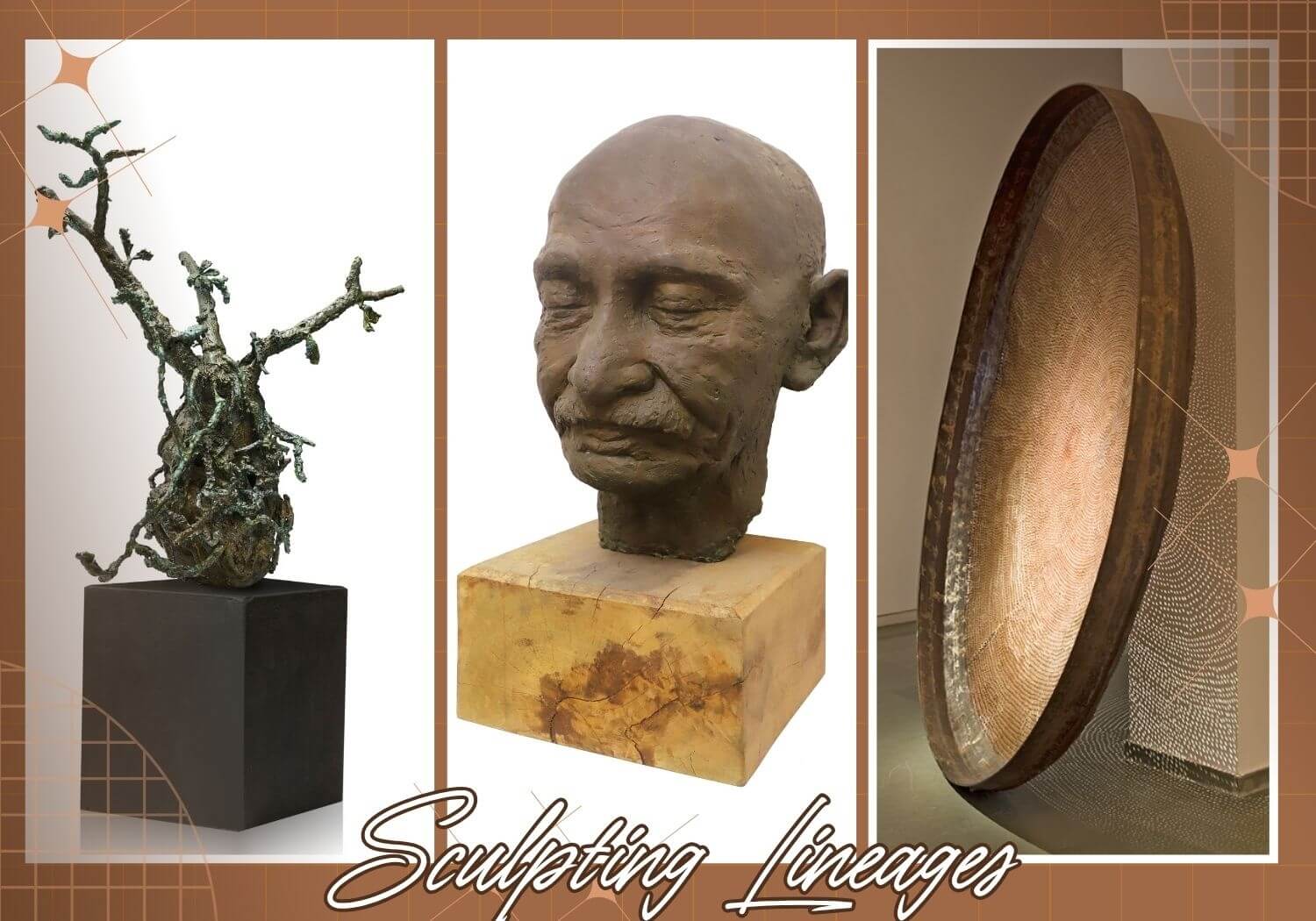
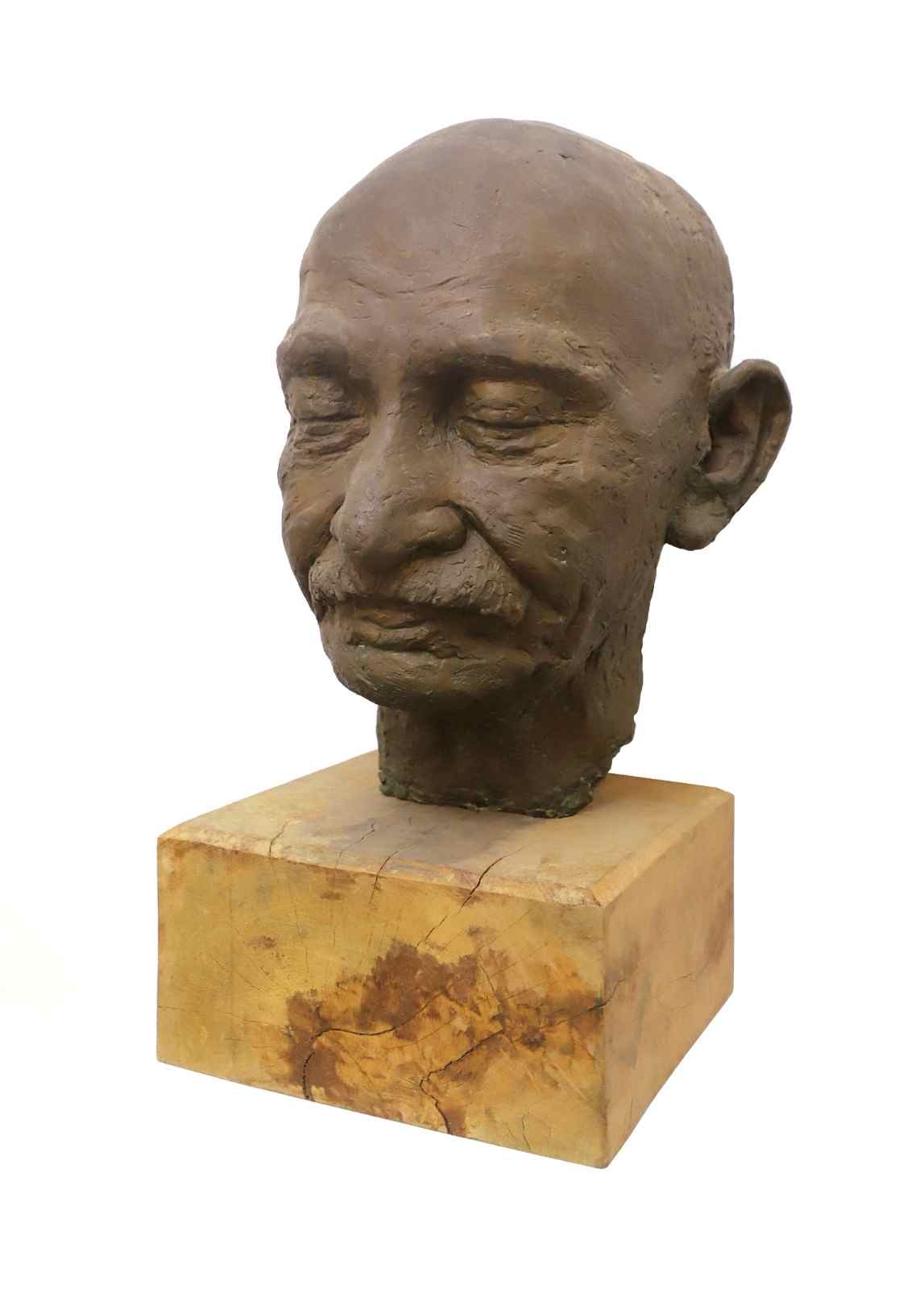
Katt, who passed away last year, is celebrated for her remarkable versatility of medium, technique and subject matter, that expanded the parametres of Indian sculpture. The exhibition features two large portrait heads of Swami Chinmayananda and Mahatma Gandhi in bronze, alongside ‘Murda’ (dead body) a poignant and powerful sculpture responding to the lives lost during the Covid 19 pandemic.
The exhibition then moves through the practices of Shambhavi and Sojwal Sawant, representative of a generation whose work was shaped by globalization, increased access to international artistic discourses and the rising influence of installation, conceptual and interdisciplinary practices.
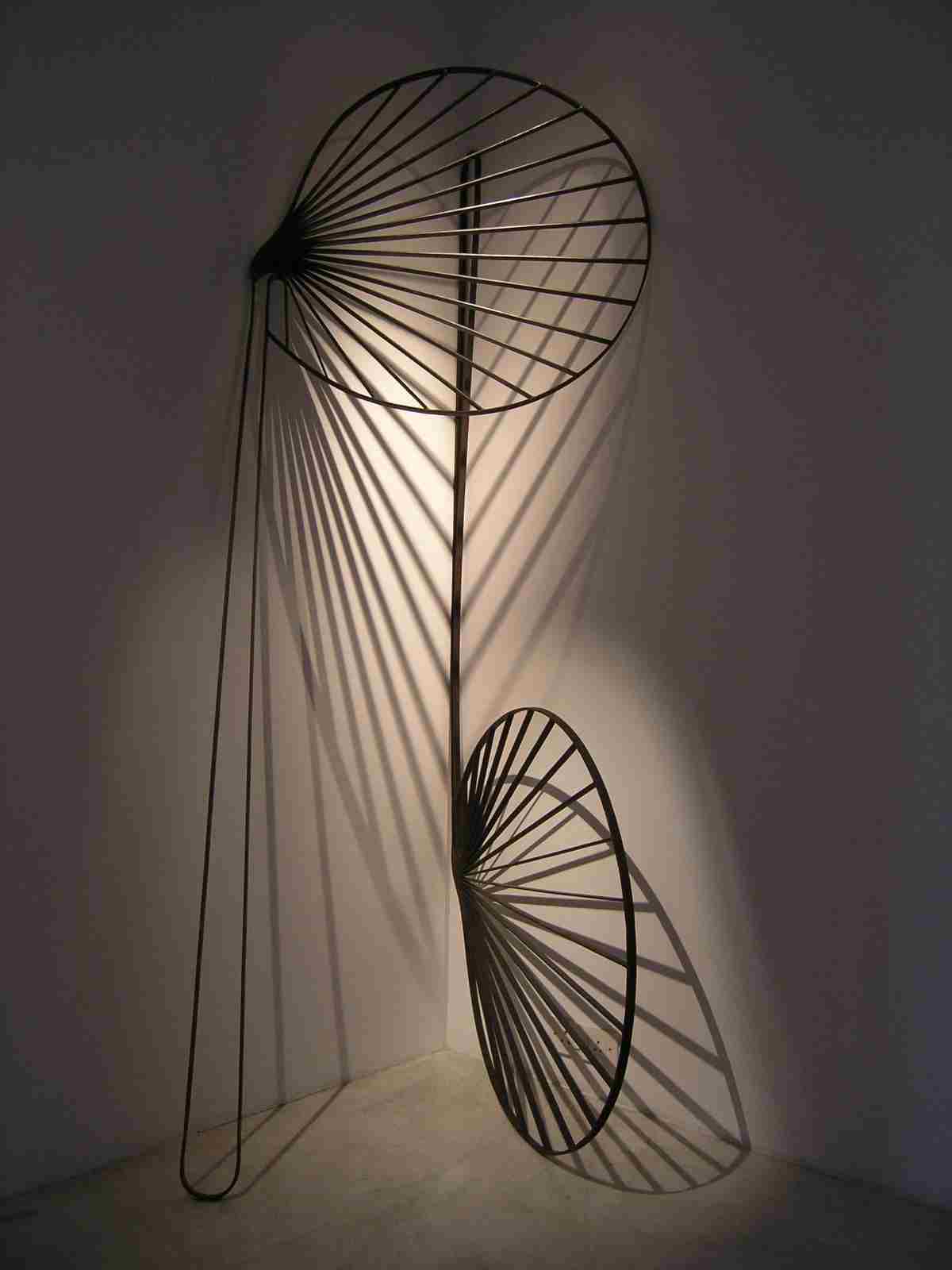
Shambhavi presents two iron sculptures – ‘Braille’ and ‘Lullaby’, monumentalised forms of commonplace objects – a sieve and a hand fan, respectively – that the artist dredges from her childhood memories of farm life in rural Bihar. The sculptures serve as politically charged icons of resilient agrarian labour and ecological precarity, proposing touch, accessibility, and embodied perception as sculptural languages.
Samant explores the psychological, conceptual and emotional dimensions of the everyday. Her works – an installation of dirty kitchen utensils in a basin, unwashed laundry, and a rug placed askew – stage feminist interventions; they focus on the invisible, repetitive domestic labour traditionally associated with women, inviting viewers to contemplate the invisible structures shaping identity, vulnerability and social conditioning.
Radhika Agarwala and Poojan Gupta, representing the youngest generation, inherit a radically expanded understanding of sculpture. Sculpture, for them, is no longer confined to carving, modelling or casting but operates as an archive, an ecology, a ritual, and a site of material inquiry into environmental degradation, urban transformation, waste economies and systems of care.
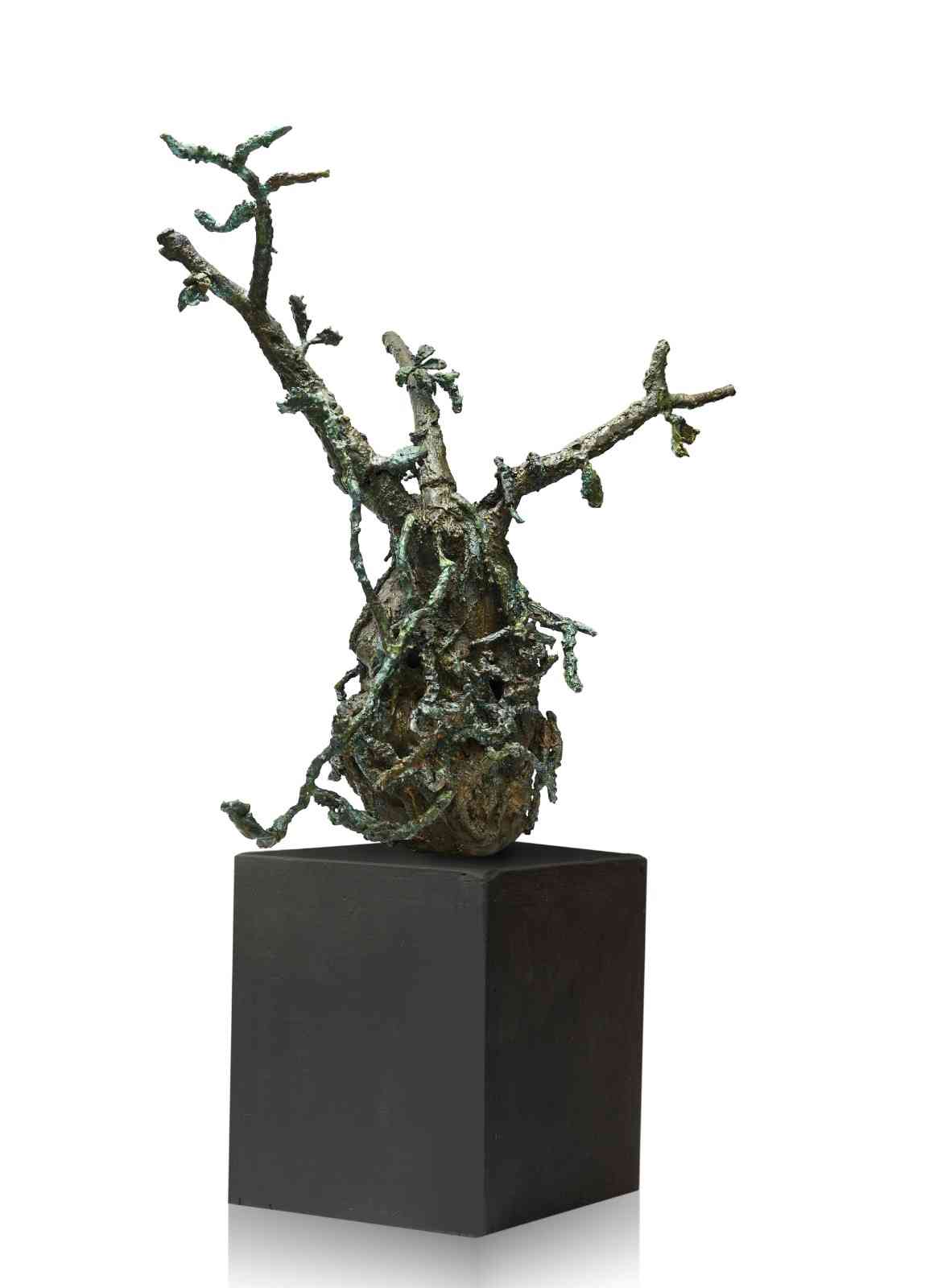
Agarwala’s sculptures draw from nature, not as a subject for representation but as ecological archives of residues and scars. Underlying much of her work is an exploration of renewal and decay, life and death with sculpture emerging as a medium holding together fragility and permanence, loss and regeneration.
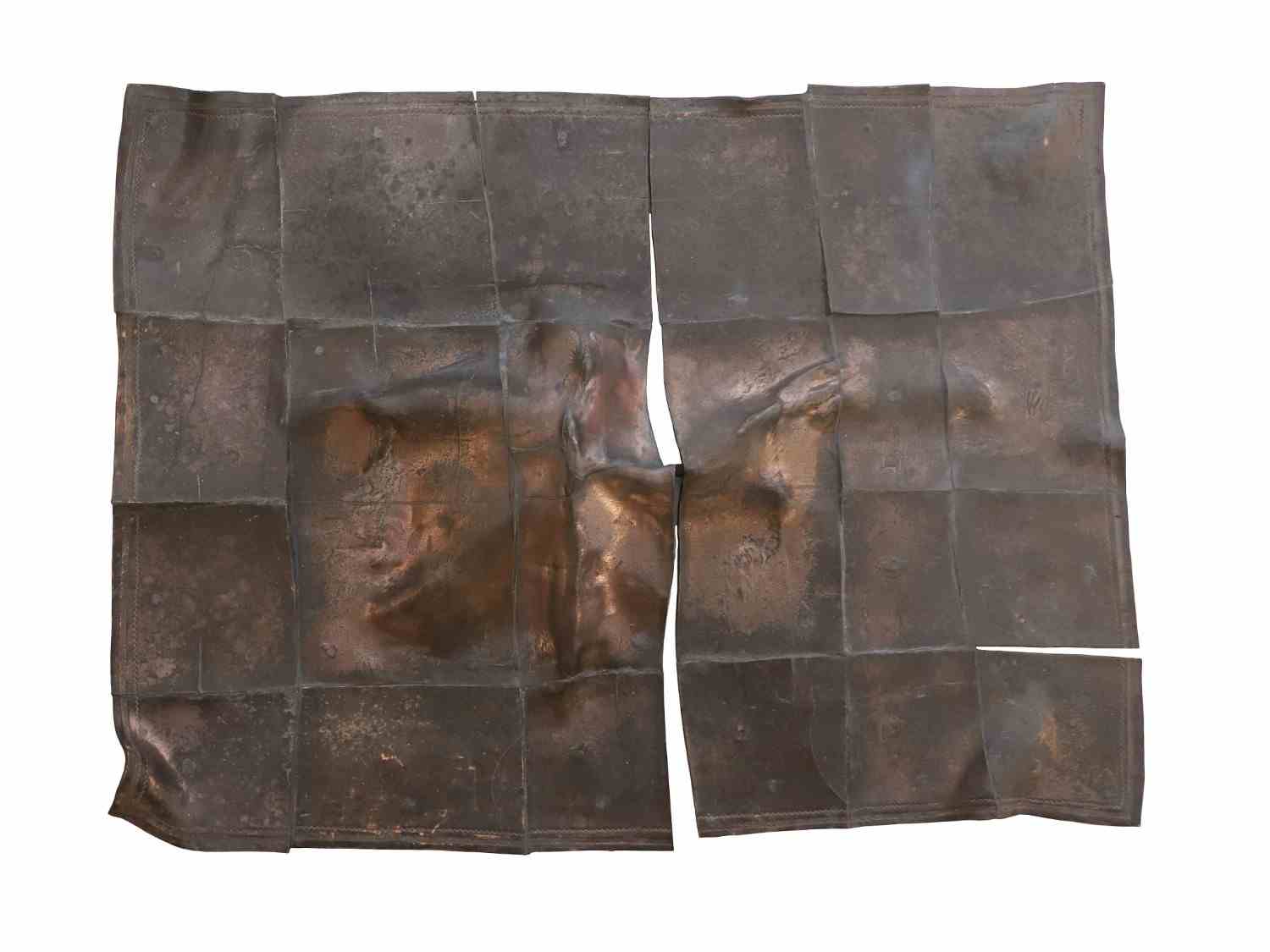
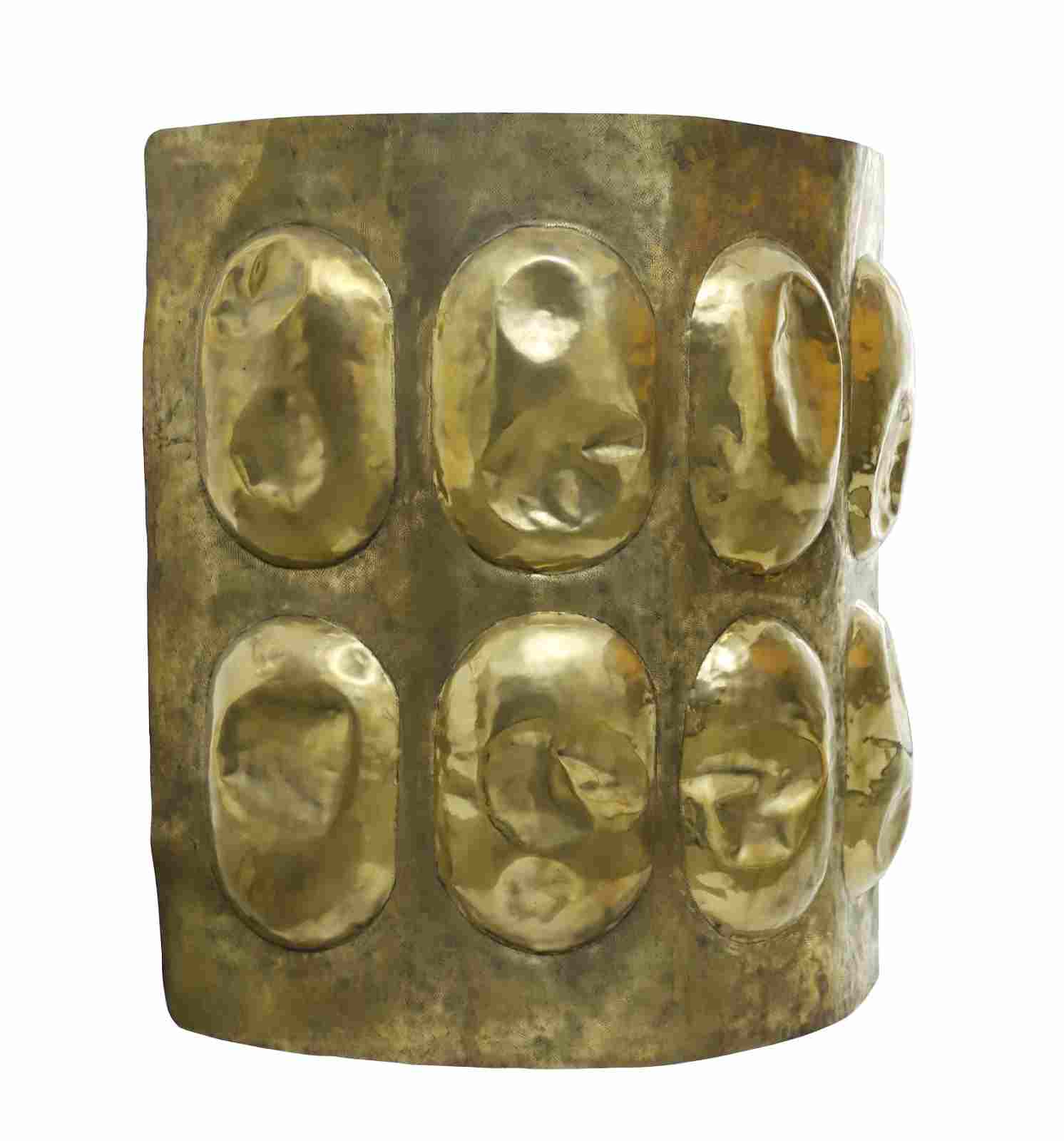
Poojan Gupta, whose sculptures use the discarded pharmaceutical blister pack as its fundamental structural unit interrogates systems of medicine and environmental sustainability. She reimagines the used plastic waste through hammered brass (‘Guarded’ and ‘Remembered’), pewter (‘Remained’), bronze and patina (‘Recalled’), German silver (‘Tokened’) and plaster (‘Imprinted’), translating disposable plastic into metallic surface. The familiar pill-shaped impressions remain visible but acquire a new symbolic resonance as sites of contemplation, focussing on how care, healing, and memory are embedded within material culture.
About Gallery Espace
Established in 1989 by Renu Modi, Gallery Espace is among the foremost arts spaces in New Delhi, recognized within the country and internationally, for nurturing the contemporary moment in Indian art with landmark exhibitions such as Drawing ’94, Sculpture ’95, Miniprint ’96, Bronze (2006), and Video Wednesdays (2008-09 & 2011-12), which sparked critical and commercial interest in these categories, which had historically lacked institutional patronage. Eclectic, nuanced and socially conscious, the gallery programme has consistently promoted young, original talent and cross-disciplinary curatorial practices. Over the decades it has emerged as a bridge between the Modernist artists led by MF Husain, who was instrumental in the Gallery’s establishment, the generation that followed – Manjit Bawa, J. Swaminathan, Jeram Patel, Nagji Patel, Nilima Sheikh and Zarina – and contemporary practitioners, among whom feature several leading mid-career artists as well as emerging ones whose experimental practices are extending the vocabulary of Indian art in new directions.